

It won’t host a match. There will be no opening whistle echoing through the jungle. No goals scored on its sand or stadium lights beaming into the sky. Yet Tulum, quiet and unapologetically different, is stepping boldly onto the global stage of the World Cup 2026 in Mexico, not as a host city, but as a cultural icon and strategic destination.
This isn’t wishful thinking or marketing fluff. It’s policy.
Mexico’s Federal Tourism Secretariat, Visit México, and the Tourism Promotion Council of Tulum (CPTT) have officially named Tulum as one of the country’s priority non-host tourism zones. Their aim is clear: harness the worldwide spotlight generated by the World Cup and direct a meaningful share of it to the Riviera Maya, with Tulum at the forefront.
In a landmark presentation led by Visit México’s Director General, Caleb Ordóñez Talavera, the national government outlined a high-impact tourism campaign launched under the direct instruction of President Claudia Sheinbaum. This strategic initiative not only recognizes Mexico as a co-hosting nation of the World Cup 2026 in Mexico, but also seizes the moment to promote its cultural, natural, and historical wealth across global markets.

And among all the destinations being spotlighted, Tulum shines brighter than ever.
A rising force in Mexico’s tourism strategy
Tulum’s designation as a strategic tourism hub is no longer just symbolic. According to Mario Cruz, president of the CPTT, the town will feature prominently in national and international marketing campaigns that aim to bring millions of visitors, not just for football, but for the Mexico they’ve yet to discover.
“There’s a growing recognition of Tulum’s role as a national jewel,” said Cruz. “And now, thanks to this strategy, we’ll ensure that the visibility of the World Cup translates directly into value for our people.”
This promotional push operates on two fronts: First, global campaigns are targeting high-yield markets in North America, Europe, and South America. Second, an internal tourism drive is focused on encouraging domestic travelers to discover or revisit Tulum before, during, and after the tournament. This dual-pronged strategy reflects a deeper purpose, not only growing tourist numbers, but distributing economic benefits locally.

Tourism waves and economic tides
Forecasts suggest that the World Cup 2026 in Mexico will generate staggering numbers: over 5.5 million additional tourists, more than 60 billion pesos in economic impact, and around 24,000 new jobs across the country. Experts estimate that 40% of these visitors will enter through Cancún, the region’s largest international gateway.
Tulum, located just 120 kilometers south of Cancún, is uniquely positioned to benefit. Even now, the signs are promising: In May 2025, hotel occupancy in Tulum reached 77.7%, surpassing Cancún’s 70.1%. And over the past two years, occupancy rose from 81% in 2022 to 84% in 2023.
Still, scale remains a challenge. Tulum offers roughly 12,000 hotel rooms, many of them boutique properties or eco-lodges. By comparison, Playa del Carmen and Cancún offer over 56,000 and 40,000 rooms, respectively. During holiday peaks, Playa has even recorded 95.3% occupancy, signaling a clear demand for the Riviera Maya experience.

Tulum may not match its neighbors in volume, but it outpaces many in value. Its brand is stronger than ever, a fusion of luxury, nature, wellness, and history that continues to resonate globally.
A new airport, a historic train, and the race for readiness
To meet growing expectations, infrastructure is racing to catch up. Tulum’s explosive growth has overwhelmed its systems, and municipal authorities estimate a 1.2 billion peso backlog in basic infrastructure, including roads, drainage, and water treatment.
While Cancún has a robust highway network and an international airport with connections to more than 130 destinations, Tulum has only one major artery: Federal Highway 307. It often clogs under seasonal pressure, and projects like a new bypass remain pending.

The town also lacks comprehensive sewage infrastructure. Many homes and businesses still rely on septic systems, which increases the risk of contamination in cenotes and underground rivers, an ecological red flag. Plans are underway to create new wastewater management systems and modernize key utilities, but progress is uneven.
One bright spot is the new Tulum International Airport. Operational since late 2023, the airport offers modern facilities and promises to handle large volumes of international traffic. However, it still lags behind Cancún in route availability. Some carriers have even scaled back flights due to low demand, highlighting the urgent need for coordinated air traffic strategy, better ground transport, and scalable hospitality services.
Then there’s the Tren Maya, a sprawling regional railway that will connect Tulum to archaeological zones, rural communities, and neighboring cities. More than infrastructure, it’s an identity project, linking the past with the present, and remote heritage sites with curious new audiences. In the context of the World Cup 2026 in Mexico, this train becomes more than transportation; it becomes the spine of a multi-sensory experience across the Yucatán Peninsula.

The metaphor of the flood
Imagine the World Cup as a storm at sea, and tourism as the rising tide that follows. Cancún is the fortified harbor, built, braced, and ready. Playa del Carmen is a sleek cruise liner, already boarding. And Tulum? Tulum is the agile canoe. Beautiful. Unfinished. Fast if the currents are right.
But it must build its channels, roads, services, partnerships, to ensure that this wave lifts its economy instead of overwhelming it.

That’s why the CPTT is working on an intense local calendar of promotional activities, festivals, and cultural programs designed not just for visitors, but for locals. Because the real win, they insist, is not in photos shared on Instagram. It’s in jobs created, businesses supported, and communities empowered.
Culture over spectacle
Mexico’s tourism strategy is not just about proximity to stadiums. It’s about meaning. The World Cup 2026 in Mexico is being framed as an opportunity to tell deeper stories, to show travelers that while the goals may be scored in Monterrey, Guadalajara, and Mexico City, the soul of the country lives in places like Tulum.
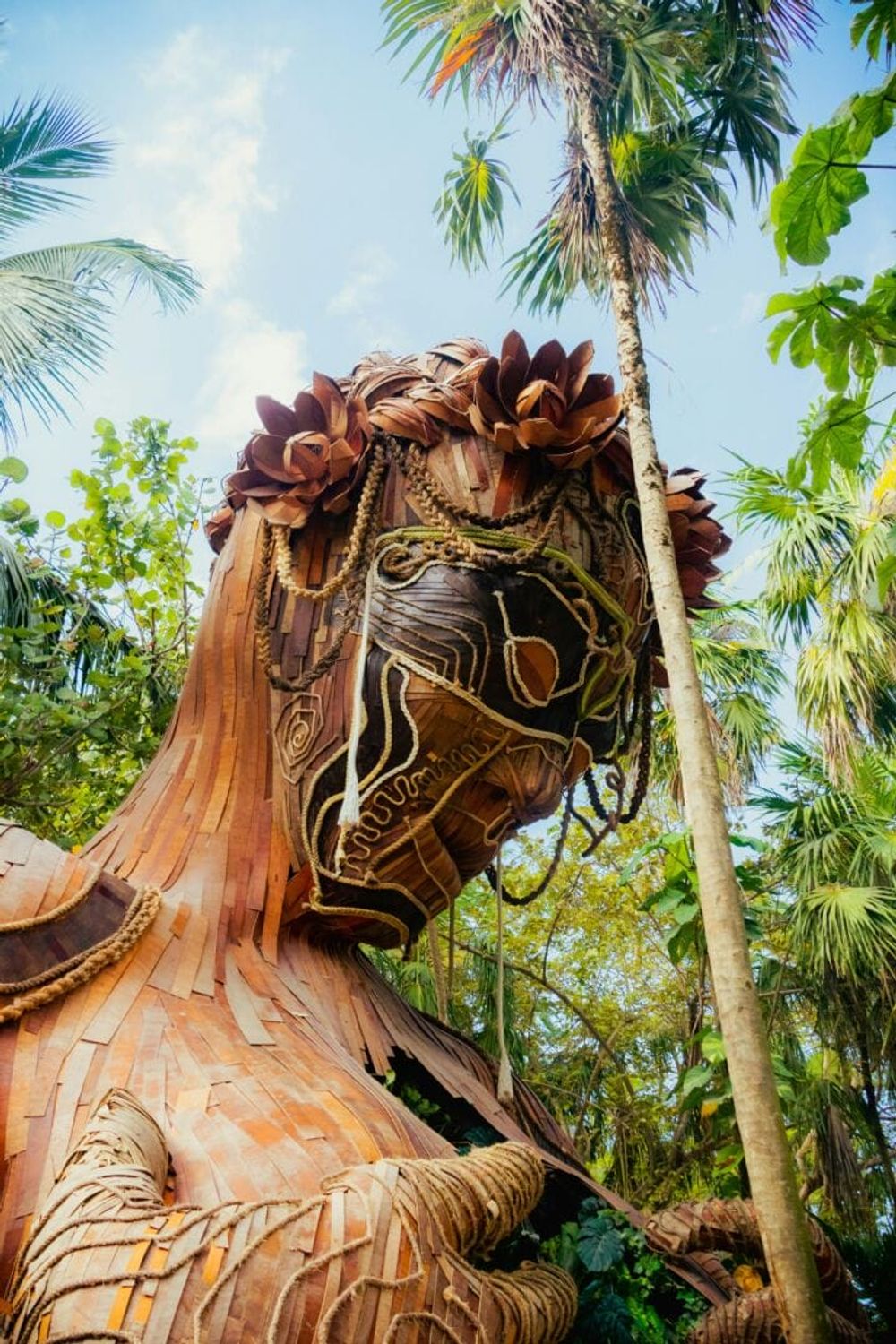
This is why national campaigns are emphasizing not only beaches, but gastronomy, ancestral heritage, and ecological stewardship. Visit México’s reactivation of the “Mundo Maya” brand underscores this commitment. Tulum is positioned as a flagship destination in this initiative, connected to a web of sites across the Yucatán Peninsula that tell the story of an ancient civilization still breathing beneath modern soil.
And Tulum is listening not just to the global media, but to its people. Leaders like Mario Cruz understand that the town’s future depends on more than visibility, it depends on vision.

Conclusion: A chance to redefine legacy
So what happens when a small coastal town becomes a strategic pillar in the World Cup 2026 in Mexico?
It stretches. It builds. It learns. It adapts.
Tulum may never host a match, but it may win something far greater: the hearts of millions who come not for the stadiums, but for the silence of sunrise, the pulse of the jungle, the rhythm of a place that doesn’t need to shout to be heard.
Here, the World Cup won’t just pass through. It will plant something. And if cultivated wisely, what grows could transform not only tourism, but Tulum itself.