
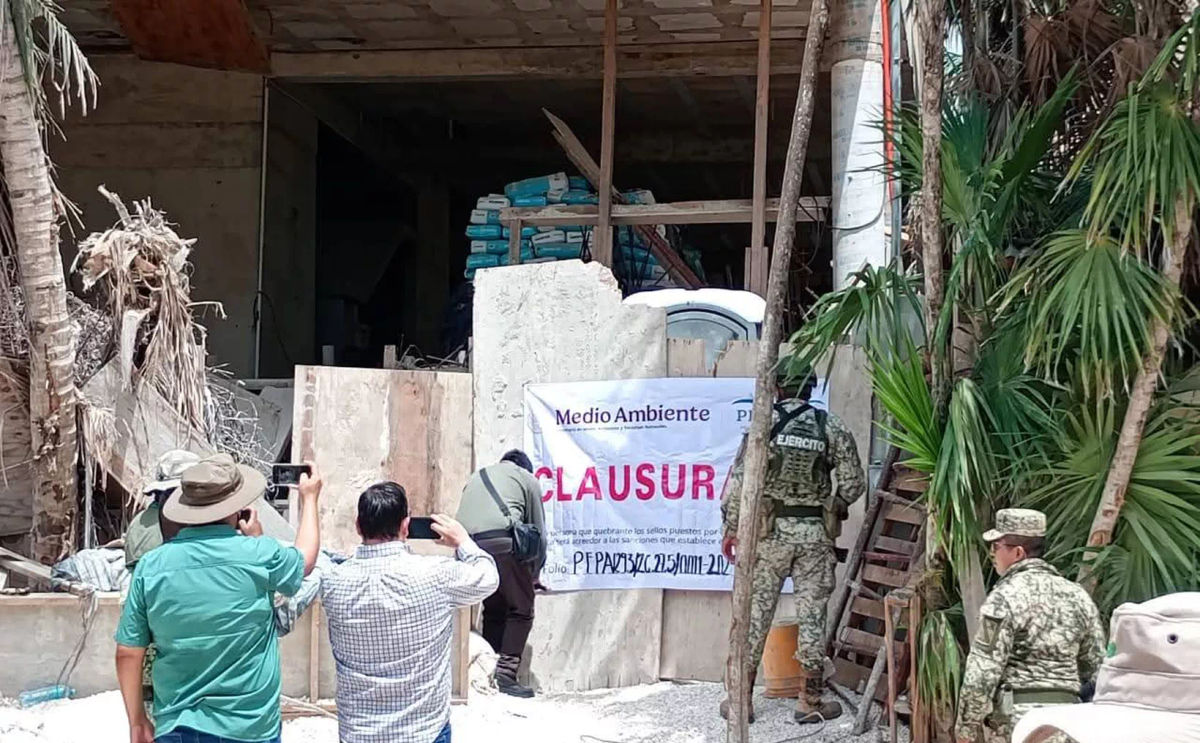
The morning air in Tulum, typically languid with the promise of sun-drenched days, carried a different sort of electricity. It hummed with the quiet intensity of official action, a palpable shift in the often-muddled narrative of development here. The scene unfolding at the Adamar Development was stark: not the usual cacophony of construction, but the methodical, almost ceremonial, presence of authority moving in. This was not a minor administrative hiccup; indeed, the very presence of uniformed personnel underscored the gravity of the moment. The *Army Enforces Closure of Adamar Development*, a phrase one might see emblazoned across headlines, was here a lived reality, a tangible expression of a larger struggle unfolding in this rapidly changing landscape.
What transpired at the site, located off the Carretera Federal Tulum-Cancún, Kilometer 231, in the very heart of the rapidly expanding Riviera Maya, was a direct consequence of a federal mandate. Specifically, it was the Attorney General’s Office for Environmental Protection, known by its Spanish acronym PROFEPA, that spearheaded the operation. Their mission was unambiguous: to ensure the full compliance of the provisional suspension order that had been issued against Adamar on January 29th. This wasn’t the first time the development had found itself under such a cloud. In a pattern that has become increasingly common in areas experiencing explosive growth, Adamar had been cited previously for environmental infractions.
The latest action, however, felt different. Perhaps it was the sheer scale of the coordinated effort. Beyond PROFEPA and a handful of federal environmental police, a contingent of the Mexican Army was present, their vehicles strategically positioned, their stance firm. This wasn’t merely a show of force, though it certainly conveyed an unyielding resolve. It spoke to a deeper systemic issue, a recognition that environmental transgressions, when unchecked, can ripple through a community, impacting everything from delicate ecosystems to the very quality of life for its residents. Their presence provided a layer of security, an assurance that the order would be upheld without contention, a quiet testament to the seriousness of governmental intent.
At the core of PROFEPA’s intervention lay a series of alleged violations that painted a troubling picture. The most significant accusation revolved around the removal of vegetation without the requisite authorization. In a region where the jungle is not just a backdrop but the very foundation of its ecological health, such an act carries profound implications. The delicate balance of the ecosystem, particularly the fragile hydrological system that supports the famed cenotes and underground rivers, is easily disrupted. Uncontrolled clear-cutting not only threatens biodiversity but also impacts groundwater quality and flow, essential for both human consumption and the health of the reef system.
Furthermore, the developers were cited for operating without the necessary environmental impact authorization, a fundamental requirement for any large-scale project in Mexico. This document, meticulously crafted and rigorously reviewed, is meant to ensure that development proceeds responsibly, minimizing harm to the natural world. Its absence suggests either a disregard for regulatory frameworks or a critical oversight in the planning process, both of which raise significant red flags. The cumulative effect of these alleged infractions paints a picture of a development pushing boundaries, perhaps neglecting the very environmental tenets that are meant to safeguard this pristine, yet increasingly vulnerable, corner of the world.
The scale of the operation reflected the magnitude of the problem being addressed. Three access points to the Adamar site were secured and then meticulously sealed. Large, official seals were affixed, bearing the weight of federal authority, serving as a visual deterrent to any further activity. It was a clear, unambiguous message: no more. This sealing wasn’t just symbolic; it was a physical lockdown, designed to halt all construction and related activities permanently until, and if, the legal and environmental violations could be adequately addressed. The quiet efficiency of the process spoke volumes about the government’s determination to enforce its own regulations, a commitment that has, at times, been questioned by environmentalists and concerned citizens.
The underlying tension in Tulum, between rapid economic development fueled by tourism and the fierce imperative to protect its unparalleled natural heritage, is a story still being written. Each such action by federal authorities serves as a chapter in this unfolding narrative. The closure of the Adamar Development, supported by the quiet, unwavering presence of the Army, underscores a growing resolve to hold developers accountable. It signals a critical juncture, perhaps a turning point, in the ongoing battle to balance progress with preservation in this ecologically rich and undeniably alluring destination. The eyes of a community, and indeed, the nation, are watching closely to see if this enforcement marks a true shift towards sustainable practices, or if it is merely another skirmish in a much longer war.
We invite you to share your thoughts on this unfolding situation on The Tulum Times’ social media channels.