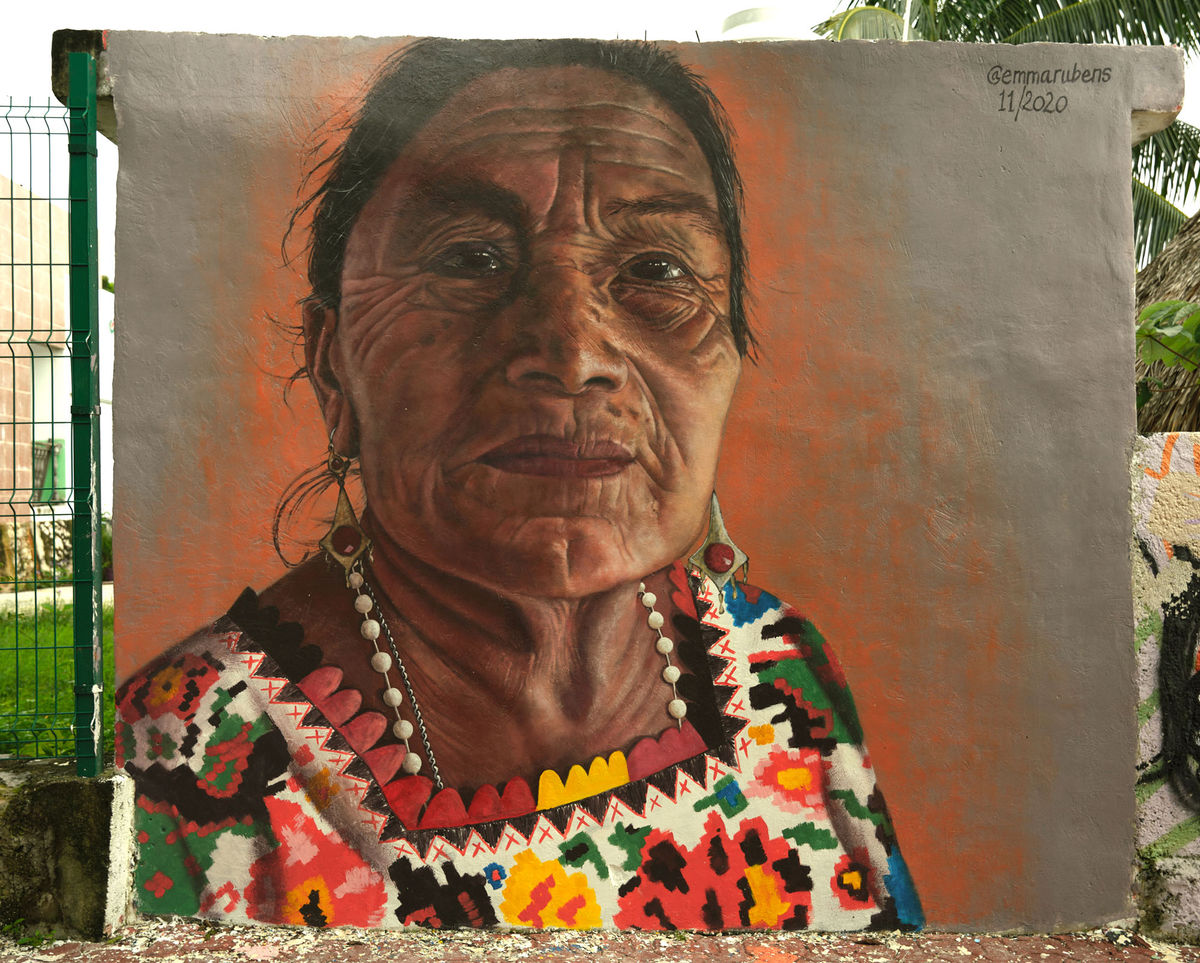
For nearly two decades, Emma has made Tulum her home. Now, the portrait painter and muralist is channeling that long relationship with the town into “The Faces of Tulum,” an ongoing portrait and oral history project centered on elders of the Mayan community whose lives hold firsthand knowledge of Tulum’s early history and its transformation over recent decades. Through detailed oil paintings and recorded interviews, the project aims to preserve voices, memories, and personal testimony that might otherwise fade as the town continues to change.
A life shaped by art and by Tulum
Emma is a portrait painter and muralist based in Tulum, where she has lived and worked since 2007. Like many others before her, she arrived while backpacking through the area with the plan of staying for just a month. She did not leave.
Born in England and raised in France, Emma later studied Illustration at Kingston University in London before moving to Mexico. But the path that brought her to Tulum was not only geographic. It was also deeply personal. She grew up in an artistic family and has been painting for as long as she can remember, a lifelong connection to image-making that now finds one of its clearest expressions in work rooted in local people and local memory.
Her first experience creating public art came in 2014, when she began painting murals in the streets of Tulum for the Tulum Art Project mural festival. That moment opened a new chapter in her practice, moving her work into public view. Yet even as her murals entered the streets, the emotional center of her work remained in portraiture.
Emma’s art focuses on human connection, memory, and local history. Much of it depicts members of the local Mayan community. That focus gives her work a sense of closeness and responsibility. These are not distant subjects. They are the people whose presence, stories, and endurance continue to shape Tulum, even as the town changes around them.

The Faces of Tulum grows from conversation
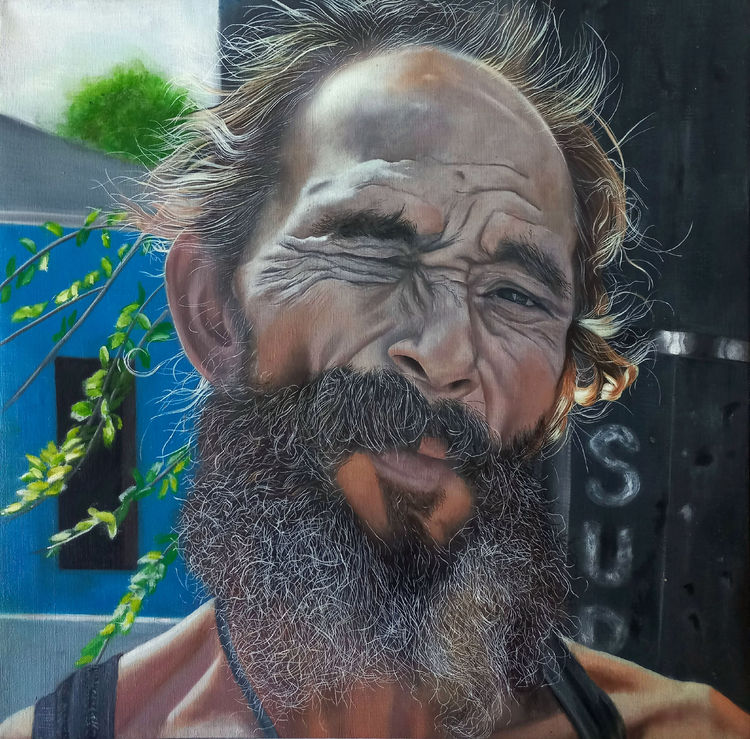
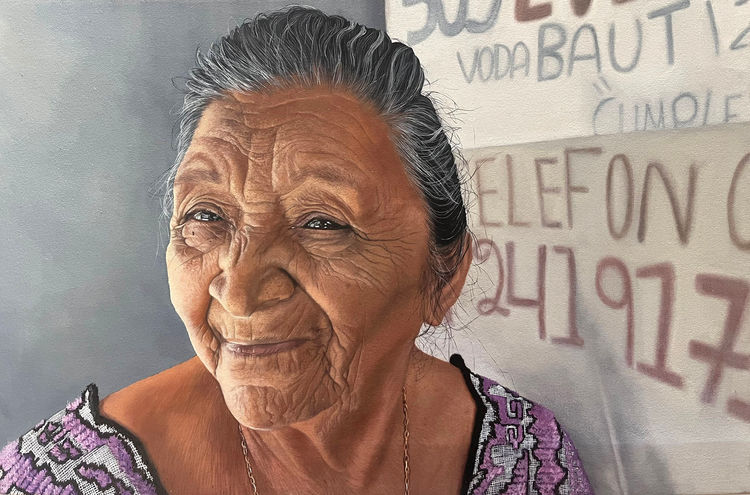
For the past couple of years, Emma has been working on “The Faces of Tulum,” a long-term project that combines portrait painting with oral history. The idea is both simple and ambitious: to document elders of the Mayan community who were either born in Tulum or have lived there for many decades, and who carry firsthand knowledge of the town’s early life.
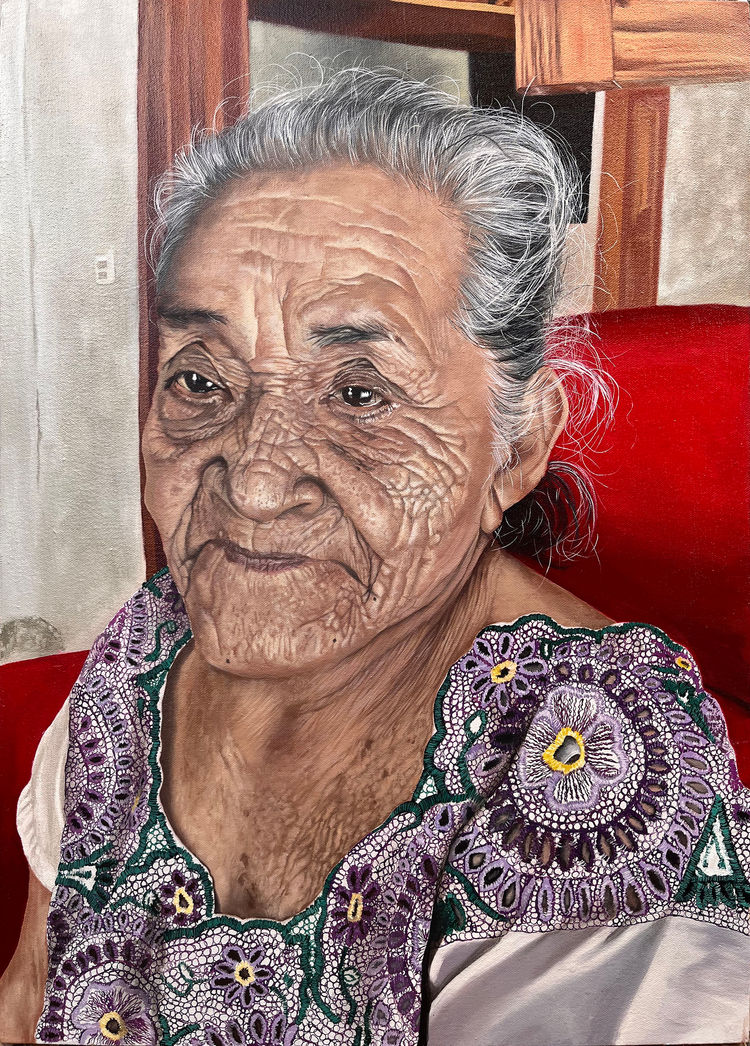
The project brings together highly detailed oil portraits and recorded interviews. Emma spends time speaking with each participant about their lives, their memories of Tulum, and what they have witnessed as the town has changed. Those conversations are recorded and later edited into written narratives that accompany the portraits.
The result is not only a painted likeness, but a fuller record of a life. Each portrait becomes inseparable from a voice, a memory, a testimony. That structure matters because the project does not treat history as something abstract. It places history in the words and faces of people who lived it.
The series will consist of around 20 portraits, and several have already been completed. Emma’s goal is to create a record of individual lives while also forming a broader portrait of the community and the history of Tulum through the people who experienced it directly.
There is a quiet force in that approach. Rather than offering a sweeping account from above, “The Faces of Tulum” builds meaning one person at a time. It recognizes that the history of a town is carried not only in dates and institutions, but in memory, family, daily life, and the way someone remembers a place before it became known to the world.
One of the most meaningful aspects of the work, Emma says, has been gaining a deeper awareness of the scale of change Tulum has undergone through the perspectives of the elders she has interviewed. While she has witnessed major transformation since arriving in 2007, those conversations have shown her that the experience of people who have lived here for many decades exists on an entirely different scale. Their memories have given her a broader and more nuanced understanding of the town’s history and the speed at which it has evolved.
She also describes the generosity of many participants as one of the project’s defining qualities. In several cases, once the conversation begins, there is a natural desire to speak, remember, and share. For Emma, those moments have been especially rich and have reinforced the importance of creating space for these voices to be heard and recorded.
Why this matters in a changing town
Tulum has changed enormously since Emma first arrived. That change is part of what gives the project urgency. Today, many people come to the town from different parts of the world, drawn by its visibility and growth. But Emma says there are still few accessible places where visitors and newer residents can learn about the people and families who built the town and shaped its early history.
Her project is intended, in part, to respond to that absence.
Through art, conversation, and personal testimony, “The Faces of Tulum” seeks to create an accessible way for people to encounter those stories. It offers a bridge between generations and communities in a place where distance can grow quickly between longtime residents and those who arrived later.
That has local significance beyond the art itself. For Tulum, this is about memory and belonging. It is about whose stories remain visible as the town evolves, and whose experiences risk being pushed aside. For members of the Mayan community, the project offers a space where their lives and voices are treated not as background, but as central to understanding Tulum. For newer residents and visitors, it creates a way to connect with the town through the people who knew it long before its recent transformation.
Emma says she hopes people take from the project an invitation to engage more deeply with the place and its history. Tulum is often experienced through its natural beauty and contemporary cultural scene, she says, but there are also many personal histories that are less visible and still fundamental to understanding the town. Through these portraits and stories, she hopes longtime residents and newer members of the community alike can find a way to connect more closely with those histories and with the people who have shaped them.
And what changes from now on is that these histories are being gathered deliberately, carefully, and in relation to the people who carry them. In a town where change can move faster than memory, that act of preservation becomes its own form of public service.
A self-funded effort with a larger vision
So far, Emma says the project has been largely self-initiated and self-funded. She continues to build the series whenever possible alongside her other work, while also exploring external support through grants and cultural funding opportunities that could help bring the full project to completion.
Funding, however, remains one of the project’s ongoing challenges. Because the series is self-funded and developed alongside her commissioned work, the amount of time Emma can dedicate to it is naturally limited. She says she has been exploring grant opportunities to support the continuation of the series, especially given the urgency of documenting these stories while they can still be shared firsthand.
Another challenge, particularly at the beginning, was building trust. As someone approaching families to document and paint their relatives, Emma says she was very aware of the need to proceed with sensitivity and respect. Some initial hesitation was understandable. Over time, however, as the project developed and more portraits were completed, trust grew organically, often through word of mouth. Increasingly, families are now reaching out themselves to participate, something she describes as deeply encouraging.
That detail is important because it reveals the scale of her commitment. This is not a one-time commission or a short-term assignment. It is a sustained effort built through time, labor, listening, and personal investment. The work has moved forward because Emma has continued making room for it, even as she balances it with the rest of her artistic practice.
The completed works are planned to culminate in an exhibition at the Museo Regional de la Costa Oriental in Tulum. Emma notes that while the museum presents the history of the ancient Mayans, her project focuses on the stories of contemporary Mayan residents and their experiences of the town’s transformation over recent decades.
That distinction gives the planned exhibition a strong local purpose. It places living memory alongside historical narrative and creates room for a different kind of encounter with Tulum’s past and present. Not the distant past alone, but the recent and remembered one. Not only heritage as artifact, but heritage as lived experience.
The exhibition also has the potential to reach the people who most need this kind of access: residents, younger generations, and those who know Tulum primarily through what it has become rather than what it was.
A book meant to outlast the moment
Alongside the exhibition, Emma is also working on a book that will include the portraits, interviews, and historical context gathered through conversations with residents. Its purpose is clear. She hopes the book will serve as a lasting record of these stories.
That matters because preservation cannot rely on a single event or a single space. A book would allow the project to continue beyond the walls of an exhibition, carrying the portraits and testimonies into a form that can endure. It would also deepen the documentary value of the work, bringing together image, voice, and context in one place.
For Emma, the hope is that “The Faces of Tulum” can help connect different generations and communities while preserving voices and histories that might otherwise be lost. It is a personal project, but it is also one with public meaning. At its heart is a question Tulum cannot avoid as it continues to grow: how does a town hold on to the people and memories that made it what it is?
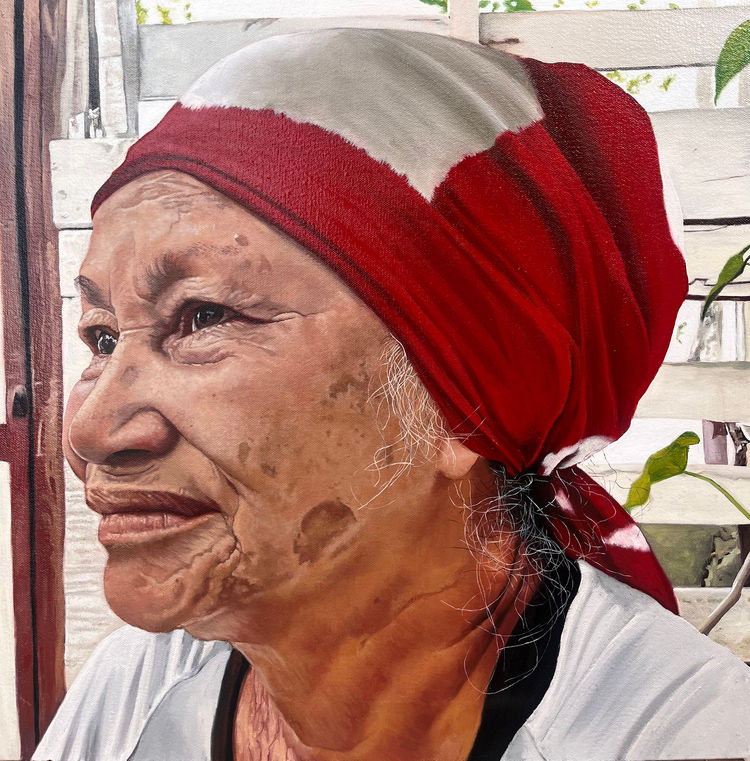
That is what gives this work its emotional weight. Emma is not only painting faces. She is making space for testimony, for recognition, and for remembrance. In doing so, she is building an archive of presence at a time when presence can be easily overlooked.
What is at stake is whether those stories remain visible as Tulum changes, and what changes going forward is that “The Faces of Tulum” is turning memory into a record that others can encounter, learn from, and carry forward. For a town still being rewritten in real time, that record may become one of the most human ways to understand its history. We’d love to hear your thoughts. Join the conversation on The Tulum Times’ social media. How should Tulum preserve the voices of the people who remember its earliest days?