
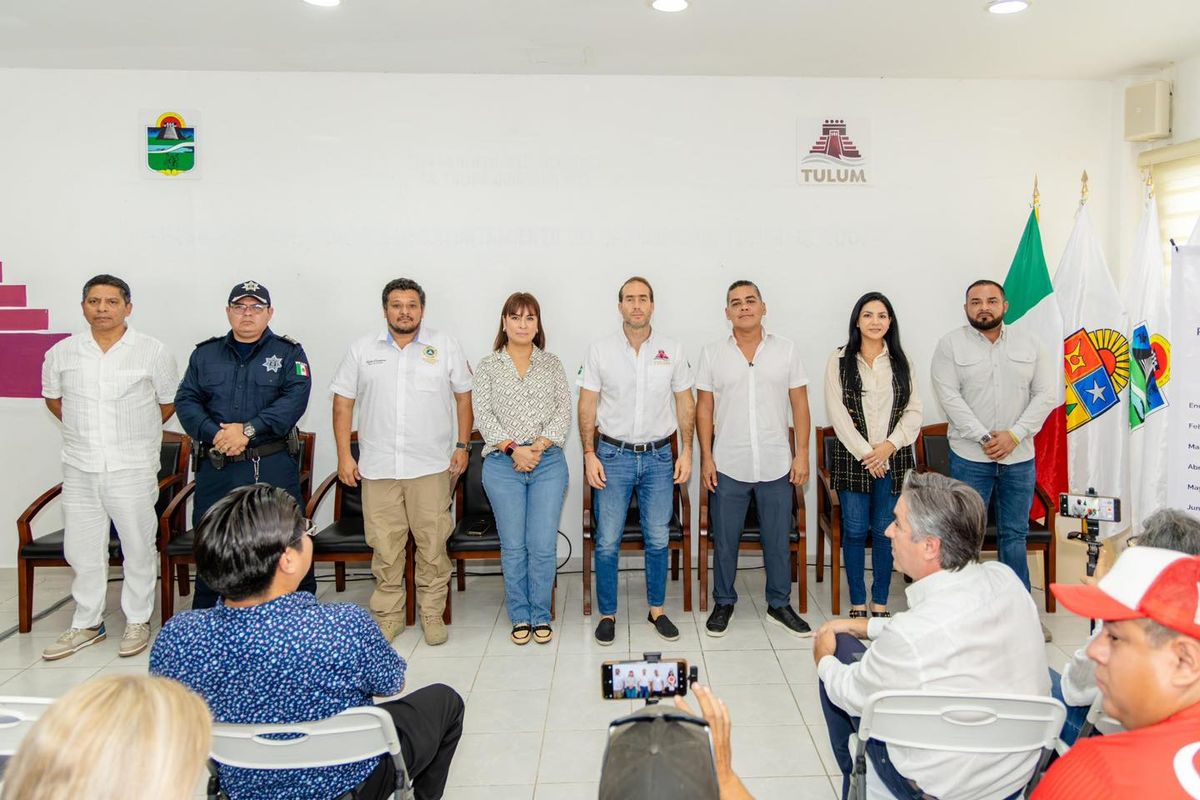
A calendar, a fund, and a bet on culture. That is the core of Tulum Todo el Año, a new tourism activation plan presented by Zamna Group with the stated goal of keeping the local economy moving through all twelve months of 2026, not just during peak travel weeks.
The initiative was unveiled in Tulum, Quintana Roo, at a moment when tourism-dependent businesses across the Riviera Maya are feeling the strain of prolonged low seasons. The proposal combines monthly cultural, musical, and wellness events with a new public-private financial structure designed to support long-term destination planning. Its backers argue that the model could help Tulum stabilize visitor flows, diversify its global image, and reduce its vulnerability to seasonal downturns.
At its center is a simple question with high stakes: can Tulum Todo el Año turn a destination known for spikes of excess into one defined by continuity?
A yearlong calendar designed to spread demand
The backbone of Tulum Todo el Año is an annual thematic calendar that assigns a different cultural focus to each month of 2026. The idea is to give travelers, airlines, and businesses a predictable reason to look at Tulum outside traditional high season periods like winter holidays and Easter.
According to the plan presented by Zamna Group, January would focus on global electronic music festivals, while February would pivot toward romance and event-based tourism. March combines electronic and global pop, followed in April by art, gastronomy, and wellness. May is dedicated to world music and Latin rock, June to wellness and Eastern cultural traditions, and July to global rap and hip hop.
August would highlight Latin American urban music. September shifts toward detox, spirituality, and ecotourism. October centers on cinema and cultural programming, November blends music, culture, and gastronomy, and December returns to electronic music.
The intention, organizers say, is not to flood the destination with constant mega-events, but to create a rhythm that encourages steady travel planning. One sentence from the presentation captured the ambition clearly: Tulum does not need more visitors at the same time; it needs visitors at different times.
Zamna Group steps beyond electronic music
Zamna Group is widely associated with large-scale electronic music events that have drawn international audiences to Tulum in recent years. But company representatives stressed that Tulum Todo el Año is deliberately broader in scope.
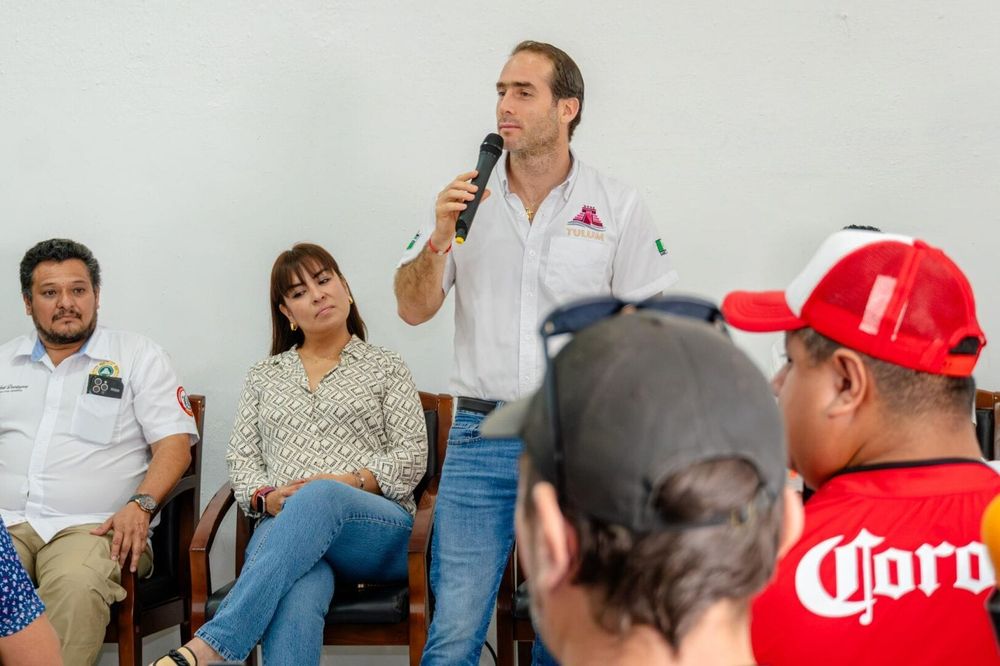
Rubén Gómez, legal representative of Zamna Group México, said the project was conceived in response to visibly lower tourist flows during months that have become increasingly difficult for the destination. He framed the initiative as a collective invitation rather than a proprietary brand extension.
“We are making a formal call to business owners, media outlets, and all sectors, municipal, state, and federal, to join this initiative and reactivate Tulum,” Gómez said. He added that the group sees the project as a way to give back to a municipality that has supported its growth.
Gómez also acknowledged that recent negative media coverage of Tulum, related to security concerns, environmental pressure, and overdevelopment, has affected perceptions. But he argued that the downturn is part of a broader tourism slowdown affecting multiple destinations in Mexico and abroad, not a failure attributable to local authorities alone.
And there was a clear message beneath the remarks: reputation can be reshaped if the narrative changes.

The trust fund at the heart of Tulum Todo el Año
Beyond the events themselves, the most structural element of the proposal is the creation of the Fideicomiso Turístico Tulum Todo el Año. This trust fund is envisioned as a public-private partnership aimed at supporting tourism development with a long-term horizon.
According to the presentation, the fideicomiso would launch with an initial investment of 4.6 million dollars, contributed by local small and medium-sized enterprises alongside larger companies operating in Tulum. The fund is described as a secure, transparent, and sustainable financial instrument intended to professionalize destination management.
Organizers estimate that the program could attract more than 227,000 visitors annually, generate a direct economic impact of approximately 270 million dollars, and support over 3,000 local jobs. Zamna Groupwould be responsible for designing and operating the annual events program, leveraging its experience with international festivals.
Those figures have not yet been independently verified, and like all projections, they depend on execution, coordination, and broader market conditions. Still, the scale of the ambition marks a shift from ad hoc event promotion toward something closer to destination governance.
A response to seasonality in Quintana Roo
Seasonality has long been a structural challenge for tourism economies in Quintana Roo. While Cancún, Playa del Carmen, and Tulum attract millions of visitors annually, occupancy rates and local income can drop sharply during shoulder and low seasons, especially in late summer and early fall.
In Tulum, the impact is amplified by higher operating costs, a strong reliance on international travelers, and an economy heavily concentrated in hospitality, food services, transportation, and entertainment. When visitor numbers fall, the effects ripple quickly through jobs, rents, and municipal revenue.
Tulum Todo el Año positions itself as a counterweight to that volatility. By offering a clear annual narrative, its promoters hope to give hotels, restaurants, airlines, and tour operators something they can align with months in advance.
This is where the project’s success or failure will likely be decided, not on stage lights or headliners, but on coordination behind the scenes.
Reframing Tulum’s global image
For years, Tulum’s international image has oscillated between bohemian escape, party capital, and cautionary tale of rapid growth. The plan’s architects argue that the destination is often reduced to a single experience, when in reality it hosts a complex mix of culture, nature, gastronomy, and innovation.
By integrating cinema, wellness, ecotourism, and technology into the calendar, Tulum Todo el Año attempts to tell a more layered story. One that might appeal to different demographics, from digital nomads and wellness travelers to regional visitors and culture-focused tourists.
There is also an implicit acknowledgment that excess-driven tourism has limits. The inclusion of detox, spirituality, and ecotourism themes, particularly in September, suggests an effort to align with global travel trends that favor sustainability and purpose-driven experiences.
Whether that alignment translates into measurable change remains an open question.
A call for collective ownership
One of the strongest themes in the presentation was the insistence that Tulum Todo el Año is not meant to be owned by a single company. The proposed fideicomiso is designed to bring together governments, hoteliers, restaurateurs, entrepreneurs, and cultural actors under a shared framework.
The founders described it as a new value pact for the destination. Not just an events calendar, but a governance experiment that could redefine how tourism development decisions are made in Tulum.
This approach reflects a growing recognition in Mexico that destinations cannot rely indefinitely on organic growth. They require planning, data, and cooperation across sectors that do not always share incentives.
As The Tulum Times has reported in other contexts, those conversations are often difficult. But they are increasingly unavoidable.
What success would actually look like
If Tulum Todo el Año succeeds, the most visible change may not be sold-out festivals, but quieter indicators. More stable employment contracts. Fewer seasonal business closures. A tourism narrative that feels less reactive and more intentional.
If it fails, it may reinforce skepticism toward large-scale initiatives led by private actors, especially in a town where residents are already wary of promises tied to growth.
Either way, the project sets a marker. It signals that parts of Tulum’s business community are ready to experiment with new models rather than wait for the next high season to solve old problems.
“Tulum is ready to write a new tourism narrative, more inclusive, cultural, and sustainable,” the founding team of Zamna Group said during the launch.
The line sounds aspirational. But in a destination shaped by cycles, aspiration is often the first step toward change.
As 2026 approaches, the challenge for Tulum Todo el Año will be turning concept into coordination. Calendars must align, trust must be built, and the benefits must extend beyond headline events to neighborhoods, workers, and small businesses across Tulum and the wider Riviera Maya.
The initiative arrives at a moment when Mexico’s tourism model is under scrutiny, and when destinations like Tulum are being asked not just how many visitors they attract, but what kind of future they are building.
Whether Tulum Todo el Año becomes a blueprint or a cautionary example will depend on what happens after the presentations end and the planning begins.
We’d love to hear your thoughts. Join the conversation on The Tulum Times’ social media.
Can a yearlong cultural strategy truly change the economic rhythm of Tulum?