

Tulum. A name that evokes turquoise horizons, sun-drenched afternoons, and dreams scented with sea breeze. But beneath that idyllic shimmer lies a quieter story, one not told in postcards, but in court documents, bulldozer tracks, and mangrove stumps.
At the heart of this tale is Antonella Vázquez.
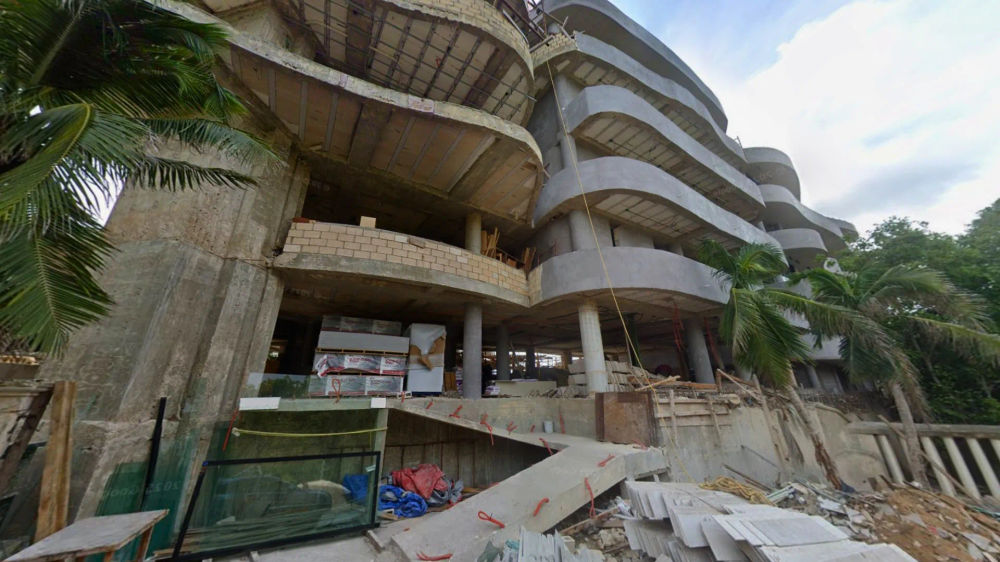
She wasn’t looking for trouble when she stumbled upon it in November 2023. Just following a whisper. A word, really: Adamar. A luxury condo complex is rising near the coast. Nothing out of the ordinary, until the whispers thickened into something darker. No permits. No paperwork. Just cranes where palm trees once danced.
The Paperless Rise of Adamar
Antonella represents DMAS, Defendiendo el Derecho a un Medio Ambiente Sano. She asked questions, filed requests, and waited. The answers she received were worse than the rumors. Adamar lacked a construction license. No urban congruence certificate. And most critically, no Manifestación de Impacto Ambiental (MIA), the non-negotiable prerequisite for any coastal development in Mexico.
Still, the billboards were bold: seven floors, 24 luxury units, each priced at over $800,000 USD. A mirage in concrete.
“We filed a citizen complaint on January 18, 2024,” Antonella recounts. “Authorities stayed silent. So we filed an amparo.” That legal instrument forced the local government to respond. They claimed Adamar had all the necessary documents. But the construction license they cited? Dated February 2024, over three months after work had already begun.
A Judge Intervenes, But the Concrete Keeps Pouring
The Ninth District Court judge saw the inconsistency and granted a temporary suspension of all construction. On paper, the machines should have stopped. On-site, they didn’t.
By March, Adamar had already reached its seventh floor.
“The developer admitted to the violation,” Antonella explains. “Profepa fined them and gave them 70 days to retroactively submit a MIA. They complied. Then the judge considered the complaint resolved. But how could the municipality grant a building license without a prior MIA? That’s not a footnote, it’s a fundamental breach.”
A Wider Shadow on the Shore
Then came the twist. During a beachside visit, DMAS approached Adamar from the coast. What they saw next turned a troubling case into something bigger.
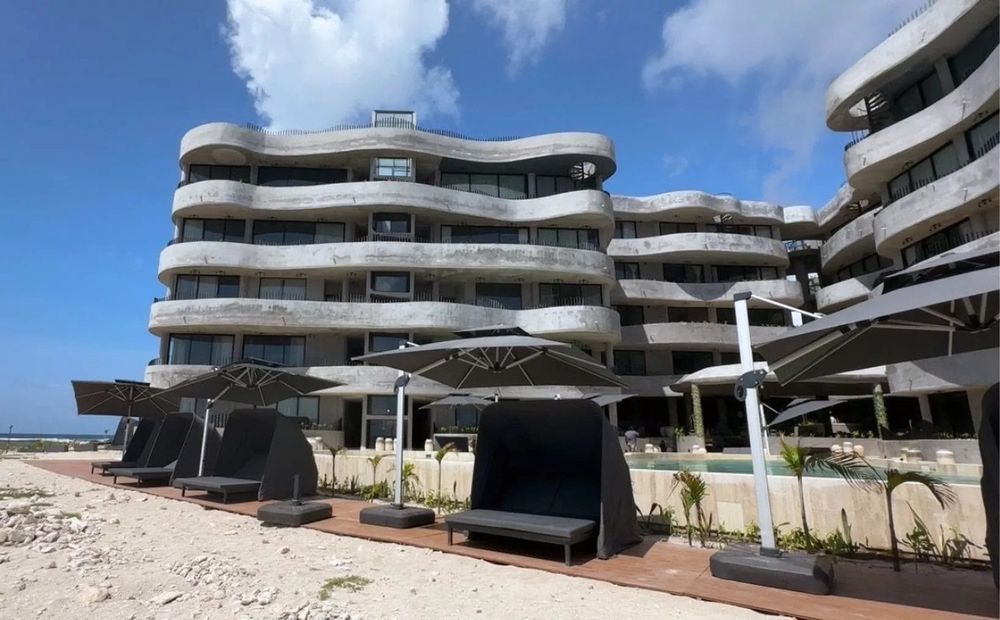
Adjacent to Adamar stood another project, even closer to the sea, MAIIM. Vast. Gleaming. And unsettlingly close to the Federal Maritime Zone, violating every guideline on coastal buffer zones.
Another amparo was filed. This time, the pattern emerged with brutal clarity.
The Pattern Behind the Projects
The developer operated through different legal identities. Adamar was built by Desarrollos Tulum Dieciséis. MAIIM by Promotora de Incentivos México. But behind the curtain? Same legal representative. Same address. Same strategy.
What looked like isolated irregularities now took the shape of a system.
MAIIM: A Timeline of Irregularities
On August 9, 2024, DMAS filed an amparo registered under number 952/2024-A-2. It challenged the actions of both local and federal authorities, alleging due process violations in environmental oversight. At the core of the case was the same ghost: the missing MIA.
According to the Ley General del Equilibrio Ecológico y la Protección al Ambiente (LGEEPA), a MIA is not optional. It’s a scientific and legal foundation, a diagnosis and a plan. Without it, there is no baseline for construction, no way to measure or mitigate impact. No legal right to build.
Yet MAIIM’s construction had already begun. And local officials had turned a blind eye.

A Cascade of Dubious Approvals
On September 12, 2021, Tulum’s Dirección General de Ordenamiento Ambiental, Urbano y Cambio Climático granted a zoning change to High-Density Residential (H4). Then, on June 17, 2022, the Dirección General de Desarrollo Territorial Urbano Sustentable issued the building license. Finally, on October 30, 2023, the state added a certificate of urban congruence.
None of these approvals should have existed without a prior MIA. Yet they did.
The Judge’s Verdict
In May 2025, Judge Alonso Robles Cuétara delivered his ruling. It was unequivocal.
“The zoning certificate, construction license, and the urban congruence certificate lack the essential prerequisite for their issuance,” he wrote. “They were issued in direct violation of both municipal and state law.”
He cited Article 28, Section IX of LGEEPA and Article 4 of the Mexican Constitution, reaffirming that environmental impact evaluations must precede development, especially in fragile coastal zones.
“The evaluation determines whether a project is viable,” the ruling stated, “and under what conditions it should proceed. That process never occurred in this case.”
The judge nullified every permit tied to MAIIM.
Neró: The Hydra’s Next Head
Victory, it turned out, had a very short shelf life.
When DMAS returned to MAIIM to film a video explaining the legal triumph, they noticed another construction site right next door. A new name: Neró. But the cast and script were painfully familiar.
“They had already reached the fourth or fifth floor,” Antonella says. “We discovered they’d cleared mangrove. On July 18, Semarnat denied their MIA. But construction carried on.”
Profepa issued a temporary suspension. The developer confessed and was fined 200,000 pesos, an absurd fee considering each unit sells for around 20 million pesos. Then, the story continued. Same rhythm. Same defiance.
“That’s how it went with MAIIM and Adamar,” Antonella sighs. “And now Neró. They never stop.”
The Waiting Hour
August 20 will mark the next hearing in the Adamar case. For DMAS, and for Tulum, it could be pivotal. Or it could be just another morning where concrete wins over conscience, where mangrove gives way to marble, where blueprints speak louder than laws.
What do you think? Join the conversation on The Tulum Times’ social media channels and help amplify the stories behind the skyline.