

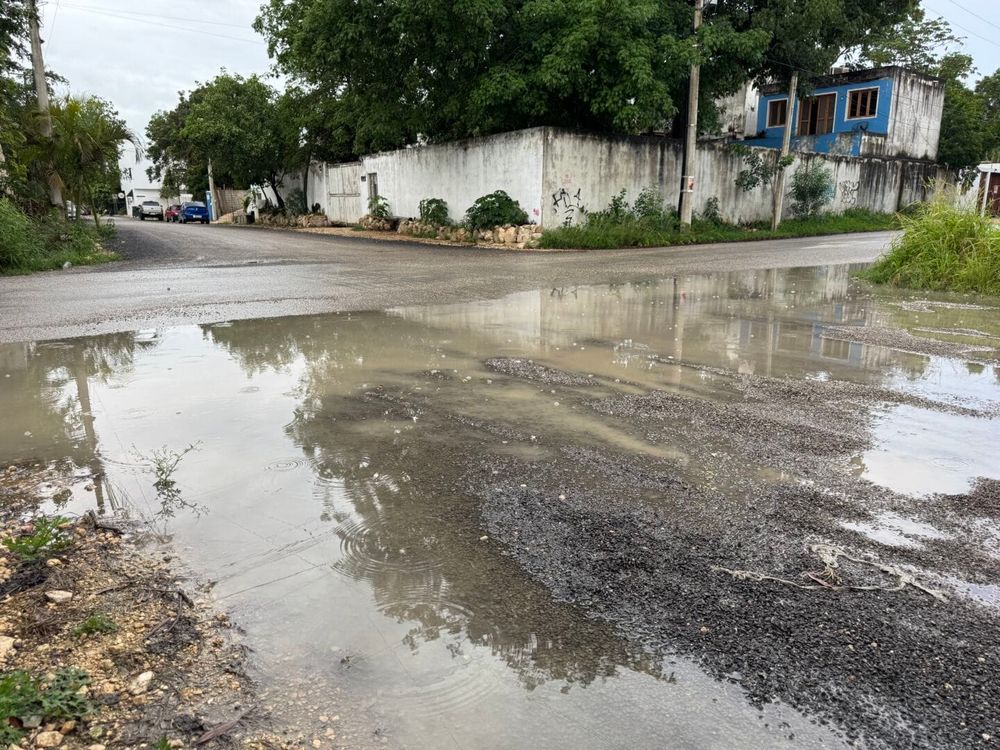
The colony of La Veleta, once envisioned as a showcase for sustainable urban growth in Tulum, now stands as a paradox: the construction cranes never stop, but the streets crumble beneath them. Just a few blocks from downtown, this fast-growing neighborhood has become a muddy maze of potholes, stagnant water, and frustration for residents and visitors alike.
A neighborhood caught between luxury and neglect
Over the past five years, La Veleta has transformed into one of Tulum’s hottest real estate zones, attracting developers who have filled its narrow streets with condominiums, boutique hotels, and vacation rentals. Yet public infrastructure appears frozen in time. The area still lacks proper drainage, consistent street lighting, and continuous sidewalks, creating a sharp contrast with the sleek marketing campaigns that sell Tulum as a model of luxury and sustainability.
When it rains, the problems multiply. Streets turn into shallow rivers, and puddles linger for days. “We pay our taxes like everyone else, but nobody takes us into account,” said Javier Manzano, a resident of 10 Sur Street. “There are days when even taxis refuse to come in. It’s sad that in such a famous destination we have to drive trucks just to get home.”
That frustration echoes across the neighborhood. Drivers from the Tiburones del Caribe transport union say the conditions are eating into their earnings. “Every week something breaks, shocks, tires, rims,” said one of them. “It’s a constant expense, and nobody takes responsibility. When it rains, you don’t even know which way to go.”

Development without direction
According to urban planners consulted by The Tulum Times, La Veleta’s situation reflects a wider issue across Quintana Roo’s Riviera Maya corridor: the lack of synchronized planning between private development and public infrastructure. As investment pours in, local governments often struggle to keep pace with basic services.
La Veleta’s unpaved roads and insufficient drainage systems expose the gap between economic ambition and civic reality. What should be a model neighborhood for sustainable urbanization now appears more like a warning sign of what unchecked growth can bring.
Municipal records show that several infrastructure projects were proposed in previous administrations, including a plan to pave key routes connecting La Veleta to Avenida Kukulkán and the central area. However, few of those projects have materialized, leaving the community dependent on temporary fixes and sporadic maintenance efforts.
Voices from the ground
Residents say they’ve submitted formal complaints to the Dirección de Obras Públicas, the municipal office responsible for public works, but have received no official response. Some neighbors have organized informal maintenance days, pooling resources to fill potholes or redirect stormwater using gravel and sand.
“The authorities come when there’s an election or a photo opportunity,” said another resident, who preferred not to be named. “The rest of the year, we live surrounded by mud.”
For local businesses, the situation is equally challenging. Several boutique hotels in La Veleta report cancellations during the rainy season as visitors struggle to access their properties. Some have resorted to providing shuttle services or all-terrain vehicles for guests, a costly but necessary solution to preserve their reputation.

Investors face a credibility problem
Real estate analysts warn that persistent infrastructure failures could begin to affect investor confidence in Tulum’s property market, one of the fastest-growing in Mexico. Rising construction activity in La Veleta has pushed land values up, but the lack of reliable urban services could limit future returns.
“People come here expecting the Tulum they see in marketing campaigns, eco-chic, well-planned, connected,” explained a property consultant based in Playa del Carmen. “When they encounter roads that flood and streets without lights, it undermines the whole narrative.”
The contradiction is striking: developers promote La Veleta as a hub of modern living, yet its residents wade through mud to reach home. It’s an image that raises uncomfortable questions about how sustainable Tulum’s growth really is.
The cost of neglect
Beyond inconvenience, the decaying infrastructure also poses safety and environmental risks. Pooled water becomes a breeding ground for mosquitoes, while unpaved roads contribute to dust pollution during dry months. The cumulative effect, residents say, erodes not only their quality of life but also the long-term value of their properties.
Tulum’s municipal government has not issued a detailed public response regarding current or upcoming works in La Veleta. Meanwhile, social media groups of residents have become informal watchdogs, sharing videos of flooded streets and tagging local officials in hopes of prompting action.
As one post recently put it: “We live in the most talked-about town in the Caribbean, yet our streets look like a forgotten village.”
Between promise and accountability
La Veleta’s predicament is not unique. Across Quintana Roo, rapid development often outpaces public infrastructure, revealing the limits of municipal budgets and the absence of coherent urban planning. Yet La Veleta’s visibility, its proximity to downtown and its concentration of foreign investment, makes its decay particularly symbolic.
If the current trend continues, Tulum risks undermining its own brand as an international destination for design, wellness, and sustainability. The mismatch between private prosperity and public neglect could define the next chapter of its urban story.
For now, residents continue to wait for visible action, hoping that local authorities will turn the spotlight from promotion to planning.
La Veleta may still represent opportunity, but it increasingly embodies a question rather than an answer.
Tulum’s transformation shows how progress without planning can lead to decay in plain sight. We’d love to hear your thoughts. Join the conversation on The Tulum Times’ social media.
Could Tulum’s growth be sustainable without a stronger commitment to public infrastructure?