
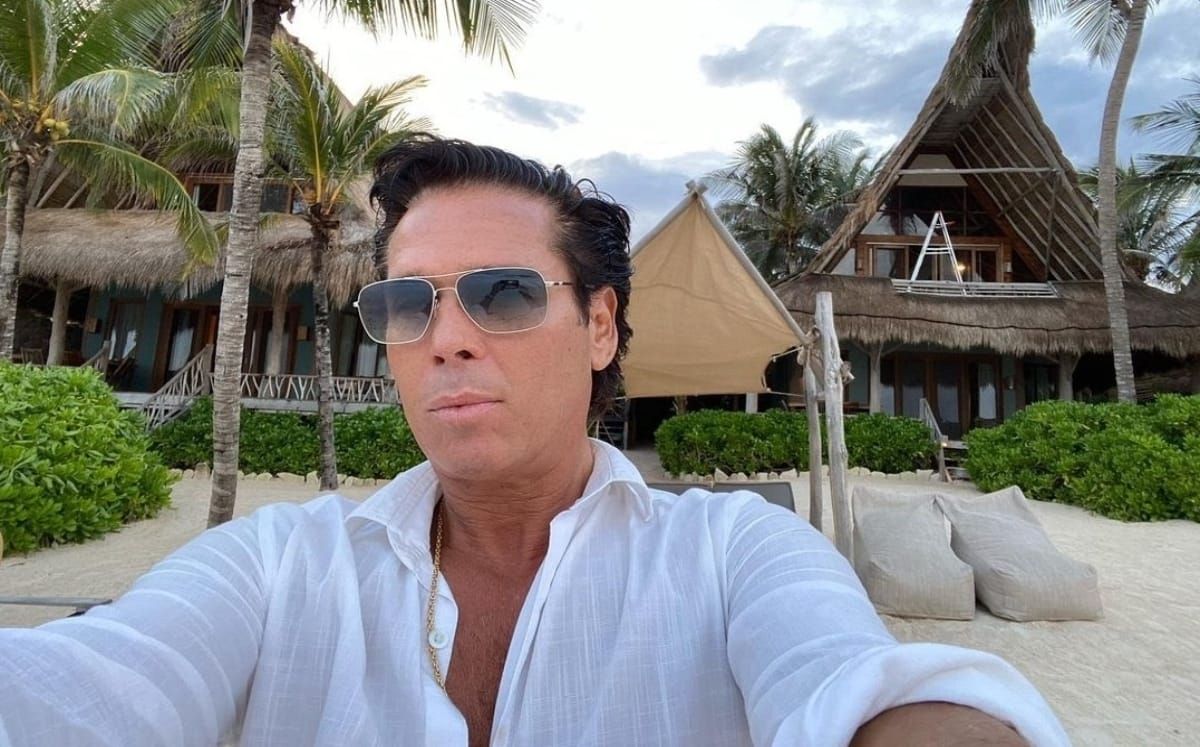
In the thick of Tulum’s sharpest tourism downturn in recent memory, a familiar name resurfaces, not in the brochures or beach clubs, but in the courtroom. Roberto Palazuelos, hotelier, actor, and self-styled lawyer, is locked in a legal battle to claim land inside a federally protected natural area. The same man long accused of fueling gentrification in the Riviera Maya now finds himself at odds with the very government whose inner workings he once seemed to navigate with ease.
And this time, the land in question sits inside the Tulum National Park, an area now guarded by the Mexican Army.
A park under siege
The dispute is not just about land. It’s about power, privilege, and a place that has become a symbol of both Mexico’s ecological fragility and its economic contradictions. According to court file 275/2025, Palazuelos has challenged a ruling from February 20 that denied him rights over the parcel. The case is under review by the Third Collegiate Circuit Court, where a panel of three magistrates, including former PRI deputy Berenice Polanco Córdoba, is expected to issue a definitive decision in the coming days.
If Palazuelos loses this round, there’s no further appeal. The ruling would be final.
But if there’s one thing the actor-turned-businessman has demonstrated over the years, it’s that he rarely backs down quietly.
How we got here
Palazuelos’ rise in Tulum mirrors the town’s transformation, from sleepy fishing village to international luxury magnet. Long before the concrete was poured, he was buying up land. By his own admission, he accessed “privileged information” that hinted at a federal development boom. He moved quickly, purchasing land at bargain prices. Some call it foresight. Others, insider advantage.
This was a man seen riding in a presidential aircraft and openly bragging about his ties to the children of former Mexican presidents. When he speaks of connections, it isn’t subtle.
His hotel, Diamante K, has become infamous for pricing that reflects the town’s unchecked inflation. During high season, rooms exceeded 30,000 pesos a night, a flashpoint for locals watching their hometown morph into something unrecognizable.
And yet, even as prices soared, the infrastructure strained. The same people priced out of beachfront housing now serve cocktails to visitors who pay more in one night than many earn in a month.

When paradise becomes private
At the heart of this case is a troubling trend: the privatization of paradise. Protected areas, meant to preserve biodiversity and cultural heritage, are increasingly eyed by developers as the last frontier of profit. The National Commission of Natural Protected Areas (Conanp), the federal body tasked with safeguarding these spaces, is now in direct conflict with one of Mexico’s most recognizable celebrities.
But the terrain isn’t just environmental, it’s political. Palazuelos once ran as a Movimiento Ciudadano Senate candidate. He calls himself a lawyer but doesn’t litigate. He’s a brand more than a professional, and the brand thrives on controversy.
That controversy now takes legal form, as his appeal presses forward. And the context couldn’t be more charged.
Tulum in crisis
Tourists are still arriving, but they’re not staying as long, nor spending as much. Local businesses report a sharp decline in revenue, blaming inflated service prices, oversaturation, and the loss of Tulum’s original charm. The army patrols the beaches, and construction dust hangs in the air.
And in this backdrop of economic uncertainty, Palazuelos’ name reappears, not as a savior, but as a symbol.
“People talk about high prices like they fell from the sky,” says a local vendor near Playa Pescadores. “But the truth is, some built that bubble.”
Whether it bursts or holds may depend on more than just hotel rates.

What’s really at stake
Beyond the legal jargon and court procedures lies a deeper question: Who gets to own paradise? And at what cost? The Tulum National Park is not just a swath of land, it’s a space of memory, ecology, and identity. Its encroachment is not just a technical violation, but an erosion of something harder to quantify.
If the court sides against Palazuelos, it could signal a new era of enforcement, a rare check against elite impunity in Quintana Roo. But if he wins, it may reinforce a growing belief that the rules are different for the powerful.
Either way, the case has captured attention far beyond Tulum. For many, it’s not just about one man’s ambitions, but a reflection of everything the Riviera Maya is becoming, for better or worse.
A quiet cliffside parable
There’s a stretch of rocky coastline near the national park where local kids used to cliff jump into the sea. It wasn’t much, just a natural ledge, some deep water, and a bit of courage. That spot is now fenced off. A private “eco-resort” claims it as part of its property.
No signs. No locals. Just silence.
Stories like this don’t make the headlines. But they make the place. And they remind us that the battle for land in Tulum isn’t always waged in courtrooms. Sometimes, it’s a slow erasure, one fence at a time.

The final verdict approaches
The Tulum Times will be closely following the outcome of this legal fight, not just for what it means for Roberto Palazuelos, but for what it means for the future of conservation in Mexico’s most coveted coastal region.
If the court rules against him, it may be a small but potent sign that even in Tulum, the land can say “no.”
We’d love to hear your thoughts. Join the conversation on The Tulum Times’ social media.
What do you think: should figures like Palazuelos be allowed to develop inside protected areas, or has Tulum already paid too high a price?