

On World Fisherman’s Day, Quintana Roo Governor Mara Lezama Espinosa announced an investment exceeding 8 million pesos to support fishing and aquaculture producers across four municipalities, reinforcing what state officials described as a long-term strategy to improve productivity, income stability, and sustainability in coastal communities.
The support was delivered through the Impulso a la Productividad de la Pesca y la Acuacultura program, operated by the Secretariat of Agricultural, Rural, and Fisheries Development, known by its Spanish acronym SEDARPE. Beneficiaries include producers from Bacalar, Othón P. Blanco, Felipe Carrillo Puerto, and Tulum.
The announcement was made during a ceremony held at the Fuente del Pescador, a site traditionally associated with the fishing sector, where state authorities gathered to mark World Fishermen’s Day and recognize the role of cooperatives and small-scale producers in Quintana Roo’s coastal economy.

Equipment delivery aimed at boosting daily operations
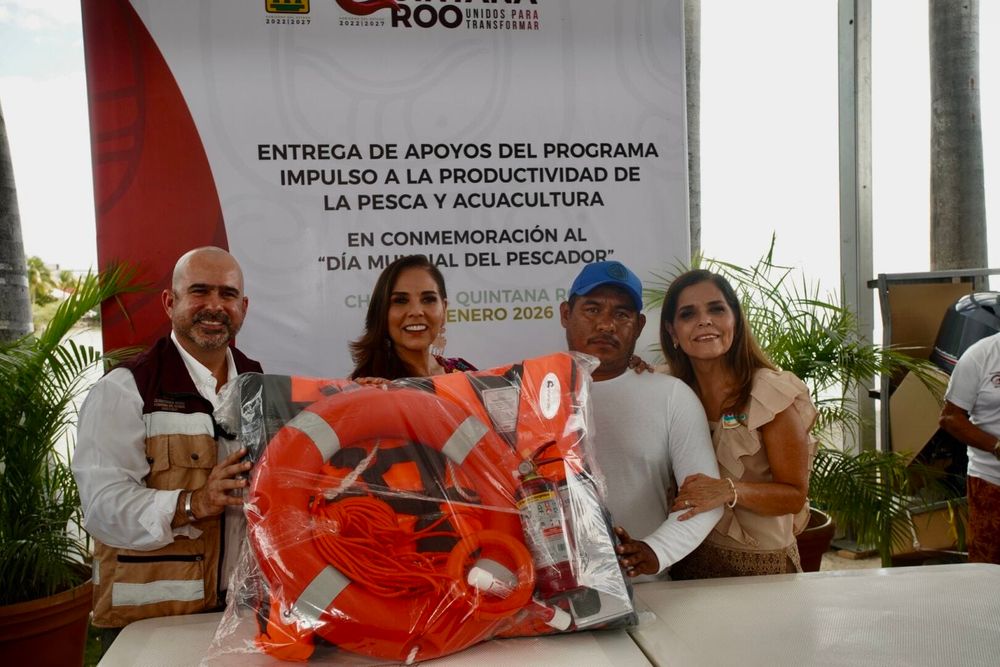
According to state officials, the investment focused on tangible equipment designed to improve daily fishing operations and maritime safety. Producers received four-stroke ecological motors, small fishing vessels, trailers, safety gear, GPS navigation equipment, and industrial coolers intended to preserve catch quality and reduce post-harvest losses.
Governor Lezama emphasized that the funds originated from public resources and were allocated directly to producers rather than intermediaries. She described the initiative as a redistribution of public money back into communities that depend on fishing as a primary source of income.
During her remarks, the governor said the administration views spending on fisheries, agriculture, and cooperatives not as an expense but as a long-term investment in livelihoods, safety, and future economic resilience. The equipment, she added, is expected to strengthen household incomes while also improving working conditions at sea.

A decade without comparable support
SEDARPE Secretary Jorge Carlos Aguilar Osorio noted that the fishing sector had not received financial support of this scale in more than ten years. He said the program was designed to address long-standing gaps in infrastructure and safety that have limited productivity in many coastal communities.
Aguilar Osorio explained that the initiative prioritizes essential inputs such as maritime safety equipment, fishing gear, and basic infrastructure, rather than short-term subsidies. The goal, he said, is to improve both productivity and overall well-being for fishing families.
He also acknowledged the role of the state’s 25 registered fishing cooperatives, congratulating their members on World Fisherman’s Day and recognizing their contribution to food security and local economies.
Sustainability and species protection at the center
State officials stressed that the productivity push is paired with environmental responsibility. Aguilar Osorio said Quintana Roo continues to promote sustainable fishing practices, including respecting minimum catch sizes and avoiding the capture of egg-bearing females.
According to the secretariat, these measures are intended to preserve marine species while ensuring the long-term viability of the fishing industry. The administration has framed sustainability not as a restriction but as a necessary condition for maintaining income opportunities for future generations.
This approach aligns with broader state policies aimed at balancing economic activity with environmental protection, particularly in regions where tourism, fishing, and conservation interests intersect.
Anti-corruption framework and public spending priorities
Governor Lezama used the event to reiterate that her administration is pursuing a different model of governance, one focused on combating corruption to maximize the impact of public spending. She said reducing misuse of funds allows the state to invest more broadly in public infrastructure, including schools, hospitals, and community facilities.
She also referenced coordination with the federal government to improve access to higher-level medical services, framing fisheries investment as part of a wider strategy to strengthen social development alongside economic activity.
While the ceremony centered on fishing, the message extended beyond the sector, positioning the program within a larger narrative of public accountability and shared prosperity.
Regional reach across southern Quintana Roo
The inclusion of producers from Bacalar, Felipe Carrillo Puerto, Othón P. Blanco, and Tulum highlights the geographic spread of the initiative. These municipalities include both inland lagoon systems and coastal fishing zones, each with distinct challenges related to access, infrastructure, and market integration.
By distributing support across multiple regions, the state aims to reduce disparities between fishing communities and ensure that smaller cooperatives are not left behind. Officials indicated that the program is expected to continue in future budget cycles, though no specific timelines or additional funding amounts were announced.
A subtle but notable aspect of the event was the emphasis on safety equipment, an area often overlooked in small-scale fisheries despite high occupational risk. GPS units and safety gear are expected to reduce accidents and improve response times in emergencies.
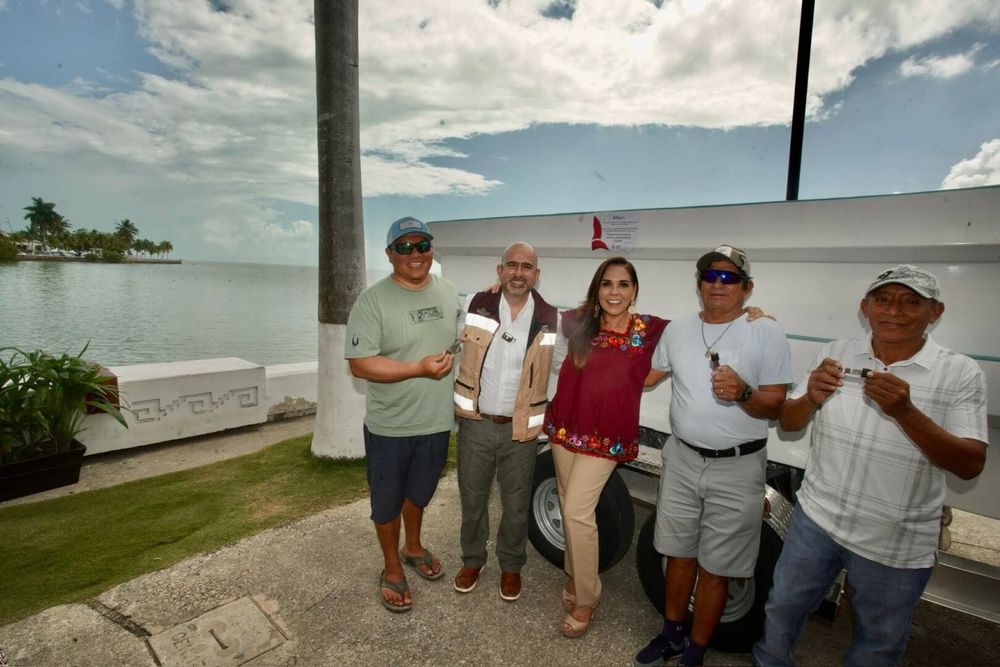
Officials and cooperative leaders attend the ceremony
Several state and sector representatives attended the ceremony, including Baltazar Gómez Catzín, president of the Federation of Regional Cooperative Societies of the Fishing Industries of Quintana Roo.
Also present were Verónica Lezama Espinosa, honorary president of the Quintana Roo DIF system; Reyna Arceo Rosado, head of the Secretariat for Anti-Corruption and Good Governance; and Ángel Álvarez Cervera, president of the State Congress Commission on Rural and Fisheries Development.
Municipal representation included Daniel Isaí Linares, attending on behalf of the Othón P. Blanco city government.
Why the investment matters beyond fishing
Fishing remains a critical economic activity in many parts of southern Quintana Roo, particularly where alternative employment options are limited. State data consistently shows that small-scale fisheries support entire family networks, from harvesting to processing and local sales.
By focusing on equipment rather than cash transfers, the program seeks to create durable improvements that extend beyond a single season. The approach reflects a broader shift toward capacity-building rather than short-term relief.
From an editorial standpoint, the emphasis on long-delayed investment underscores how infrastructure gaps can persist in primary sectors even in regions closely associated with tourism-driven growth.
What remains at stake
As fuel costs, climate variability, and market pressures continue to challenge small-scale fisheries, the effectiveness of this investment will depend on follow-up, maintenance, and continued support for sustainable practices.
For communities in Bacalar, Felipe Carrillo Puerto, Othón P. Blanco, and Tulum, the immediate benefit lies in safer and more efficient operations. The longer-term question is whether programs like Impulso a la Productividad de la Pesca y la Acuacultura can be sustained and expanded to meet evolving needs.
The outcome will shape not only fishing productivity but also food security and community stability across coastal Quintana Roo, a topic The Tulum Times will continue to follow closely as implementation unfolds.
We’d love to hear your thoughts. Join the conversation on The Tulum Times’ social media.
How should Quintana Roo measure the long-term success of this fisheries investment?