
For years, Alejandra Castillo’s home in the Riviera Maya was more than a roof and walls. It was her retreat from the chaos of city life. A white-stone refuge nestled among whispering palms, where time loosened its grip and the wind strolled freely through open windows. When she bought the house seven years ago, a modest property in the heart of Tulum, she saw it as both a long-term investment and a personal haven. It was her quiet rebellion against the pace of the world.
She never imagined that selling it would feel like shouting into a void.
“I thought it would be simple,” she says now, seated beneath a tamarind tree not far from where her house once stood. Her voice holds the disbelief of someone who expected the process to be transactional, not existential. “I didn’t expect it to feel like drowning.”
The decision to sell didn’t come lightly. After several personal and professional shifts, a job that demanded mobility, a new chapter in her life, she knew it was time. The house had been her refuge, her canvas. But now, it was a closed chapter. What she hadn’t expected was how hard it would be to turn the page.
A Market That Doesn’t Wait
Trying to sell a home in the Riviera Maya is not for the faint of heart. What was once a sleepy coastal escape has exploded into one of the most dynamic and competitive real estate markets in Latin America. Buyers arrive from around the world, often cash-ready, digitally savvy, and supported by professional teams. Sellers, however, especially individuals like Alejandra, are left to navigate the terrain alone.
She started as most do: with optimism. She posted photos of the house on mainstream property websites, added a short description, and waited. Days passed. Then weeks.
“I kept refreshing the page,” she says. “But it was like I didn’t exist. No calls. No emails. Nothing.”
Her listing drowned in an ocean of generic ads. She had unknowingly entered a digital thunderdome of oversaturated portals, each one filled with similar-looking properties fighting for the same handful of eyeballs. Her house wasn’t the problem. The problem was visibility. Or rather, the lack of it.
And she was completely alone.
Trial, Error, and Exhaustion
Alejandra tried to adapt. She retook the photos, this time with a newer phone, and added more detail to the listing. But the response didn’t change. She had no real strategy, no digital expertise, and no idea how to position her property in an algorithmic jungle.
“Some platforms were expensive. Others didn’t generate a single lead,” she explains. “I felt like I was burning time and money with no return. Just guessing, and failing.”
Her post was only in Spanish. She hadn’t even considered translating it until a few confused foreign buyers reached out, asking for clarification. She realized, painfully, that her potential market had been cut in half by default. English wasn’t optional, it was essential.
Then came the idea of social media. Facebook groups, Instagram ads, boosted posts. A well-intentioned rabbit hole. Suddenly, she was expected to understand campaign objectives, audience segmentation, keyword usage, and ad budgets. “I had no idea what I was doing,” she says. “And I couldn’t afford to keep experimenting.”
Her day-to-day became an exhausting loop: replying to messages, copying and pasting photos, retyping square meters and property features again and again. The lack of structure turned every interaction into a time sink.
“I didn’t have a proper link to send. No clean webpage. Everything was scattered, photos in my phone, floorplans in my email, legal documents on a USB. I kept making mistakes. Sending outdated information. Losing track of conversations.”
What had begun as an exciting new chapter started to feel like a slow unraveling.
“I thought maybe I should just give up. Drop the price. Hand it to a realtor, even if they took a big cut. But I didn’t want to give up control. This was still my home. I wanted to tell its story properly.”
The Turning Point
One afternoon, over coffee, a friend in the real estate business suggested something different: a platform called Riviera Maya Residences. No agents. No commissions. Just tools, designed for people like Alejandra.
“It sounded too good to be true. But I had tried everything else, so I gave it a shot.”
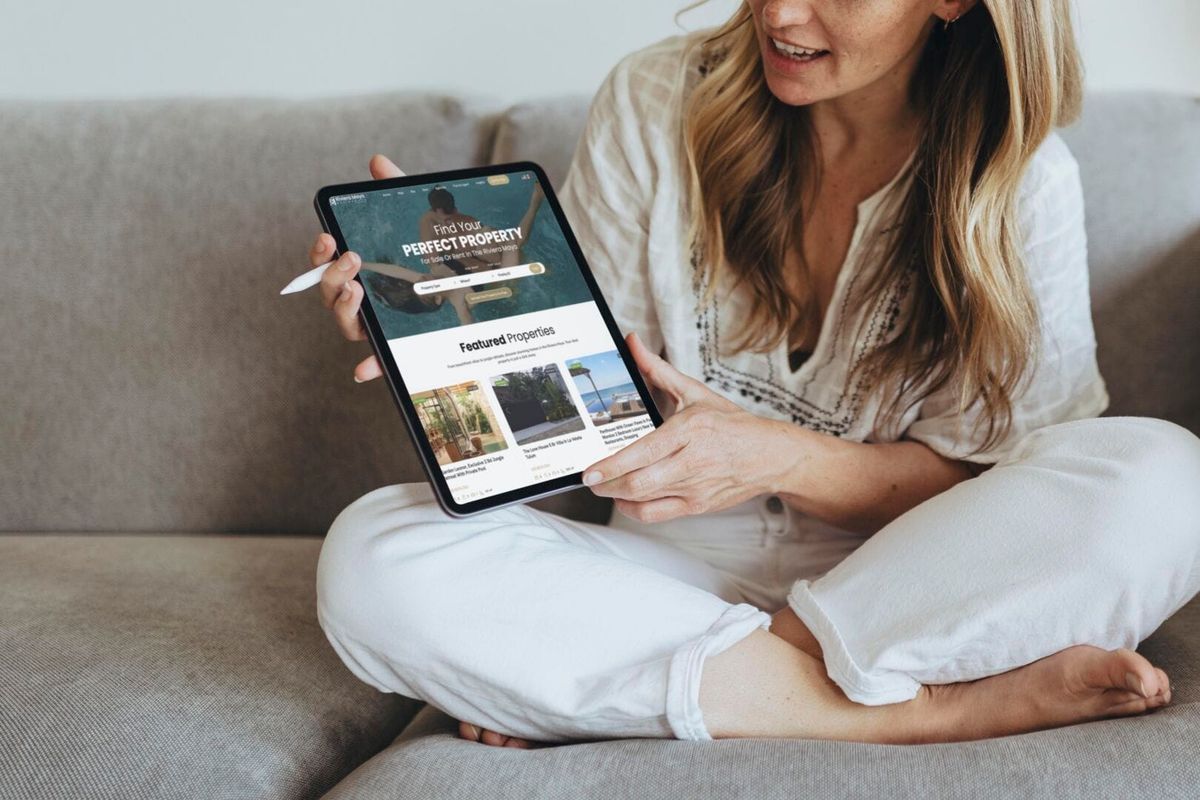
She registered in minutes. The interface was clean, intuitive. She uploaded her images, added her story in both English and Spanish, attached the floorplans, and filled in technical details she hadn’t even thought to include before.
The platform automatically generated a professional, custom webpage with a unique URL for her property. It looked elegant, reliable, something she was proud to share. No more sending people to cluttered portals or patching together explanations.
“I finally had something solid. I wasn’t just throwing info at people anymore. I was presenting something that looked professional and felt like me.”
She used the link to run a modest Facebook campaign. The difference was immediate. Inquiries came from serious buyers. Conversations were clearer, smoother. People understood the property. Trusted it. Trusted her.
The platform also provided downloadable brochures, a PDF with photos, layout, specs, and contact information. “That PDF saved me,” she laughs. “It was one file, ready to send by email or WhatsApp. It made me look like I knew what I was doing.”
And then came something unexpected: emails from the platform itself. Short, practical tips. How to improve her photos. What kind of description generates clicks? How to prioritize the most important features.
“It was like having a quiet coach beside me. I didn’t feel so alone anymore.”
She started browsing listings from other sellers on the platform. She saw what worked, what didn’t. She revised her description. Changed her order of photos. Updated her headline. Everything started to click.
“I wasn’t just guessing anymore. I was learning. Adjusting. Getting better.”
A New Kind of Sale
Four months after relaunching her listing, she received a message from a Canadian buyer who had found her page. They scheduled a video call. He had already read everything. He had seen the plans. He had no questions.
Three weeks later, the sale was closed. No agents. No commission. No confusion. Just two people, a platform, and the right tools.
Rethinking the Real Estate Equation
Alejandra’s story is not unique. And that’s precisely the point. Thousands of individual sellers across the Riviera Maya find themselves in the same situation, overwhelmed, under-equipped, invisible. The market, as it stands, was built for agencies. But tools like Riviera Maya Residences are beginning to change that.
They offer more than functionality. They offer dignity. Control. And above all, clarity.
Now, Alejandra recommends the platform without hesitation.
“If you’re trying to sell and you feel lost,” she says, “don’t give up. Don’t hand over your story. Use the tools. Learn. Own your process.”
Her sale wasn’t just a transaction. It was a transformation.
And maybe that’s the quiet revolution happening here in the Riviera Maya: individuals reclaiming their voice, their agency, and their place in one of the world’s most competitive real estate markets.