
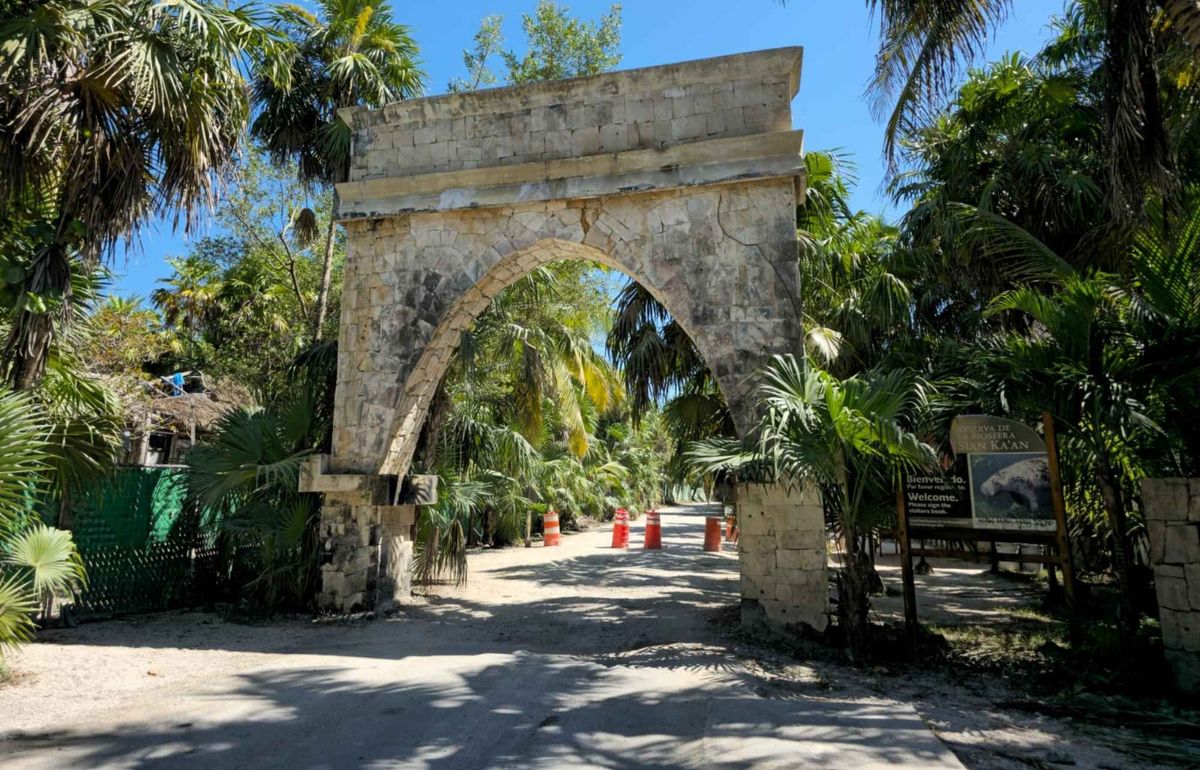
Sian Ka’an isn’t just a name whispered by tourists in search of serenity. It’s a biosphere pulsing with life, and, recently, with the devastation left behind by fire.
Between May and July this year, three separate parcels of land within the protected reserve in Quintana Roo went up in flames. Now, long after the smoke has cleared, the legal firestorm has begun. The Federal Attorney for Environmental Protection (Profepa) has stepped in with a heavy hand: three properties have been sealed off, marked with the unmistakable stamp of environmental violation.
And the message is clear, ashes don’t mean opportunity.
The Law Behind the Lockdown
Profepa’s action isn’t just symbolic. It’s anchored in Article 97 of the General Law on Sustainable Rural Development. This rule, often overlooked until it’s too late, prohibits any change in land use for at least 20 years after a fire, illegal logging, or deforestation, unless the native vegetation has demonstrably regenerated.
No crops. No cows. No concrete.
According to federal authorities, the regulation aims to ensure that recovery unfolds under a framework of sustainable forest management. Anything else? It’s a crime. Simple as that.
This isn’t a new issue for Quintana Roo. The Riviera Maya’s delicate ecological balance has always walked a tightrope between preservation and pressure. But the encroachment of agriculture, construction, and tourism has pushed that rope to its limits, especially in protected areas like Sian Ka’an.
The Weight of What Burns
Sian Ka’an, a UNESCO World Heritage Site, isn’t just another patch of jungle. It’s a tangled web of mangroves, wetlands, and rare species, many of which don’t exist anywhere else in Mexico, or the world.
So when fire touches this land, it scars more than just the soil.
Profepa’s decision might seem harsh to some landowners, but for conservationists, it’s a lifeline. By sealing the sites, the agency is taking a stand against a pattern that’s all too familiar: a fire burns, land lies vacant, and then, quietly, a new development sprouts.
Is it a coincidence, or calculation?
That’s a question many locals have started to ask. In Tulum, where unchecked growth often gallops ahead of regulation, skepticism isn’t rare, it’s survival.
Cautionary Flames and Consequences
“We’re not just losing trees,” said a conservation volunteer who asked to remain unnamed. “We’re losing ecosystems that take centuries to form.”
The Tulum Times spoke to several residents who live near the reserve, and their concern was palpable. One fisherman described seeing blackened trees where he used to find freshwater springs. Another recalled the day the sky turned orange.
But it isn’t just the visual damage that haunts them, it’s the fear of what comes next. The slow creep of bulldozers. The “For Sale” signs. The quiet normalization of loss.
Profepa’s move to enforce the 20-year restriction could slow this cycle, or at least shine a light on it.
It might even be the start of something rare in the region: real environmental accountability.
Between Regulation and Reality
Still, sealing land doesn’t make it safe.
Environmental laws in Mexico often look good on paper but struggle in practice. Enforcement is inconsistent, and local interests, often backed by serious money, have ways of navigating around red tape.
Sian Ka’an, for all its prestige, is not immune to these forces. In past years, it has seen illegal clearings, unsanctioned roads, and clandestine construction. The recent fires might add to that trend, or serve as a turning point.
But only if the regulations are upheld.
Only if the eyes stay open.
And only if citizens, those living in and around Tulum, are part of the solution.
Profepa has encouraged the public to report any forest fires or suspicious activity, offering the national hotline 01 800 INCENDIO (01 800 46 23 63 46) as a lifeline for environmental defense.
Echoes in the Jungle
There’s something tragic about seeing a protected reserve wounded. Like watching a museum burn, knowing that some of its artifacts can never be replaced.
And yet, within this moment, there’s also clarity.
The response from Profepa might be technical, but the motivation is deeply human: protect what can’t protect itself. Let the land breathe. Let it heal.
But healing takes time, and time requires patience.
In Sian Ka’an, the next 20 years might define the next 100.
What’s at Stake
As climate change continues to stir the pot across the Yucatán Peninsula, fire seasons could worsen. Land grabs could intensify. And the fragile green lungs of Mexico might not always recover.
For now, Profepa’s seals serve as a kind of warning label: nature isn’t for sale. At least, not officially.
Whether that warning holds depends not only on federal inspectors but on the collective will of the community.
And that’s where the story truly begins.
We’d love to hear your thoughts. Join the conversation on The Tulum Times’ social media.
What would it take for protected land to actually stay protected?