

You hear it before you see it, whispers of ruined vacations, murky waters, the stink of decay along Mexico’s famed Caribbean coast. And at the center of it all floats a misunderstood villain: sargassum seaweed. But here’s the twist, this isn’t the ecological apocalypse you’ve been led to fear. Not entirely. Because if you peel back the layers, past the headlines and beach snapshots, you’ll find a more complex, more human story. One of adaptation, of local resilience, and yes, of bureaucratic knots that still need untangling.
Sargassum Seaweed Season in Mexico: What You Should Know
David Ortiz Mena, a longtime voice in Quintana Roo’s tourism sector, doesn’t sugarcoat it, sargassum is real. It rolls in with the warm currents from April to September, uninvited yet predictable. But not all beaches are blanketed equally. Places like Isla Mujeres, Holbox, Bacalar, and parts of Cozumel barely flinch during the season. Tourists sipping mezcal in Bacalar’s emerald lagoon or diving into Holbox’s bioluminescent waters rarely cross paths with the brown tide.
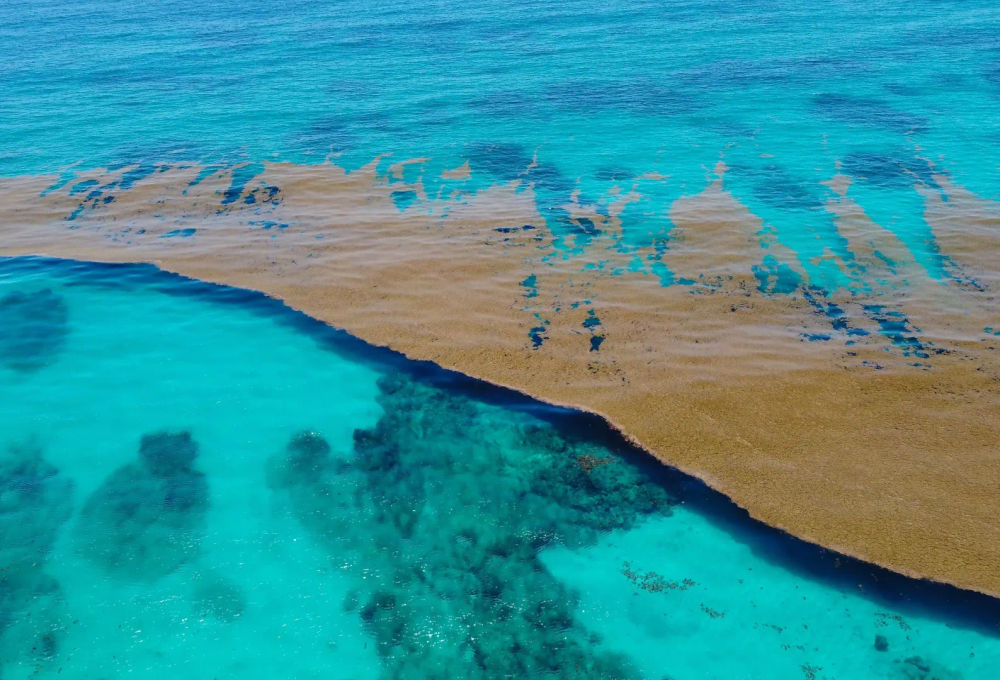
And even in the more affected zones, the Caribbean doesn’t lose its magic. Culture, jungle treks, sacred cenotes, ancestral cuisine, this isn’t a coastline that lives or dies by beach photos alone. If you’re wondering, is Tulum affected by sargassum?, Yes, but not constantly, and not irreparably.
Who Picks Up the Bill?
Here’s where the paradise postmark fades a little. At the same time, tourists may snap their selfies and rinse the sand off, someone’s footing the cleanup tab. That someone? Hotels. Resorts. Local workers are scraping the shore before breakfast. Meanwhile, municipal governments receive funds, money from Zofemat fees, environmental sanitation taxes, but the application of those resources is often tangled in red tape or lost in the shuffle.
It’s a case of mismatched burdens: the private sector shoulders the daily cost while the public sector struggles to deliver timely support like trying to bail out a canoe with a leaky bucket while the crew naps in the sun.
Tulum’s Fight Against the Tide
Tulum, ground zero for Instagram dreams and eco-bohemian escapes, isn’t sitting still. Since 2021, hotel owners have rallied behind a simple yet powerful idea, a trust fund. The goal? Transparent, efficient management of public funds meant to deal with sargassum seaweed.
Backed by the Hotel Associations of Tulum and the Riviera Maya, and with support from Mayor Diego Castañón, the initiative inches toward reality. But inching is the operative word. Everyone’s on board, sure. But good intentions don’t clear seaweed off the sand.
That’s why Ortiz Mena and others are pushing for concrete measures: designated, clearly marked disposal sites; local transfer stations near collection zones; and a commitment to keep public beaches, especially those that draw the crowds, clean and swimmable.
Emergency or Excuse?
There’s talk, loud talk in some corners, about declaring a state of emergency. Would it help? That’s up for debate. FONDEN, the federal disaster relief fund, no longer exists. But a state-level emergency fund, financed by cruise passenger fees, could step into the breach.
Still, emergency declarations carry risks. They can be hammers used where scalpels are needed, more political theater than a pragmatic solution. The real challenge lies not in the naming of the crisis, but in the day-to-day logistics of facing it head-on.
The Real Mexico: Beyond Seaweed
Sargassum seaweed isn’t going anywhere. Not this season, not the next. But neither is the ingenuity of the people living with it. The story of Quintana Roo’s coastline is not one of surrender, it’s a dance of adaptation. Like coral adjusting to tides, locals are learning to shift, to move resources, to stay resilient.

So yes, come for the beaches. But stay for the deeper beauty, the kind that doesn’t wash away when the sea turns gold.
Frequently Asked Questions About Sargassum in the Mexican Caribbean
When is sargassum season in Mexico?
Typically, sargassum arrives from April to September, though intensity varies year to year.
Is Tulum affected by sargassum in 2025?
Yes, but not consistently. The presence fluctuates, and local cleanup efforts, especially by hotels, help manage its impact.
What beaches in Mexico are free from sargassum?
Holbox, Bacalar, Isla Mujeres, and parts of Cozumel often report low or no sargassum presence.
Why is there so much seaweed in the Caribbean?
It’s a natural phenomenon exacerbated by changing ocean currents, climate shifts, and nutrient runoff. The seaweed, originating from the Sargasso Sea, travels thousands of kilometers.
Is it safe to swim during sargassum season?
Generally, yes, though heavy sargassum can make the experience unpleasant. Some areas may have skin irritants or sea lice associated with the algae.