

As seaweed drifts across the Caribbean coast each summer, few places face as much scrutiny as Tulum. This year, while thick sargassum blooms tested local infrastructure and patience, the town’s tourism industry has shown remarkable endurance. According to Mayor Diego Castañón Trejo, Tulum is projected to close 2025 with hotel occupancy near 90 percent, a figure that defies what he calls “a media crisis,” not a tourism one.
Historically, the months of August through October mark the slowest travel season in the Mexican Caribbean. But in 2025, the dip in Tulum’s visitor numbers has been modest, falling by only five to ten percent compared with the previous year. “This was the worst year for sargassum in Quintana Roo,” Castañón acknowledged after a visit by Governor Mara Lezama and federal Tourism Secretary Josefina Rodríguez. “But we are already working with the federal and state governments to solve it.”
What was confirmed today
The mayor’s statements came after a series of coordination meetings that brought together federal, state, and local officials in Tulum. Among the main topics were improvements to southern access to the Parque del Jaguar and its adjacent archaeological zone, projects now under federal review. “I thank the President, the Governor, and the Secretary for their attention. Whatever is decided will benefit visitors,” said Castañón.
He also addressed concerns about high accommodation prices, clarifying that many hotels are applying discounts of 40 to 60 percent during the off-season. The problem, he suggested, lies not in cost but in communication. “It’s supply and demand. Prices drop in low months, but many hotels fail to communicate their promotions. There is no tourism crisis, only a media crisis.”
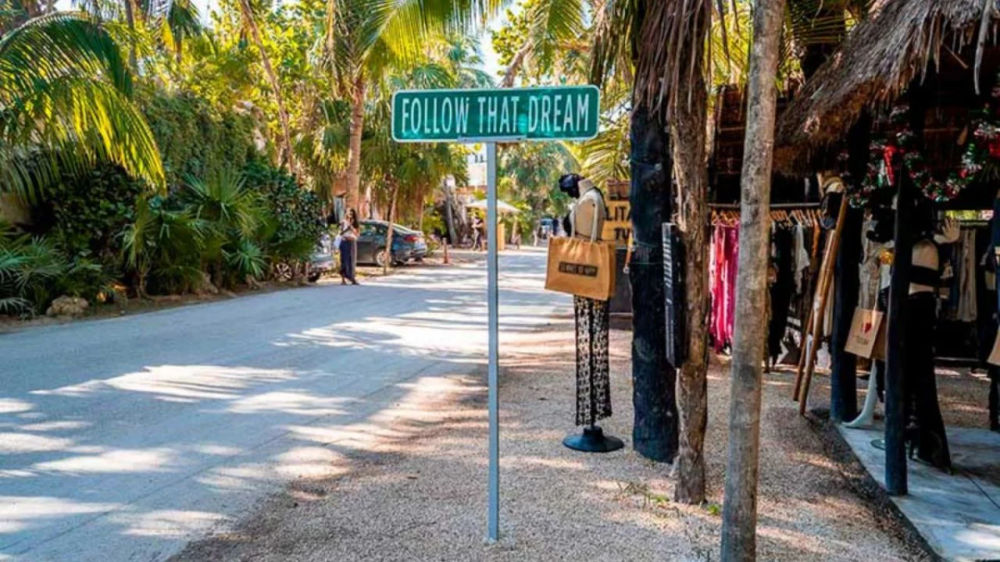
Local impact in Tulum and the Riviera Maya
For a destination whose brand depends heavily on global perception, such statements matter. In a region where headlines about sargassum can quickly go viral, perception often outpaces reality. Yet booking data tells a different story. Tulum expects nearly 80 percent occupancy in November and close to 90 percent in December, driven by international events such as Day Zero and Zamna, electronic music festivals that each attract 20,000 to 30,000 visitors annually.
“If we were in crisis, those festivals would not come,” said Castañón. “Tulum remains a global brand.”
The municipality currently counts around 11,800 registered hotel rooms, many of which collaborate closely with the local Hotel Association led by David Ortiz. Together, they are coordinating a year-end strategy to maintain momentum and prepare for 2026, when Mexico’s World Cup events are expected to draw even more international arrivals to the Caribbean coast.
What remains unclear and what comes next
While occupancy numbers look solid, the sustainability of growth continues to be a point of discussion. Seaweed collection, waste management, and public beach access have become recurring themes in Tulum’s governance. Castañón announced agreements with fifteen hoteliers to allow public access through private properties, expanding the number of entry points to the shoreline.
“The beaches belong to everyone, and no previous administration had achieved these agreements,” he said. “Now we are formalizing them with support from the Ministry of Tourism.”
Coordination with the Federal Maritime Zone Authority (Zofemat) has also intensified to ensure rights of way and enable new public corridors along the coast. “Zofemat is fully cooperative, and we are reviewing potential areas to open more access,” the mayor added.

Statements and perspectives
Local authorities point to a 60 percent reduction in reported crime compared with last year, a figure that has contributed to a stronger sense of safety among residents and visitors. At the same time, transportation reforms are underway. In collaboration with the State Mobility Institute, taxi fares are being standardized across the municipality, a move intended to avoid overcharging and protect tourists.
Castañón describes this as gradual but steady progress. “We’re moving step by step, with concrete agreements involving hoteliers, artisans, and transport operators. You don’t start from ten; you start from one, and little by little, we’ll see results.”
For residents, these developments could mean more inclusive access to tourism benefits. For visitors, they promise a more organized and transparent destination. “Tulum is not a trend,” said one hotel manager, “it’s a test of how global tourism adapts to local reality.”
Key figures and timelines
- 11,800 hotel rooms registered in the municipality
- 5–10% decrease in occupancy during the 2025 low season
- 80–90% projected occupancy in November–December 2025
- 60% drop in reported criminal incidents
- 15 hotels opening public beach access routes
- 20,000–30,000 visitors expected for Day Zero and Zamna festivals

Editorial reflection
The story of tourism in Tulum is no longer about whether the destination will survive external pressures, but how it manages perception in an era of constant scrutiny. Environmental challenges and digital narratives collide here more visibly than almost anywhere else in the Caribbean. The mayor’s phrase, “no tourism crisis, only a media one”, captures that tension.
What appears clear is that travelers continue to see Tulum not just as a getaway, but as a symbol of the evolving Mexican Caribbean, a place that faces its contradictions in full view of the world.
The Tulum Times has observed a growing trend: travelers are becoming more discerning, demanding transparency, sustainability, and truth behind the image. Whether Tulum’s leadership can meet that demand will define the next chapter of its global story.
Tourism in Tulum remains resilient, anchored by coordination among government, hotels, and communities. The challenge ahead lies in communication and environmental management as much as in infrastructure.
We’d love to hear your thoughts. Join the conversation on The Tulum Times’ social media.
Can Tulum balance global attention with local responsibility as it enters another record year for visitors?