

In the quiet kitchens of Quintana Roo, where woodsmoke curls around ancestral memory and recipes carry the weight of lineage, something rare is happening. Sustainable tourism in the Mexican Caribbean has taken a turn, one that veers away from the polished resorts and instead leads into the heart of community kitchens, where hands weathered by time are stirring the future.
It began not in a boardroom, but in the Second Extraordinary Session of the Committee for the Promotion of Gastronomy of Quintana Roo. There, alongside Airbnb and under the watchful eye of the state government, a call was made, not just for cooks, but for cultural keepers. Men and women of Mexican heritage, from municipalities like Benito Juárez, Playa del Carmen, Tulum, Felipe Carrillo Puerto, and José María Morelos, were invited to reclaim and professionalize their culinary traditions.

A Certification with Deep Roots
This wasn’t some generic cooking contest. Backed by a donation from Airbnb and orchestrated through the Conservatorio de la Cultura Gastronómica Mexicana (CCGM), the initiative offered official certification for traditional cooks, a document that doesn’t just hang on a wall but opens doors. It’s recognition from the Mexican government that your abuela’s sacred mole isn’t just good, it’s a cultural asset.
The criteria weren’t casual. Candidates had to be born in Quintana Roo, aged between 18 and 65 at the time of registration, and residing in one of the five designated municipalities. More than that, they had to be direct descendants of recognized traditional cooks, show demonstrable experience in preparing regional dishes, and meet a set of administrative requirements. It’s a bar set high on purpose, to honor the depth of what’s being preserved.

The Caste War Route: A Taste of Resistance
One of the initiative’s most potent impacts was seen along the historic Ruta de Guerra de Castas in Maya Ka’an. In these lands where rebellion once flared, culinary knowledge has endured like flame in coals. Now, thanks to this certification, cooperatives along the route can offer gastronomic experiences backed by official validation. It’s not just food, it’s identity, resistance, and service quality rolled into one tamal.
“Accrediting the skills of our traditional cooks is essential,” said Bernardo Cueto, Secretary of Tourism. “They are key to consolidating our culinary identity and represent a path for community development.” It’s not mere sentiment, it’s state strategy.
Cooking Up Competitive Advantage
The Master Plan for Sustainable Tourism in Quintana Roo 2030 recognizes gastronomy as more than flavor, it’s a tool for diversifying tourism. But it doesn’t stop at branding. The strategy pushes for collaboration across public, private, academic, and social sectors to elevate the state’s competitiveness. Under Governor Mara Lezama’s leadership, food isn’t a side dish, it’s a main course in the new tourism era.
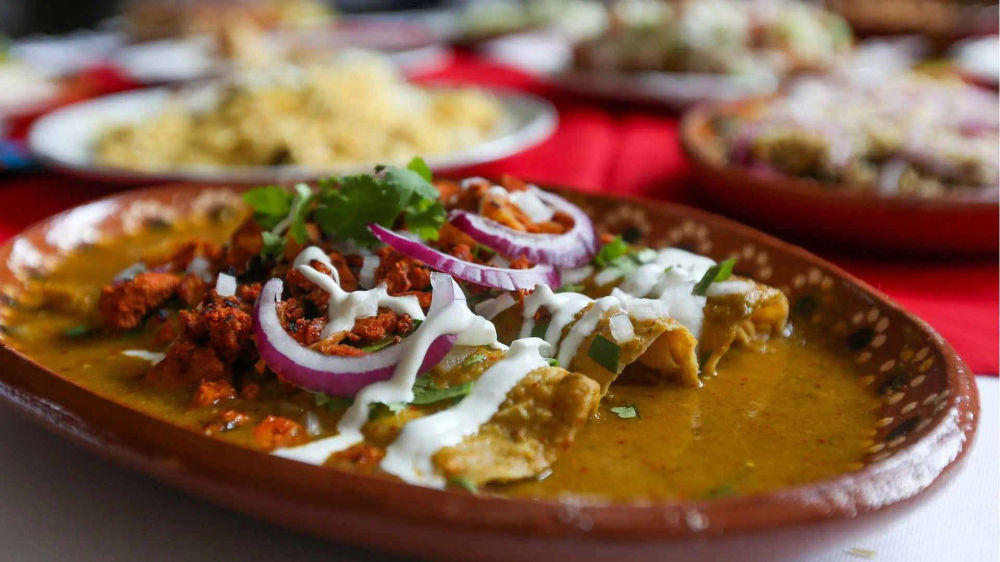
The strategy fuels cultural pride, employment, and local economic growth. Through culinary promotion, identity-building, and the creation of a regional inventory that catalogs ingredients, establishments, and certified traditional cooks, the program feeds more than tourists, it nourishes an entire state.
Culture as Currency
Airbnb isn’t just along for the ride, they’re investing in the wheel. “We know the best way to diversify tourism in the Mexican Caribbean is to open the door to its people and its kitchens,” said Sebastián Colín, Airbnb Mexico’s Director of Public Policy. And the numbers back him up. Data from CONCANACO shows local businesses in Quintana Roo receive 60% more customers thanks to Airbnb host recommendations, well above the national average. Even more compelling? Six out of ten micro and small enterprises that grow over 10% annually cite Airbnb as a key channel for attracting guests.
And here’s the real kicker: the tourism sector already contributes 87% of Quintana Roo’s GDP. In this context, empowering traditional cooks isn’t just cultural, it’s an economic strategy in action. It creates a ripple effect, from market stalls to family tables, from food carts to full-fledged culinary tours.

In Their Hands, History Lives
Dr. Gloria López Morales, president of the CCGM, perhaps said it best: “Mexico is a crucible of flavors, traditions, and customs woven into a unique culture. Within this world exists a vast community of women who carry our culinary heritage in their hands, hands that have passed down knowledge from generation to generation. Thanks to them, the great cuisine of this country remains alive. This certification validates that knowledge and backs it with a document issued by the Mexican government. It opens doors to economic, professional, and social advancement.”
This is the future of sustainable tourism in the Mexican Caribbean: not just in beaches or boardrooms, but in smoke-darkened kitchens where stories simmer alongside sauces. In every tortilla pressed and every dish served with memory, there’s an invitation, for travelers, for communities, for a different kind of prosperity.
The flame’s still burning. And thanks to these cooks, it’s catching.
We’d love to hear your thoughts, join the conversation on The Tulum Times’ social media.