

Just a year after its highly publicized opening, the Felipe Carrillo Puerto International Airport in Tulum appears to be losing altitude fast. Flights are being cut. Airlines are backing out. And the project, once touted as a crown jewel of the AMLO administration’s infrastructure drive, is now facing turbulence that even its supporters can’t ignore.
During a recent broadcast on Latinus, journalist Carlos Loret de Mola didn’t mince words. He called it a failure. “And it was supposed to be the good one,” he said, comparing it to the also-criticized Felipe Ángeles International Airport near Mexico City. “The one that was actually going to work was Tulum.”
But what went wrong? And why are foreign airlines slashing flights to one of Mexico’s most beloved tourism hubs?
Context: a mega-project meant to transform southeast Mexico
When it was inaugurated on December 1, 2023, the Tulum airport came with high expectations and even higher political stakes. Built over 1,200 hectares in the municipality of Felipe Carrillo Puerto, Quintana Roo, the terminal was designed to move up to four million passengers a year. It’s the second-largest airport in the Yucatán Peninsula, behind only Cancún, and sits roughly 20 kilometers southwest of Tulum, at kilometer 201 on Federal Highway 307.
According to former Tourism Secretary Miguel Torruco Marqués, the project cost around 3.2 billion pesos. Supporters called it a strategic move to ease congestion at Cancún International and to provide more direct access to iconic sites like Chichén Itzá.
The logic seemed sound. The location placed it closer to many archaeological and ecological hotspots. International interest was high, and airlines from the U.S., Latin America, and Europe rushed in to announce routes.
Now, the exodus has begun.
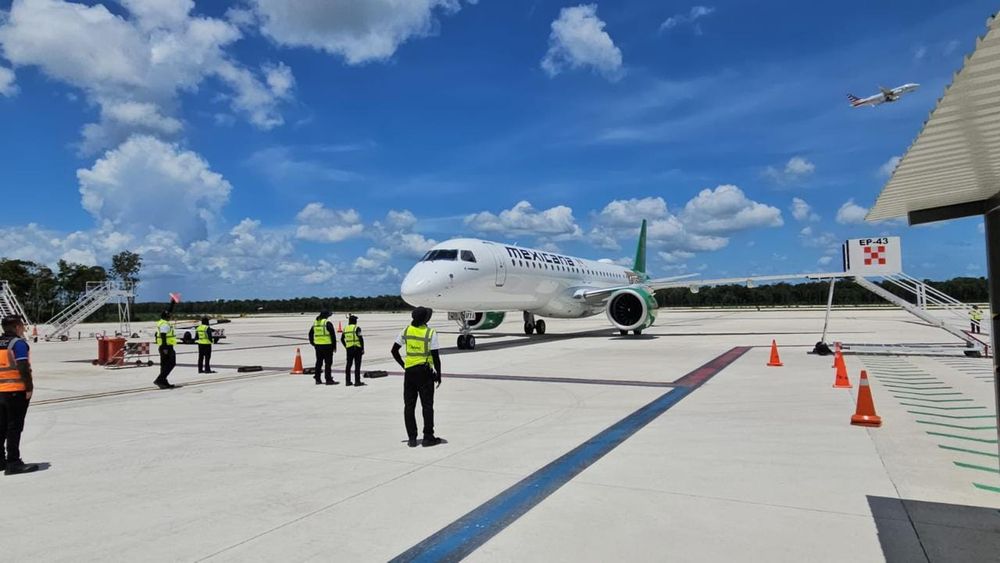
Airlines pulling back, frequencies slashed
Several international carriers have begun scaling back. Loret de Mola cited figures suggesting foreign airlines have cut flights by 30 to 40 percent. German carriers, U.S. giants like Delta, United, and American Airlines, and regional players such as Avianca and Copa have all either reduced frequencies or pulled out entirely.
“Sure, Delta and United still fly there,” noted aviation expert Carlos Torres in the segment, “but they’ve reduced their frequencies. Others, like Avianca, just stopped flying to Tulum altogether.”
The message is clear: the market isn’t responding as expected. But why?

Grounded by ground transport
One major reason appears frustratingly simple: lack of ground transportation. Getting from the airport to the hotel zone, or anywhere, really, isn’t easy.
“There’s just no way to get there,” Torres explained. While that might sound like hyperbole, it reflects a real operational gap. Many visitors, once they land, face long waits, expensive private transport, or confusion over how to reach Tulum’s beaches or resorts. The problem mirrors one faced by the AIFA in Mexico State: slick runways but no way out.
Then there’s the travel time. Distances in the Riviera Maya can be deceptive, and traffic bottlenecks compound the issue. What looks like a 25-minute drive on paper can stretch into an hour or more, depending on time of day and weather.
In a tourism-driven economy, those logistics matter.
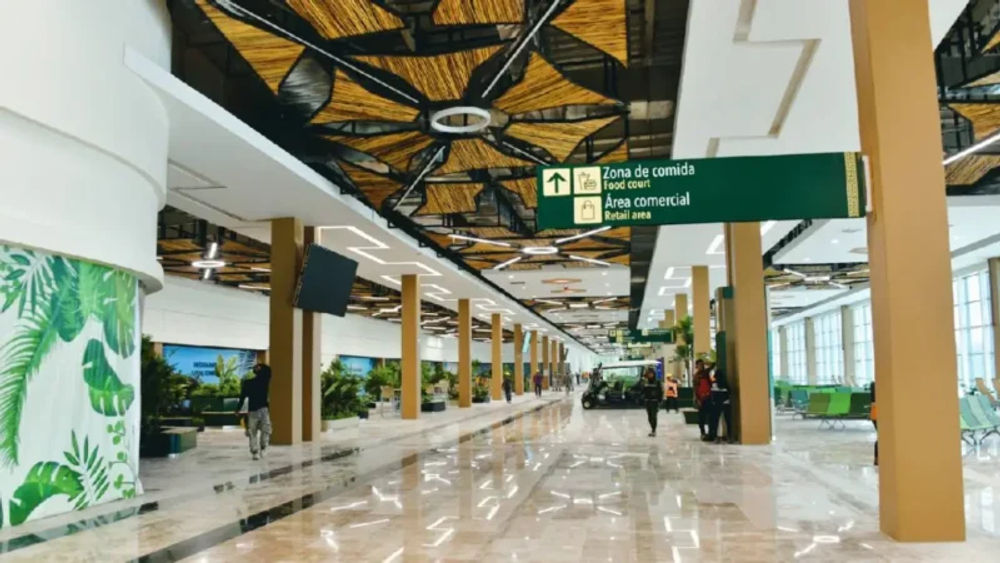
A promise of connection that hasn’t landed
When the Felipe Carrillo Puerto airport opened, it was meant to anchor a broader vision of development across southern Mexico. The timing was no accident. It was part of a suite of infrastructure projects launched under López Obrador’s presidency to stimulate the economy in historically underserved areas.
But there’s a lesson here: building infrastructure isn’t just about pouring concrete. Airports are ecosystems. Without efficient access, airline confidence, and steady passenger demand, even the most modern terminals can feel deserted.
It’s a metaphor that resonates. A shiny runway with nowhere to go.
Local businesses feel the drop
For hotel owners, tour operators, and restaurant managers in Tulum, the flight reductions are more than a statistic. They hit the bottom line.
“There was this big boom in bookings when the airport was announced,” shared a local guesthouse owner in Aldea Zama. “Now we’re getting more cancellations. Guests are saying the flights are too limited, or the taxi from the airport is too expensive.”
Tourism has long been the beating heart of Quintana Roo’s economy. And for Tulum, the promise of a nearby international airport wasn’t just convenient, it was transformative. That promise now feels uncertain.

A reflection on Mexico’s infrastructure strategy
What’s happening in Tulum might not be unique. Similar criticisms have plagued other mega-projects across Mexico, where timelines and construction often outpace on-the-ground readiness. The Felipe Ángeles International Airport was mocked early on for its lack of passengers and awkward location. The Mayan Train has also faced concerns about cost, environmental impact, and delays.
Tulum’s airport now joins the list.
And while it’s too early to declare its future sealed, the early indicators suggest a hard landing unless course corrections are made. Better ground connectivity, clearer public transport options, and sustained airline partnerships could turn things around.
But that will take time, and will.

What’s next for Felipe Carrillo Puerto Airport?
A year in, it’s not too late for a turnaround. The location is still strategic. The nearby tourism appeal is undeniable. And the region continues to grow in popularity, particularly among eco-tourists and archaeological enthusiasts.
Yet for that potential to be realized, authorities need to address the real-world frictions travelers face. Because no one wants to fly into paradise only to get stranded on the tarmac due to poor planning.
The Tulum Times will continue following this story as new data emerges and flight patterns evolve.
“We built a bridge to nowhere,” someone said recently in a local café. “But it’s not the bridge. It’s the roads around it.”
What’s really at stake?
Beyond the technicalities and transport issues lies a deeper question: who benefits from mega-infrastructure when it doesn’t serve the people it was built for?
We’d love to hear your thoughts. Join the conversation on The Tulum Times’ social media.
Will this airport become the gateway to the Riviera Maya it was meant to be, or remain a monument to misplaced ambition?