
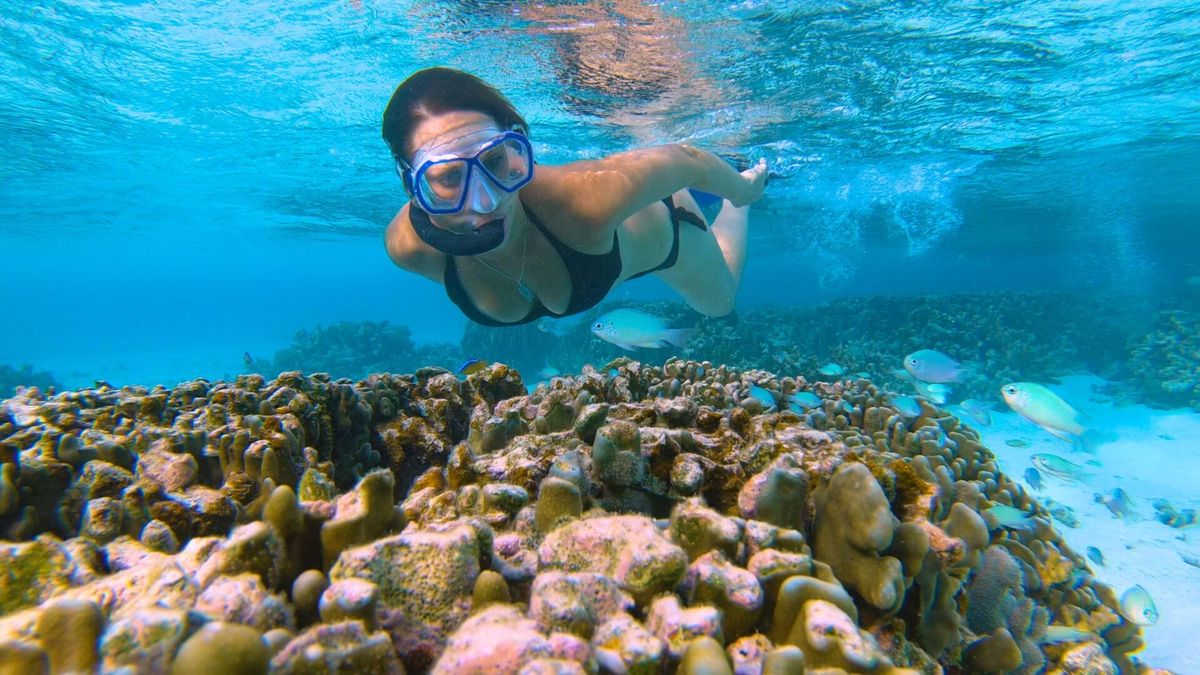
How quickly can a reef turn pale. Fast enough that Tulum coral bleaching is no longer a whisper among dive shops, it is the conversation on the dock, on WhatsApp groups, on the beach where boats idle before sunrise. In the shallow gardens that fed the local economy with color, guides say the white is spreading. And the dread with it.
In recent weeks, divers and tour operators working close to the coast have reported an accelerating loss of color in the corals that sit between five and ten meters deep, the easy reefs, the ones families snorkel after breakfast. They describe it as visible, immediate, and tied to their livelihood. What happens to a tourism town when the showpiece begins to fade.
Context and the waterline we crossed
Locals often measure distance by minutes on a panga, not by nautical miles. Fifteen to twenty-five minutes off the shoreline hotels, where the Caribbean looks like a freshly shaken bottle of mineral water, crews have watched the hard corals blanch. A veteran diver, Carlos Solís of Mexidriver Tulum, says the shallow patches are taking the brunt. He and his team work those sites daily, so the changes do not hide behind tides or mood. They stare back at you.
Bleaching is not mysterious. When corals are stressed, they lose the tiny symbiont algae that feed them and give them color. Sometimes the corals rally. Often they do not, unless conditions improve. Heat is the first name people reach for. Pollution and ocean acidification are not far behind. In Quintana Roo, those forces do not act alone. They compound like interest.

What is confirmed today
Solís describes two urgent drivers that, in his view, must be confronted now. The first, wastewater pollution. Along the coastal strip, he says, hotels and private properties still mismanage gray and black water, and those effluents can end up in the sea. The excess nutrients feed algae, the algae dims the light, and the reef gasps for oxygen. This is not a subtle chain of events. It is visible on a single tank of air.
The second is the kind of tourism that loses its manners the moment it hits warm water. Guides across the Riviera Maya say some operators ignore basic rules for snorkeling and diving. Tourists stand on living colonies. Fins smack branches. Curious hands break what took decades to grow. These are not villains; most are simply uninformed or rushed through a briefing. But ignorance, multiplied by volume, becomes damage.
Solís is not calling for scolding. He is asking for mandatory training for guides and visitors, and clearer, stricter rules for water activities. He sounds less angry than tired, like someone who has repeated the same request for years while trying to keep a small business afloat.
The human side, told in salt and fiberglass
Picture the morning routine. A captain named Luis checks the fuel, wipes salt from his sunglasses, and untangles a line that always seems to coil in the wrong direction. His crew hands out masks and quiets the nervous first-timers. Ten minutes later, over a shallow reef near Tulum, a child squeals behind a snorkel at their first parrotfish. Beauty does a simple thing, then it sells the next tour.
Recently, those same guides surfaced to a different sound, the hushed conversation of a team comparing notes about a pale patch that was not pale last week. One of them stays behind after the guests leave, hovering at five meters, counting the bleached heads. He gestures to his chest once aboard, the universal sign for a problem you cannot yet solve. The boat rides back in short, choppy bursts. Nobody wants to drain the day of its joy in front of paying customers, so they speak softly and text colleagues in Akumal, in Playa del Carmen, in Puerto Morelos. The replies come fast. We see it too.
Riviera Maya echoes, Mexico tourism at risk
The bleaching is not a Tulum-only story. Operators in Akumal, Playa del Carmen, Puerto Morelos, Cancún, and Isla Mujeres are reporting the same patterns in shallow zones. The Riviera Maya lives on reef charisma, on turtles and fans, and the way sunlight ladders through clear water. Mexico tourism does not end if a reef fades, but it shifts, and not in a way coastal towns can afford for long.
Tulum has built an economy on the promise of close nature. That promise travels in Instagram carousels, in honeymoon plans, in family itineraries scribbled on hotel notepads. If the reefs keep paling, the promise thins. Fewer repeat trips. Shorter stays. More pressure on cenotes and inland experiences that have their own carrying limits. The damage ripples from the water to the street vendor who sells fruit after the tour, to the mechanic who fixes the outboard, to the apartment where a deckhand sends money to a grandmother.
The science in plain words
Strip away the jargon, and coral bleaching reads like a fever. Elevated water temperature stresses corals; they expel the algae that feed them, they lose color, and they weaken. Pollution worsens the fever. Nutrients bloom algae that shade corals and starve them of light. Acidification erodes the very skeletons that give reefs structure. In shallow water, heat and pollution hit first and hardest, which is why the five to ten meter band looks worst to the people who work there.
Some colonies recover when conditions improve. Many do not. That is why divers speak with urgency, and why their hedging words, might, could, and appear, feel heavier than usual. They are careful because they are not scientists, but they are out there every day, eyes on the ground that happens to be saltwater.
Efforts to heal, and why they need company
Restoration is not a rumor. Organizations like Oceanus A.C., the National Autonomous University of Mexico, and the Puerto Morelos National Reef Park are already growing and outplanting more resilient corals. They also run training for tour operators. These actions matter. They are the reasons many in the field still sound determined rather than resigned. But specialists keep warning that nurseries and plantings are no match for ongoing stress if the sources of that stress stay in place.
This is where the editorial voice intersects with the tide chart. Local policy can feel slow, but wastewater management is not optional on a coast that sells its water clarity as a brand. Hotels and property owners know this. Many already invest in better systems. The call now is for uniform commitment, not a patchwork. And for operators to bake real briefings into every trip, not a perfunctory two sentences shouted over the engine.
How Tulum compares, and what we learn from neighbors
Cancún has long wrestled with balancing volume and conservation. Playa del Carmen has the muscle of larger institutions and the scrutiny that comes with it. Tulum is younger in its boom, more artisanal in its operations, which makes both its flexibility and its vulnerability stand out. The same small scale that lets a captain change a route by instinct can also mean rules go unenforced by habit.
In Quintana Roo, the reef is a shared asset, a common language. When Isla Mujeres reports bleaching in its shallow sites, Tulum should listen. When Puerto Morelos demonstrates a training module that actually changes guest behavior, the rest of the coast could copy it without pride. The Caribbean does not care about brand identity. It cares about inputs.
What comes next, and the price of delay
There is motion. Restoration projects continue. Trainings are offered. Calls for stricter regulation grow louder. But without stronger public policy and clear private action by the hospitality sector, gains will remain fragile. This is not doom for the sake of drama. It is the math of a reef already stressed by heat. Every unfiltered pipe, every unbriefed group, is another degree turned up.
The Tulum Times has followed these currents before, often through the words of the people who live by the tide. Today, the storyline is not complicated. Protect the reef that protects the town. A living barrier keeps beaches wide and waves calmer. It also keeps the boats full, the tips flowing, the pride intact.
Voices from the water
“I have watched this reef for years, and the shallow sections are paling fast,” a local guide told us after surfacing from a morning dive, his mask still beaded with salt. He echoed Solís’s call for training that is not just suggested but required. He spoke about the moment a tourist reaches for a piece of coral, how a firm, friendly hand on a shoulder can change behavior. Social media loves grand gestures, he said, but the reef survives on small ones repeated.
That line stayed with us. The reef survives on small gestures repeated. It sounds simple enough to share, and true enough to pin at the top of a feed.
Key details without the noise
The working radius, fifteen to twenty-five minutes by boat from shoreline hotels, maps to the shallow patches that families prefer. The depth, five to ten meters, makes the sites both accessible and exposed. The problems, wastewater, and careless contact can be managed with policy and education. The broader geography, from Akumal to Isla Mujeres, signals a regional pattern, not an isolated blip. The response, from Oceanus A.C., UNAM, and the Puerto Morelos National Reef Park, shows commitment on the ground.
None of these demands is heroic. It demands consistency, enforcement, and the humility to admit that a wildly successful destination must also be a disciplined one. Mexico’s tourism can hold both ideas at once, growth and restraint, if it chooses.

What is at stake, and a question for Tulum
If Tulum coral bleaching keeps accelerating in shallow water, the town risks losing more than color. It risks memory, the shared snapshots that built the local economy in the first place. A reef is an underwater city, and when its neighborhoods go white, the streets empty, the businesses shutter, the mood turns. The chance, still present, is to reverse enough of the stress that recovery remains possible. The cost of inaction is written in pale limestone skeletons.
We close with Solís’s practical plea, training for every guide and visitor, stricter rules for the sea, and a real pact from hotels to keep waste out of the water. The question is simple. Will Tulum do the small things, again and again, until the reef has a fighting chance.
“We’d love to hear your thoughts. Join the conversation on The Tulum Times’ social media.”
What readers can do now
Ask for a proper briefing before you snorkel or dive. Choose operators who respect no-touch policies. Support businesses that invest in wastewater management and make that choice public. Share the line that matters; the reef survives on small gestures repeated. And tell us where you are seeing change, for better or worse. The Tulum Times is listening, because this story, like the tide, comes back every day.
The Caribbean Mexican coast has weathered storms, literal and figurative. It can weather this if policy and practice align. Reef restoration teams will keep planting. Guides will keep guiding. Tourists will keep coming. The difference, the part we control, is how we act in the water and what we flush toward it. Tulum coral bleaching is a warning written in white, not a verdict carved in stone. What kind of coast does the Riviera Maya want to be next season, and the season after that.