

What happens when the law arrives late, but the concrete’s already set?
That’s the uneasy question surfacing in Bahía Solimán, a picturesque bay in Tulum now at the heart of a bitter standoff between two luxury developments and Mexico’s environmental authorities. This week, the Secretariat of Environment and Natural Resources (SEMARNAT) denied environmental authorization to both the Maiim and Adamar condominiums, confirming what activists had warned: these projects were built first and asked questions later.
The ruling was made public in the latest issue of the Gaceta Ecológica, Mexico’s official environmental bulletin. But for many locals, the news feels like too little, too late. By the time the permits were formally rejected, steel and glass were already rising above the dunes.
A timeline of violations and slow accountability
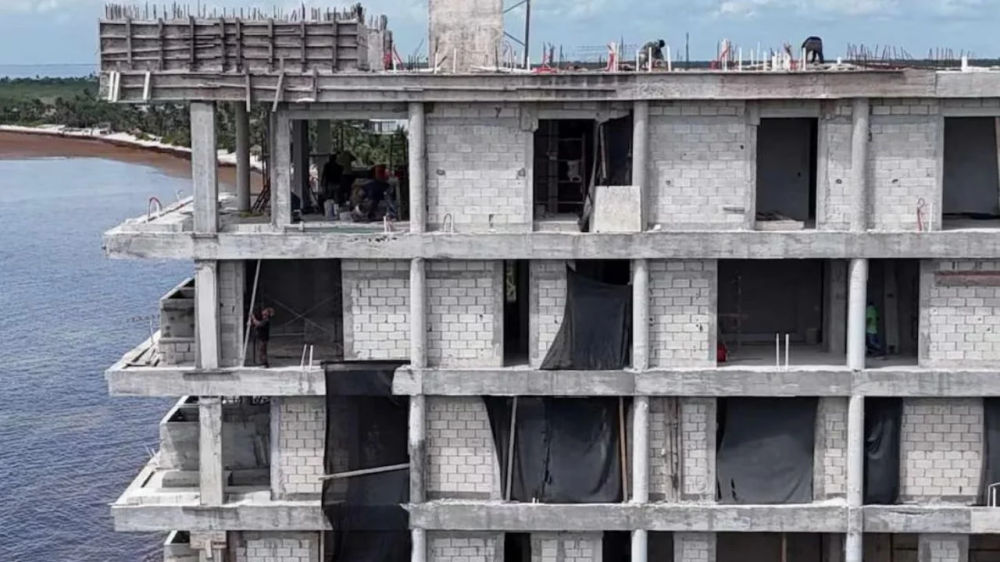
The Maiim development, promoted by Promotora de Incentivos México S.A. de C.V., sits on a 3,144-square-meter plot in Tankah IV. The complex, now largely built, includes 38 apartments spread across three buildings, a swimming pool, a restaurant, a gym, and shared areas. None of it had environmental authorization when construction began.
According to the Environmental Impact Statement filed after the fact, the project was already sanctioned by the Federal Attorney for Environmental Protection (Profepa), which forced the developers into a retroactive environmental evaluation process. A clear case of building first and complying later.
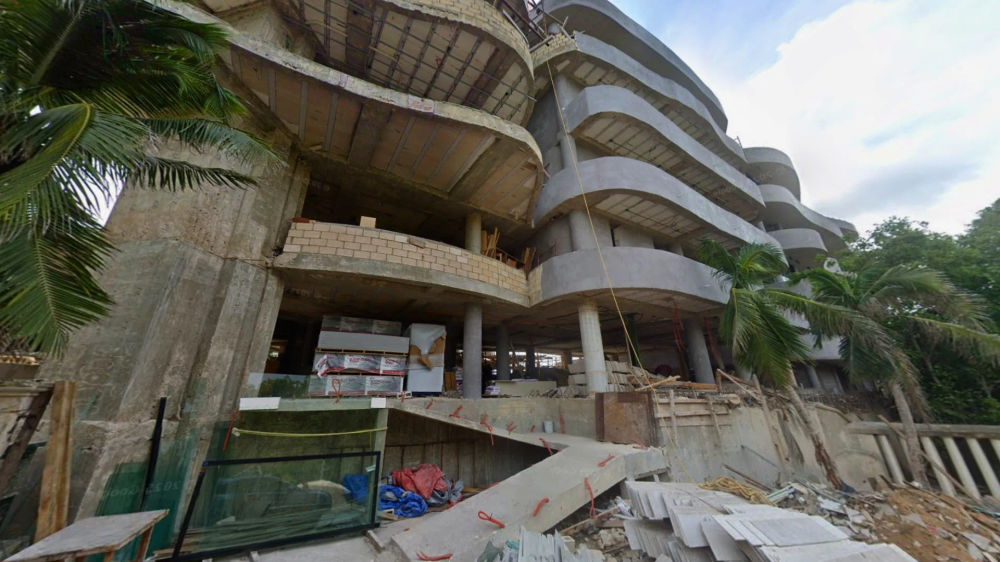
Things were even more fraught for Adamar, the other high-end project in question. Developed by Desarrollos Tulum Dieciséis S.A.P.I. de C.V., Adamar was designed as a seven-story complex with 16 luxury apartments and upscale amenities. It was also constructed without approval and directly damaged 731 square meters of protected coastal dune, a fragile ecosystem home to marine turtles and endangered birds.
In August 2025, a federal judge ordered the project’s demolition, citing multiple violations of environmental law. The ruling came just weeks before Semarnat’s formal denial of environmental approval. For residents and activists who had raised alarms since 2024, the judgment marked a rare and overdue victory.
“A world turned upside down”
Antonella Vázquez, spokesperson for the civil association Defendiendo el Derecho a un Ambiente Sano (DMAS), didn’t mince words.
“We’re living in a world turned upside down,” she said. Her group filed complaints about the Adamar project back in 2024, but actual enforcement only came after the site was secured by Quintana Roo’s Attorney General in September of this year, nearly two years after construction began.
By then, the damage to the coastal ecosystem was done.
What began as a grassroots complaint evolved into a multi-agency standoff, including legal intervention, on-site inspections, and public protests. But as many Tulum residents know, the wheels of environmental justice in Mexico often grind painfully slow.
Tankah IV: paradise under pressure
Tankah IV, located along the Riviera Maya’s northern coastline, has become an unexpected flashpoint in the debate over unchecked development in Quintana Roo. Unlike neighboring Playa del Carmen or Cancún, where large-scale tourism infrastructure was planned decades in advance, Tulum’s boom has been chaotic and largely unregulated.
The area’s booming real estate scene is a magnet for investment, and for conflict. As luxury developers eye every available inch of beachfront, community groups and environmental watchdogs are racing to protect what remains of the region’s fragile ecosystems.
Maiim and Adamar are hardly the first to bend the rules, but they might become the first to pay a public price for it.
The human cost of environmental shortcuts
Behind the legalese and agency acronyms lie stories of everyday frustration and resistance. One resident, who asked not to be named, described watching trucks roll into Tankah IV as early as 2023, months before any public records suggested construction had begun.
“There were no permits. Just machines and men working around the clock,” they said. “It felt like the rules didn’t matter here.”
For others, the developments brought noise, disruption, and a creeping sense of inevitability. The fear wasn’t just about the view, it was about the water table, the turtles, the balance of a place that once felt untouched.
These aren’t abstract concerns. They’re the daily reality for locals living in the path of Tulum’s explosive growth.
Could this set a precedent?
While the court’s demolition order against Adamar is a rare legal outcome, its long-term implications remain unclear. Will other unpermitted projects be held to the same standard? Will developers start taking environmental laws more seriously?
“There’s a sense that something shifted here,” said one local conservationist. “But we’ve seen these wins before, and too often, they get reversed or ignored when the money starts talking again.”
What makes this case different, perhaps, is the timing. With increasing scrutiny from environmental groups, global media, and watchdog organizations, Tulum is no longer a lawless frontier. And The Tulum Times has been documenting that change every step of the way.
Yet questions linger. Will Semarnat’s denial hold? Will the Adamar demolition order be enforced? Or will this, too, fade quietly into the background?
The stakes for Tulum and beyond
The Maiim and Adamar controversies are more than local dramas. They’re symbols of a broader struggle playing out across Mexico’s tourism hotspots, where natural beauty collides with economic ambition.
In Quintana Roo, the balance between development and preservation has never been more precarious. What happens in Tankah IV could shape how future projects are approached, not just in Tulum, but across the Riviera Maya.
And if these rulings stand, they might just offer a glimmer of hope for those still fighting to protect what’s left.
We’d love to hear your thoughts. Join the conversation on The Tulum Times’ social media.
Do you think these rulings mark a turning point for environmental justice in Tulum?