
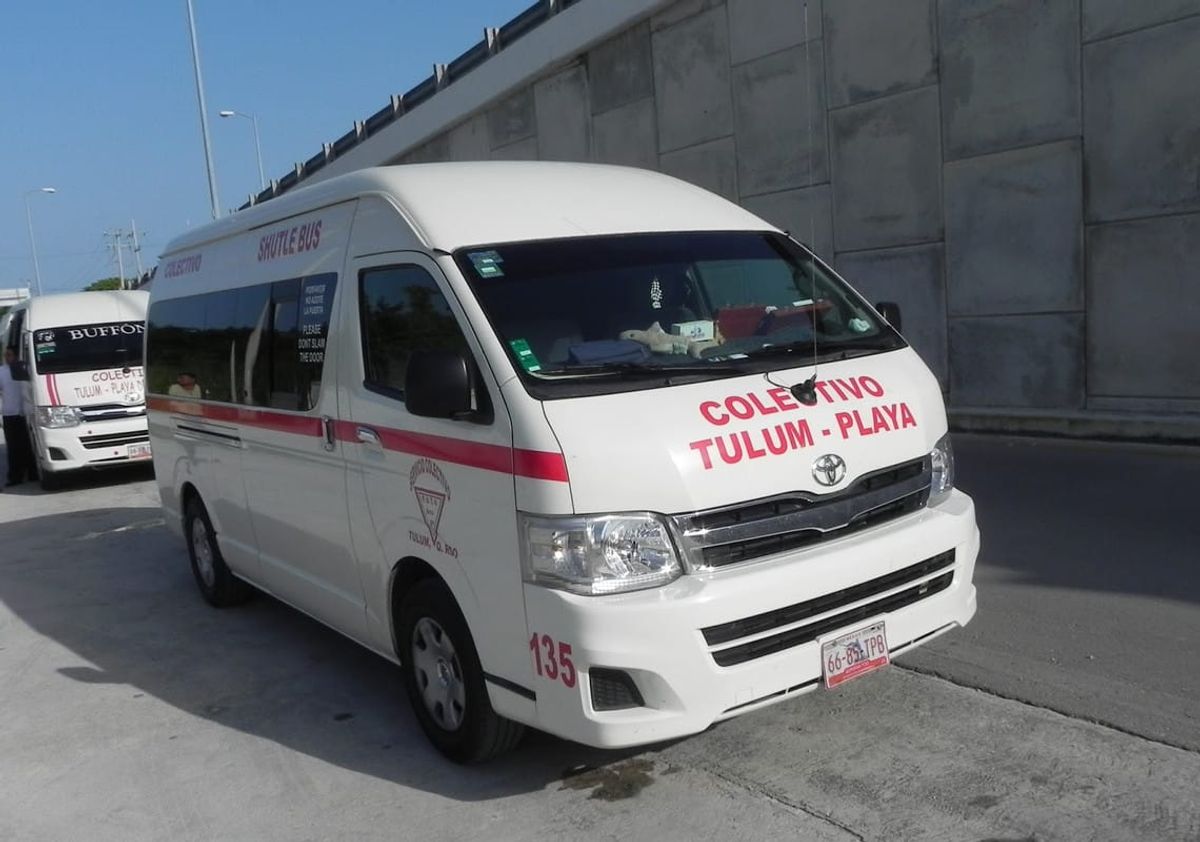
Somewhere between Tulum’s sun-bleached colectivo stops and the busier fringes of Playa del Carmen, drivers now wait longer. Much longer. Gone are the days when vans were packed shoulder to shoulder, when 70,000 daily riders pulsed through the corridor like the region’s lifeblood. Today? That number has dropped by more than half.
That’s not just a dip. It’s a warning siren echoing down Federal Highway 307.
The colectivos, those shared vans that once symbolized mobility and affordability for both locals and tourists, now cruise half-empty, burdened with rising fuel prices and shrinking revenues. The rhythm of the region’s daily commute has been thrown off, and it’s not just about missed connections. It’s a snapshot of a much larger unraveling.
What Happened to the Riders?
Moisés Pool Quijano, Secretary General of the Union of Public Transport Operators (PODSAC) in Tulum, puts it plainly: “The tourists just aren’t coming like they used to.”
In a place where tourism is more than a seasonal trend, it’s the foundation of the local economy, the sudden evaporation of demand is jarring. And it’s not just about fewer beach towels on the sand. It’s about livelihoods. It’s about hundreds of transport workers whose daily wages were already on the edge, now slipping into deficit.
To put it bluntly, colectivos now see between 30,000 and 35,000 daily passengers, a nosedive from the previous 70,000. And while tourism has always been volatile, this drop feels different. It feels structural.
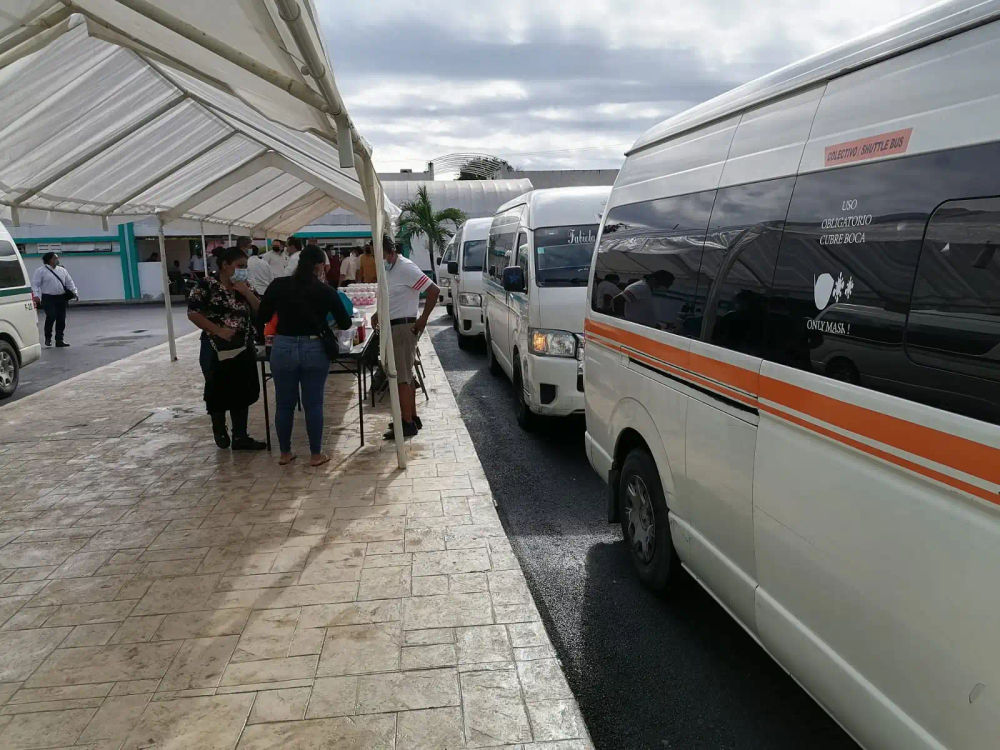
Sargassum, Safety, and a Price Tag on Nature
Let’s start with the beaches. Or rather, what’s covering them.
This year, Sargassum, dense mats of floating brown seaweed, has returned with a vengeance. Blanketing shorelines and pushing tourists inland, the once postcard-perfect Riviera Maya now struggles with aesthetics and smell. Beaches that used to be a magnet now repel.
Then there’s the safety issue. While government agencies are quick to assure travelers of increased security, the broader narrative around Mexico’s safety remains mixed. For many cautious tourists, especially families, the risk, perceived or real, is enough to book elsewhere.
And if environmental and safety concerns weren’t enough, a recent blow came in the form of the Jaguar Park entrance fee. Previously a free gateway to Tulum’s coastline, this newly introduced charge now includes access to the beach. For cost-conscious travelers, it’s yet another reason to think twice.
“I Used to Make My Quota Before Noon. Now, I Wait All Day.”
Julio, a 42-year-old colectivo operator who’s driven the Tulum–Playa route for over a decade, shares his reality:
“I used to make my quota before noon. Now, I wait all day for half that. Gas goes up. Passengers go down. What do I do?”
His story isn’t isolated. Across the Riviera Maya, transport operators report similar struggles. According to Quijano, driver pay has been slashed by 200 pesos per day in a desperate attempt to stay afloat. But cuts can only go so deep. Tires still need replacing. Engines still need maintenance. And the vans? They don’t run on hope.

Air Routes Cut, Tourism in Freefall
The issues stretch far beyond colectivos.
At the region’s new pride, the Tulum International Airport, traffic is sputtering. Lourdes Jiménez Rojo, commercial manager for mobility company ADO, revealed a 20–30% drop in passengers this summer compared to 2024.
Airlines have taken note. American, Delta, JetBlue, and United have all trimmed their winter schedules to Tulum. Direct flights from Minneapolis, Charlotte, Chicago, and New York? Reduced or scrapped entirely. And just when things couldn’t get worse, Lufthansa’s Discover Airlines canceled its anticipated Frankfurt–Tulum route altogether.
This isn’t just a dip. It’s a redistribution of confidence. Airlines, like investors, move with the winds of certainty. And right now, Tulum’s forecast looks cloudy.
An Interconnected Crisis
Zoom out, and you begin to see the tangled web.
Less air traffic means fewer tourists. Fewer tourists means fewer bus and van passengers. Fewer passengers means lower incomes for transport operators, which feeds into less economic activity in town. The spiral tightens.
It’s a chain reaction that highlights how deeply interwoven the tourism economy is across Tulum, Playa del Carmen, and the broader Riviera Maya.
Even Cancún, still buoyed by its brand recognition and mega-resorts, shows signs of strain. But in places like Felipe Carrillo Puerto, where the ripple effect hits harder, the situation borders on critical.
What’s Next for Colectivos?
The price of a colectivo ride, 60 pesos, is still affordable. It remains, for many, the most convenient link between towns. But without passengers, affordability becomes irrelevant. Vans idle. Routes shorten. Operators quit.
The unions are trying. They’ve slashed operational costs, cut daily operator fees, and tried to keep morale from collapsing. But the reality is clear: without a tourism rebound, these efforts are a Band-Aid on a bullet wound.
Can the Riviera Maya Bounce Back?
The region has recovered before, from hurricanes, global recessions, and yes, pandemics. But this time, the causes are more layered: environmental degradation, shifting airline strategies, and policy decisions that subtly alienate tourists seeking affordability.
One Tulum shopkeeper compared the current season to “watching a slow tide go out and not come back.” It’s a haunting image, and it fits.
What the region needs isn’t just a rebound in visitor numbers. It needs a rethink. A cleaner coastline. Smarter policies. Clearer messaging about safety. And yes, a break from sudden new fees that quietly push people away.
As The Tulum Times continues to track this story, one thing is certain: public transport is more than a way to get from A to B. It’s a mirror of the region’s health. And right now, that mirror is cracked.
Tulum and Playa del Carmen’s transportation crisis isn’t just about empty vans, it’s about what happens when an entire economy leans too hard on one fragile pillar. If tourism doesn’t recover, the ripple effects could become waves.
We’d love to hear your thoughts. Join the conversation on The Tulum Times’ social media.
Will Tulum find its footing again, or is this the beginning of a deeper shift in Mexico’s tourism map?