
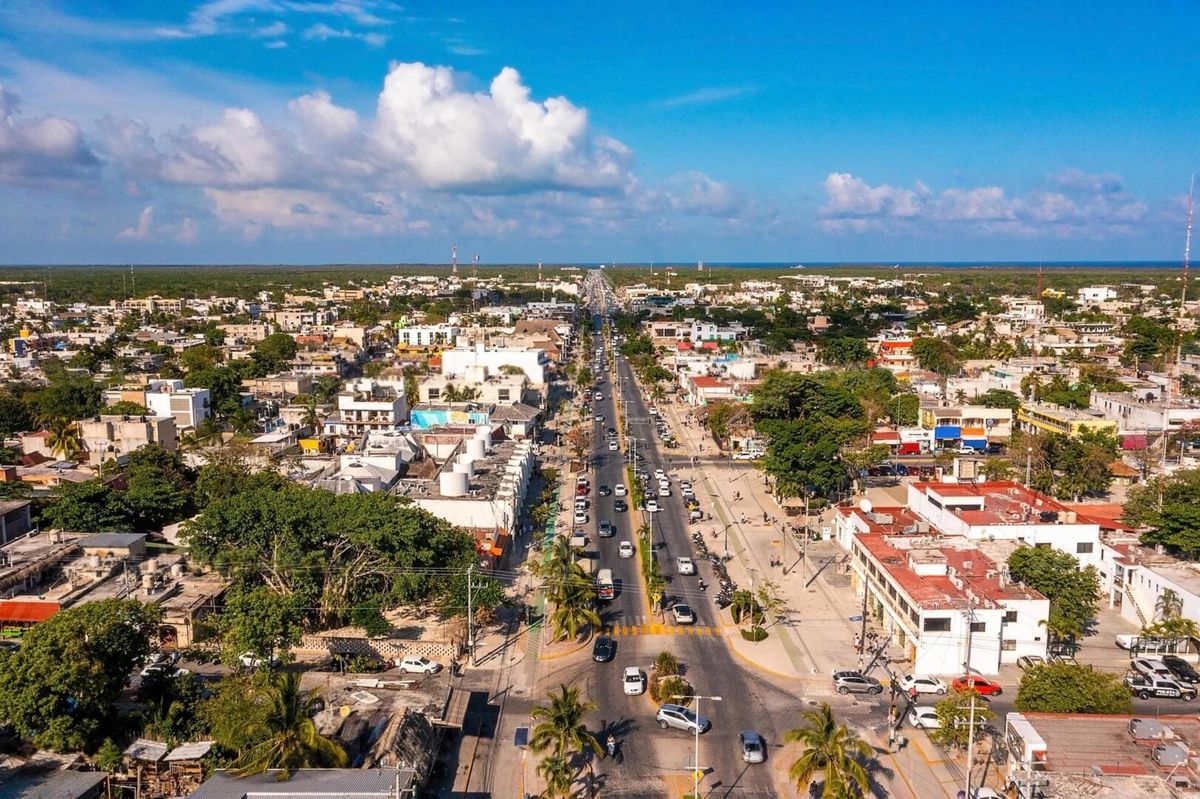
Tulum didn’t stumble into a crisis overnight. It sprinted into it.
There are now 560 real estate developments under construction in the once-laid-back beach town. That staggering number, revealed by Miguel Ángel Lemus Mateos, president of the Real Estate Council of Quintana Roo, has jolted conversations across business circles and local communities. Lemus isn’t mincing words: Tulum, he says, needs a total reengineering. Not just better roads. Not just faster permits. Everything.
Infrastructure, services, legal clarity, tourism flow, real estate regulation, everything.
In his recent statements, Lemus confirmed that the council will be seeking formal meetings with municipal, state, and federal authorities. Their aim? To launch a sweeping proposal to rescue Tulum from a chaotic spiral of overdevelopment and underplanning.
But how did we get here?
How Tulum outgrew itself
Tulum wasn’t always a magnet for unchecked growth. But the last decade turned it into a developer’s playground, one where permits sometimes came later, if at all.
According to Lemus, Tulum’s growth wasn’t just fast, it was abrupt. Private properties and ejido lands were stitched together in messy ways. Entrepreneurs would erect palapitas, makeshift stands or bungalows, as tests to see if a business would stick. Many did. And without robust planning, the town ballooned beyond what its fragile infrastructure could support.
“There was no legal certainty. No infrastructure certainty. And yet the growth didn’t stop,” Lemus explained.
It’s a story not uncommon in the Riviera Maya, but Tulum’s version is perhaps the most intense. In contrast, Cancún and Playa del Carmen, though far from perfect, saw more coordinated expansion in their early years. Tulum, by comparison, feels like a high-rise built on sand.
Private sector meets public responsibility
What Lemus proposes isn’t a mere urban fix. He’s calling for a full-system rethink. That means revisiting the licensing process, clarifying property rights, upgrading utility networks, and designing a smarter tourism strategy.
He emphasized the importance of collaboration between the private and public sectors, urging investors, developers, hoteliers, and operators to engage, not just to build, but to rethink.
“It’s time to pay attention to this destination,” he said. “Tulum requires a complete reengineering of its infrastructure, its marketing strategies, and its licensing systems, so tourism can flow more naturally.”
That’s not just rhetoric. The council intends to propose specific initiatives to help the municipality manage its runaway growth.

More than just overloaded infrastructure
At first glance, Tulum’s challenges may look like the typical woes of any booming town, traffic jams, strained sewage systems, patchy electricity. But the stakes are higher.
With over 500 active projects, the town faces the very real possibility of overextending itself to the point of collapse. Tourists could be deterred by overcrowding and degraded experiences. Locals may face even harsher impacts, skyrocketing rents, water shortages, and power blackouts.
“Tulum risks burning out before it can fully bloom,” commented one resident, noting the increasing pressure on essential services.
The human side of the crisis is often overlooked. Locals who once saw opportunity in tourism now face daily frustrations: waiting days for utility repairs, dealing with spotty internet in service-based jobs, or watching sacred green zones disappear under concrete.
The reengineering roadmap
What does a “total reengineering” look like? While the council has yet to unveil a full plan, key components are already in discussion:
- A coordinated land-use plan to harmonize ejido and private ownership zones.
- Updated and enforced building permits and legal frameworks.
- Major upgrades to roads, drainage, and electrical grids.
- A more sustainable and market-aligned tourism model.
Critically, this overhaul must involve voices from all three levels of government, municipal, state, and federal. Lemus says developers and investors are already on board for an initial proposal, and the council hopes to initiate official dialogues in the coming months.
One developer’s reality
Consider this: A developer who began building a small boutique hotel in 2022 on land near the jungle thought he had everything lined up. But midway through construction, the road to his site was blocked for months due to power line work that no one warned him about. His losses were in the millions.
This isn’t a one-off story. It’s symptomatic of a wider issue, a lack of synchronization between development and infrastructure.
Stories like his are part of why the council is pushing for a reset. Not to halt development, but to make it smarter.
The soul of Tulum is at risk
Tulum was once a place people came to unplug. To slow down. To breathe jungle air and touch the Caribbean without the noise of overdevelopment. That spirit still lingers in its beaches and cenotes, but it’s being squeezed by cranes and condos.
The Real Estate Council’s call for reengineering is not just about regulation. It’s about identity. About asking: What kind of Tulum do we want ten years from now?
Because if the answer is “a sustainable, livable paradise,” then urgent change is non-negotiable.
Meetings, plans, and possibilities
Lemus Mateos and the council are preparing to meet with key figures across government and industry. Their goal? A collective commitment to pull Tulum back from the brink.
It won’t be easy. The momentum of the market is fierce, and the appetite for profits stronger still. But the longer stakeholders wait, the harder the fix becomes.
Tulum needs clarity. And quickly.
The price of ignoring the warning signs
Tulum is a living paradox, a town thriving and straining, growing and cracking. The question now is whether the people with power, developers, officials, and residents, will rise to meet this moment or allow the chaos to deepen.
We’d love to hear your thoughts. Join the conversation on The Tulum Times’ social media.
What kind of future do you think Tulum should build toward?