
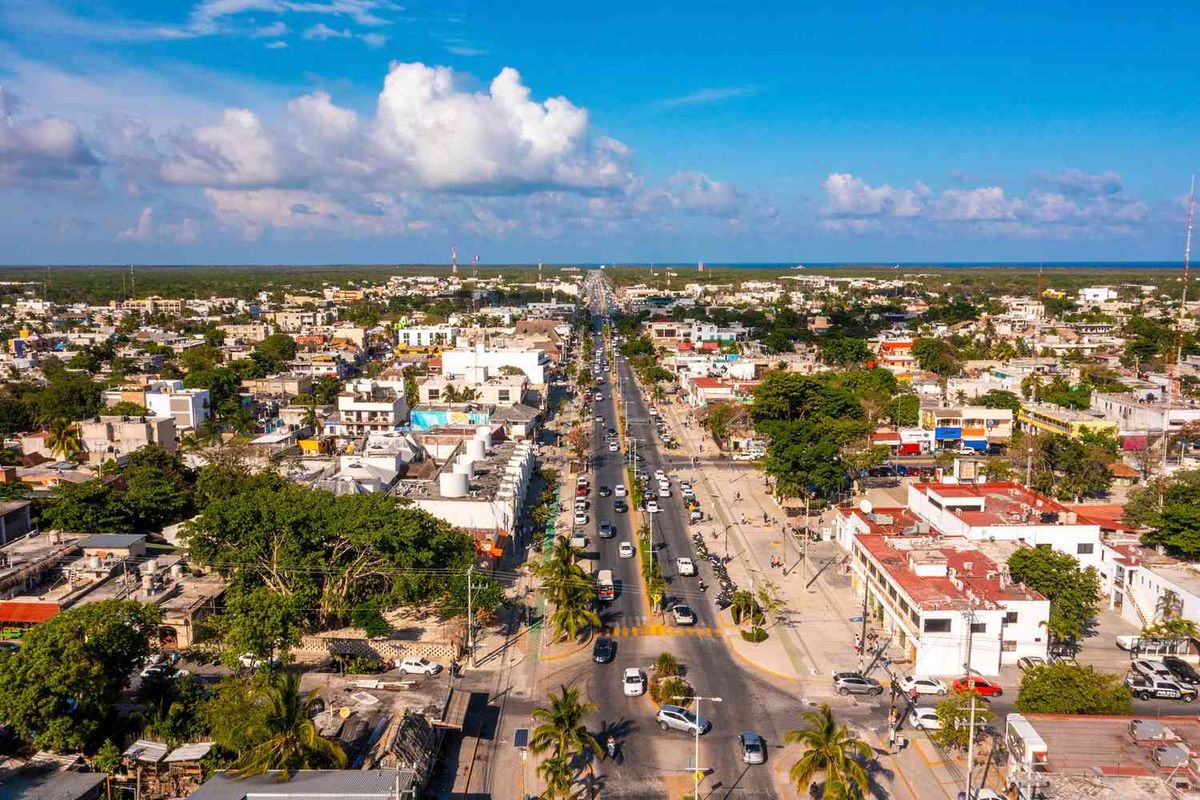
Tulum didn’t just grow, it transformed. Once a quiet beach town, it became one of Mexico’s most talked-about investment destinations. With hundreds of active real estate projects, international attention, and premium price points that reflected its rising status, Tulum marked a milestone for tourism-driven development in Latin America.
And yet, like any place evolving at high speed, it has encountered growing pains. But rather than a cautionary tale, Tulum might be something more useful: a living case study in how booming coastal towns can evolve sustainably, when growth is aligned with planning, inclusion, and long-term vision.
Growth Without Limits, And What It Reveals
During the pandemic, Tulum experienced one of the most accelerated real estate booms in Mexico. Over 400 active developments. Sales are topping 1,000 units per quarter. Prices are reaching $4,400 USD per square meter. Global investors, remote workers, and short-term rental operators all saw promise in its turquoise waters and jungle charm.
That energy was real, and still is. But the town’s rapid transformation moved faster than its infrastructure. Today, some signs of saturation appear: a high number of resale units, moderate occupancy in vacation rentals, and infrastructure services that are catching up to demand.
Yet these are not failures. They’re the natural result of exponential success without the time for systems to adapt. Tulum’s experience can now guide others, particularly other Latin American beach towns following similar paths.
For Costa Rica, a Timely Mirror
Costa Rica, with its Pacific gems like Nosara, Tamarindo, Jacó, and Santa Teresa, is experiencing its own wave of investment. These towns are rich in beauty, culture, and potential. Foreign capital continues to pour in, driven by eco-tourism, digital migration, and lifestyle appeal.
But, as in Tulum, the pace of development sometimes outpaces institutional readiness. Many local governments are still working with outdated zoning plans or limited technical capacity. In certain areas, public infrastructure, such as potable water, road networks, and wastewater systems, is under strain, especially during high season.
These parallels don’t signal trouble ahead. Rather, they provide a valuable opportunity to proactively plan, coordinate, and strengthen the foundations before growing pains set in.
Housing That Reflects the Whole Community
One of the key takeaways from Tulum’s journey is the importance of diversity in housing. Much of the current real estate offer, both in Mexico and Costa Rica, is focused on short-term tourism, with high-end studios, villas, and condos aimed at travelers.
This model brings dynamism, yes, but if it becomes the only model, the community fabric risks becoming too narrow. Workers, families, local entrepreneurs, and long-term residents need housing options, too. Without that balance, affordability can shrink, and local diversity can fade.
Tulum’s experience underscores the need to plan for everyone, not just visitors. It’s not a question of reducing investment, but of designing it with wider inclusion.
Infrastructure as an Ally, Not an Obstacle
Infrastructure is often seen as something that lags behind development. But what if it were treated as a core component of investment readiness?
In destinations growing as fast as Tulum, infrastructure must evolve hand in hand with real estate. That includes modern drainage systems, sustainable waste management, reliable water supply, and transport connectivity. These aren’t just public-sector responsibilities, they’re essential for maintaining property values and attracting long-term investors.
Costa Rica’s coastal towns now stand at a moment where infrastructure investment could define their next decade. By prioritizing public-private collaboration, they can ensure that beauty and livability rise together.
The Tulum Times has highlighted how the town’s forward-thinking sectors are pushing for coordinated planning, recognizing that success in tourism and real estate depends on sustainable ecosystems, not just natural, but urban too.
Territorial Planning: A Key to Resilience
It’s easy to frame zoning and regulatory plans as limitations. But in truth, they offer clarity, legal certainty, and long-term value. A developer who knows where and how they can build confidently is more likely to succeed than one working in a gray area.
Modern regulatory frameworks help align market momentum with territorial capacity. They ensure that land use reflects both opportunity and sustainability. And they allow for a mix of uses, tourism, housing, services, commerce, that bring resilience to a local economy.
Tulum’s journey shows what happens when market energy is not yet matched by a complete regulatory framework. It’s not a failure, it’s a stage in evolution. And it’s one Costa Rica, and others can anticipate with foresight.
Planning Doesn’t Slow Growth, It Strengthens It
Tulum remains a powerful magnet for investment and tourism. Its natural beauty and cultural mystique are as captivating as ever. What’s changing is the conversation around how to grow, smarter, not just faster.
This is the same conversation happening in Tamarindo, Nosara, and Santa Teresa. With strategic planning, technical regulation, and long-term vision, these communities can not only welcome growth, but shape it, in ways that benefit residents, investors, and ecosystems alike.
When developers build in harmony with planning, with access to solid services and infrastructure, their projects don’t just sell better, they endure.
And in the end, sustainability isn’t a constraint. It’s the strongest signal a destination can send to those who are watching, and investing, from afar.
Tulum’s story is still being written. Not as a warning, but as a workbook for emerging destinations across Latin America. What they choose to learn from it could define their futures.
We’d love to hear your thoughts. Join the conversation on The Tulum Times’ social media.
How can your community grow in a way that includes everyone, and lasts for decades to come?