
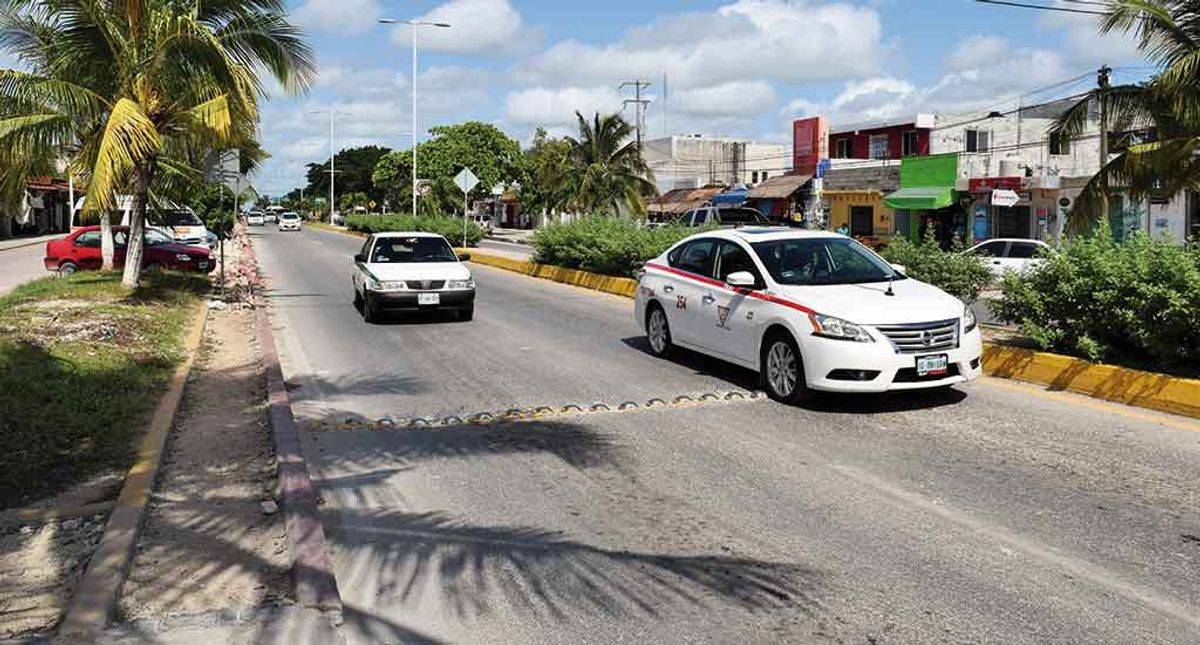
By the end of November, the Institute of Mobility of the State of Quintana Roo (Imoveqroo) is expected to approve and publish a new fare system for taxi service in Tulum. The announcement, confirmed by Manuel Solís Alcocer, secretary general of the local taxi union Tiburones del Caribe, marks a step toward greater transparency and accessibility for both residents and visitors as the region prepares for the high tourism season.
According to Solís Alcocer, the update seeks to prevent irregular charges and improve public confidence in the local transport network. “We are supporting a system that ensures the fare chart is clear and accessible for everyone in Tulum. It will be visible inside the vehicles and online so that anyone can check prices from their phone,” he said.
The plan includes the introduction of a QR code that passengers can scan to verify official rates. This code will be displayed in taxis and on digital platforms linked to Imoveqroo, part of a wider push to modernize transport management in Quintana Roo.
A sector under scrutiny as complaints mount
Despite ongoing reforms, taxi services remain the top source of complaints among tourists in Tulum, both nationally and internationally. Issues range from overcharging and price extortion to verbal abuse. For years, social media platforms and travel forums have registered recurring reports from visitors who say they were charged excessive rates or mistreated by drivers along the coastal hotel zone.
The situation has affected the destination’s image, prompting calls for stricter enforcement and clearer pricing systems. Local business owners argue that unchecked fares undermine Tulum’s competitiveness compared to Playa del Carmen and Cancún, where electronic fare systems are already in place.
The introduction of digital tools such as QR verification is seen by many as a test case for how Tulum handles the growing tension between its expanding tourism economy and its need for better transport governance.
“Transparency in Tulum taxi rates could help restore confidence,” said a hotel manager familiar with the initiative. “Tourists just want clarity and fairness, and that benefits everyone.”
Balancing growth and control in the local fleet
According to the Tiburones del Caribe union, there are currently around 400 taxi concessions in operation across Tulum. While the number has grown steadily, Solís Alcocer said most drivers are adapting operations based on seasonal demand. He acknowledged that roughly 20 to 30 percent of concessions have been inactive in recent months, reflecting the slowdown in international arrivals and the lingering economic effects of reduced flight connectivity.
Still, the union expects full reactivation by December, coinciding with the peak months of December, January, and February. “We are preparing for a gradual recovery. Even if there has been a drop in international flights, activity is picking up, and we want to be ready,” Solís Alcocer explained.
The measured expansion of the fleet, he added, is part of an effort to maintain balance in the local market. “It is good for the taxi family to grow, but in a controlled way, with a plan that allows equilibrium,” he said.

Collaboration with hotels to curb fare abuses
Authorities and the union are coordinating with hotel associations in Tulum to limit overcharging incidents. The goal is to integrate official taxi operators into the broader tourism mobility ecosystem and ensure fair pricing for guests.
Solís Alcocer acknowledged that not all transport providers comply with the established fare system, especially some private shuttle companies operating without official tariff charts. “We, as taxi drivers, act transparently because we follow a fare chart. But there are transport companies without one, and that causes confusion,” he said.
The union is now exploring agreements that would allow hotels to verify driver credentials and display authorized fare tables at reception desks and digital kiosks. This approach could reduce disputes and encourage visitors to use regulated taxis.
A needed reset for a tourism-dependent economy
Tulum’s dependence on tourism makes its transport sector a critical component of its economy. The city has long faced criticism for unreliable pricing, lack of regulation, and inconsistent service quality. Many see the current initiative as part of a “reset” phase similar to what Playa del Carmen and Cancún underwent years ago, when rising tourist dissatisfaction forced tighter mobility oversight.
Solís Alcocer said that both the private sector and authorities understand that reputation is at stake. “As in any community, there are good and bad practices. The important thing is to keep improving so that service becomes more professional and fair,” he noted.
This statement reflects a growing consensus that reforming local transport is not only about regulation but also about restoring trust between drivers and passengers.
Toward a single pricing standard
A long-term goal, according to the union, is the creation of a unified fare policy that eliminates price distinctions between locals and tourists. “We would like to establish one price for everyone, without differences. It’s a process that will take time, but we are working toward it,” Solís Alcocer said.
Uniform pricing could help Tulum align with other international beach destinations that have moved toward standardized digital fare systems. For many residents, such transparency would mark a major shift in how the city manages one of its most sensitive sectors.
What is at stake for Tulum
As the new fare chart approaches implementation, the success of this reform could determine whether Tulum’s transport system regains public trust or continues to fuel frustration among visitors. If effective, the model could serve as a blueprint for other municipalities in Quintana Roo struggling with similar issues.
A clear and accessible digital fare system may seem like a technical adjustment, but for a city whose economy relies almost entirely on tourism, it represents much more. It signals how Tulum intends to manage its growth, its reputation, and its relationship with millions of travelers who visit each year.
The Tulum Times will continue monitoring the rollout and its impact on both drivers and passengers as the season progresses.
Tulum taxi rates remain at the heart of the discussion, a test of transparency and trust in one of Mexico’s fastest-growing destinations.
We’d love to hear your thoughts. Join the conversation on The Tulum Times’ social media.
Do you think the new fare system will change tourist perceptions of Tulum’s taxi services?