
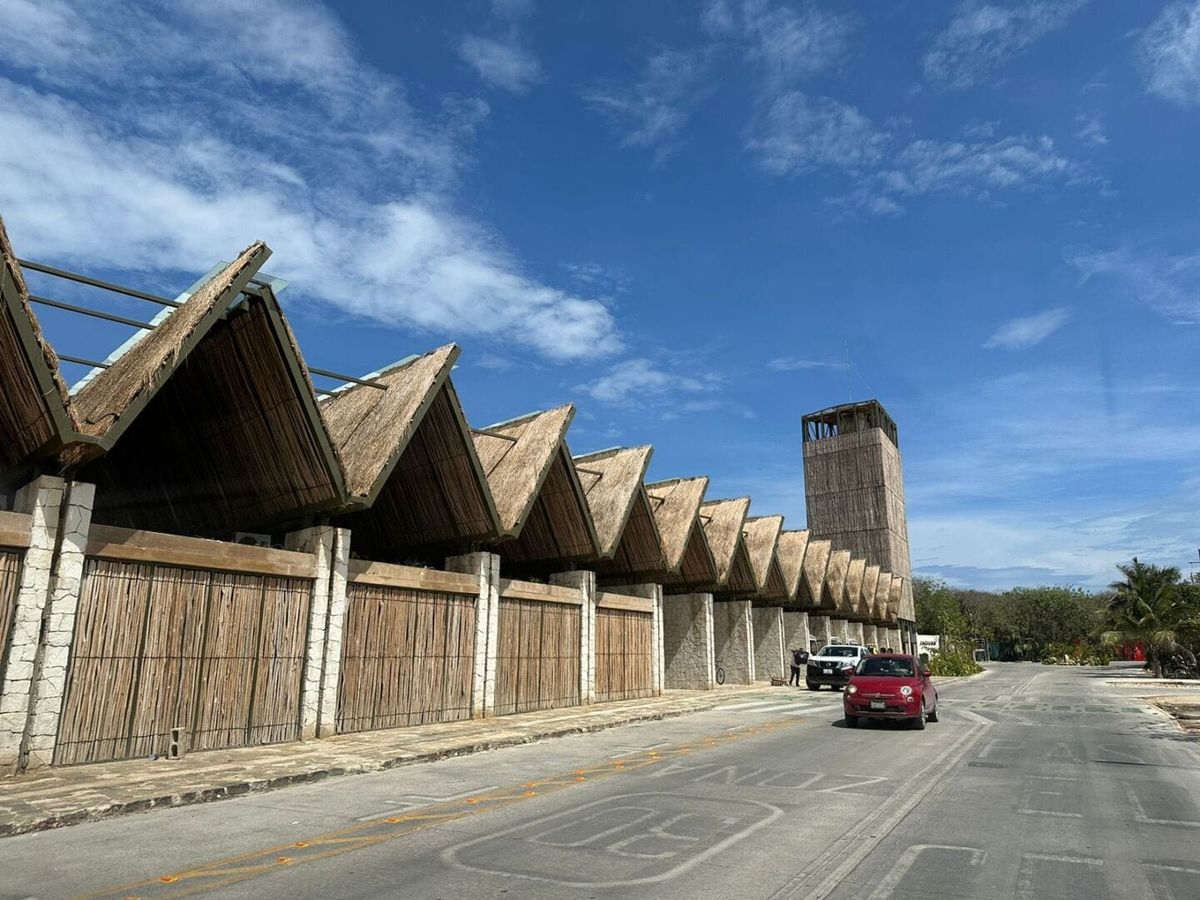
It used to be that the scent of copal drifted freely through the air near Tulum’s beach paths, carried by ocean breezes and the hum of local voices. But now, something’s missing.
Half of the artisan shops near the entrance to the Parque Nacional del Jaguar have shuttered. Not because of low season, not because of storms, but because visitors stopped coming.
And it all changed with a gate.
A Barrier, Not a Welcome
The shift began when the Grupo Aeroportuario Ferroviario de Servicios Similares y Conexos Olmeca Maya Mexica (Gafsacomm) took control of access routes to the park and nearby beaches. What was once a fluid entry to one of Mexico’s most stunning coastal reserves became a paywall.
Visitors now must enter via Federal Highway 307, where a 105-peso charge awaits them, followed by an additional 100 pesos collected by the Instituto Nacional de Antropología e Historia (INAH). That’s over 200 pesos (more than 10 USD) just to reach the coast.
This might not seem like much to some tourists. But to vendors like Nora Elena Palacios, it’s been devastating.
“Shops have closed because, with no people, there’s no money to pay the rent, which is at least 12,000 pesos a month,” she told Sipse. “That’s why the closures are happening right now.”
Palacios isn’t alone. Other vendors have echoed the sentiment, calling it the worst crisis they’ve faced in living memory. Behind each closed shopfront is a family, a story, and months of unpaid bills.
The Struggle for Survival Behind Souvenirs
Imagine a small shop filled with handcrafted dreamcatchers, embroidered blouses, and Mayan replicas carved by hand. The kind of place where a tourist might chat with the maker, learn the story behind the craft, and take home something real.
Now imagine that same shop closed, its metal shutter rusting in the salt air.
Tulum’s artisan economy doesn’t run on high margins. Many vendors survive week to week. With a sudden plunge in foot traffic, some can’t even make rent, let alone afford materials. As Palacios explains, “Even if you have beautiful things to sell, no one’s coming through the door.”
The story of these vendors is one of invisible collapse, quieter than the headlines, but no less urgent.
What Sparked the Crisis?
The turning point came with the reconfiguration of beach and park access. What used to be an open area, where locals and tourists mingled near the “ruinas” entrance, has now become highly restricted.
After community protests and road blockades along Federal Highway 307, including participation from municipal, state, and federal authorities, a temporary resolution was reached: the southern access would remain open year-round and free of charge. This was confirmed by Diego Castañón Trejo, Tulum’s municipal president.
“We want free beaches. We want order, and we’re going to do things the right way, never behind the people’s backs,” Castañón said in a public statement.
But the situation remains in flux.
A formal request has been submitted to the Comisión Nacional de Áreas Naturales Protegidas (CONANP) to reopen the older, more accessible path near the archaeological ruins. Locals say that without this, the lifeline for many vendors is effectively severed.
A City Caught Between Development and Heritage
Tulum has become a magnet for international tourism, drawn by its jungle-chic hotels and pristine beaches. But as investment grows, so too does the tension between access and exclusivity.
Cancún and Playa del Carmen have faced similar growing pains, but Tulum’s rapid transformation seems particularly stark. Where once there was sand and soul, there are now gates and guards.
This shift isn’t just logistical, it’s ideological. Who gets to enjoy the Riviera Maya’s natural beauty? And at what cost?
What’s happening in Tulum could be a test case for Mexico’s broader challenge: balancing tourism revenue with public access, development with cultural preservation.
The Human Toll of Bureaucracy
Palacios and her fellow vendors aren’t fighting for luxury. They’re fighting for survival. For many, their only hope lies in restoring a more accessible path to the beaches, not just for tourists, but for locals too.
Some hope the second public access route, currently under review by CONANP, will offer relief. Others fear it might come too late.
“There’s no people because of the high fees at the Parque Nacional del Jaguar,” Palacios said. “If only they’d leave it at 100 pesos.”
It’s not just a matter of 5 pesos here or there. It’s about the ecosystem of livelihoods built around free movement, local connection, and spontaneous tourism.
When you put up a toll, you don’t just collect money, you draw a line between those who can afford to cross it and those who can’t.
What’s at Stake for Tulum?
Tulum’s image, one of barefoot luxury and wild coastline, rests on a fragile balance. If public access becomes a memory, so too will the vibrant, local-driven culture that gives this place its magic.
The Tulum Times will continue to follow this evolving story, especially as pressure mounts on CONANP and Gafsacomm to provide long-term solutions.
At the heart of the matter isn’t just who owns the land, but who belongs to it.
We’d love to hear your thoughts. Join the conversation on The Tulum Times’ social media.
Will free beach access return in time to save the local vendors, or is this the beginning of a deeper shift in who Tulum is really for?