

A federal judge has issued a ruling that directly affects the most contested portion of the Tren Maya, the rail segment connecting Cancún and Tulum through the Riviera Maya’s ecologically sensitive corridor. The decision does not halt the entire project, but it sets a mandatory condition that changes how the work and related activities must be monitored from now on.
According to the ruling described in the case, Mexico’s environmental enforcement agency, the Federal Attorney for Environmental Protection (Profepa), must carry out strict, constant, on-the-ground inspections along the Cancún–Tulum route. Paper reviews and administrative reports prepared from offices outside the region will no longer be treated as sufficient oversight for this stretch.
The order arrives at a moment when the train is already operating on several sections while continuing to face litigation, financial questions, and sustained criticism over potential ecological damage. For communities and businesses across Tulum and the wider Riviera Maya, the immediate change is not a new stop or schedule update, but the prospect of tighter enforcement in the area where construction and operation intersect with the region’s water system, caves, and jungle.

Court order targets Profepa’s oversight role
The ruling requires Profepa to maintain permanent physical inspections along the Cancún–Tulum segment, shifting oversight from primarily administrative procedures to continuous field verification. The judge’s reasoning, as presented in the base text, reflects a conclusion that environmental monitoring in this zone cannot remain superficial or bureaucratic.
The mandate focuses on direct supervision and specific risk areas. The order calls for verification of tree clearing and possible impacts on protected species, safeguards for cenotes and caves, monitoring of potential impacts to underground rivers, and frequent, detailed reporting.
This matters for Tulum because the Cancún–Tulum corridor is the region’s main tourism artery and also the same corridor where the underground freshwater system and the karst terrain make environmental damage difficult to detect early and difficult to reverse later. Residents, local workers in tourism and construction, and nearby communities are directly affected if oversight becomes more stringent on-site, including through the pace of work, compliance demands, and enforcement consequences.

A judge’s warning raises legal stakes for officials
Beyond the inspection requirements, the judge warned that failure to comply could trigger administrative penalties, economic fines, and even potential criminal liability for officials, according to the description in the text. That warning, in practical terms, turns environmental supervision into an obligation under active judicial scrutiny rather than a procedural checklist.
The pressure falls most directly on Profepa, which is tasked with enforcement. It also raises the stakes for the authorities responsible for demonstrating that the project complies with environmental law on the ground, not only in documentation.
A subtle but important implication is that the order shifts the burden of credibility. In a highly contested stretch like Cancún–Tulum, the ruling signals that courts may expect visible, verifiable enforcement activity rather than assurances based on internal reporting.
The Tulum Times will continue to follow how this requirement is applied in practice, particularly as it affects environmental protection commitments in the Riviera Maya’s most fragile areas.

What makes Cancún–Tulum the most sensitive stretch
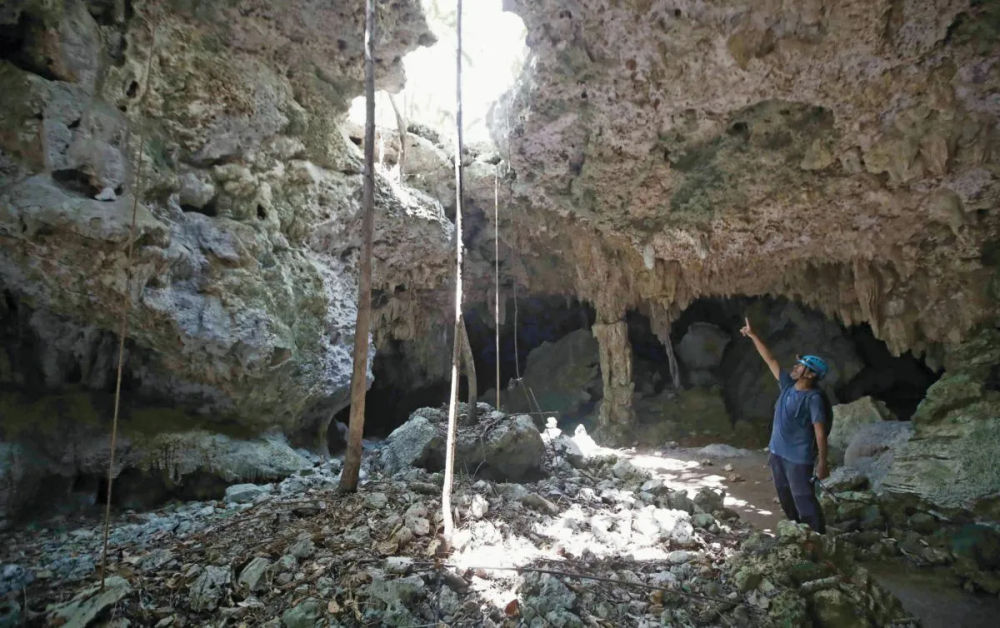
The Cancún–Tulum segment is described as crossing one of Mexico’s most delicate ecological zones. The base text emphasizes two features: the underground freshwater system and the tropical jungle habitat above it.
Under the surface lies an interconnected network of subterranean rivers that the text describes as among the most extensive in the world and as the main source of freshwater for the region. The concern laid out by critics is that poorly executed drilling, structural vibration, or spills could cause damage that spreads through water movement below ground, connecting points across long distances.
On the surface, the route cuts through tropical jungle habitat for wildlife described in the text as emblematic of the region, including jaguars, spider monkeys, and tapirs, along with birds and plant species considered at risk. Specialists cited in the text also point to the karst terrain, characterized by porous soils and cavities, as a reason deeper studies and continuous monitoring are necessary.
The ruling, as described, implicitly acknowledges that the environmental risk is not hypothetical to those raising concerns, and that monitoring in such terrain must be more than intermittent reviews.
Activists and local groups see progress but remain wary
The base text reports that collectives and organizations that promoted legal actions welcomed the ruling as an important advance. Their claims have centered on alleged irregularities such as accelerated tree clearing, work proceeding without sufficient supervision, and potential impacts on wetlands and natural heritage.
At the same time, those groups argue that the challenge now is enforcement. A judicial order does not guarantee compliance on its own, they say, and they plan to track Profepa’s actions closely. If they identify omissions, they indicated they would return to court.
For Tulum, this sets up a new phase in which scrutiny may intensify not only on construction activity but also on the regulator’s presence and documentation in the field. The people directly affected include nearby communities concerned about water quality and habitat, as well as workers and businesses whose activity depends on predictable project conditions in the region.

Financial questions and ongoing litigation remain unresolved
The environmental dispute is described as only one front in a wider set of challenges facing the Tren Maya. The text states that the project continues to face multiple active legal cases, budget adjustments, and questions about long-term economic viability.
It also says official information shows operations depend heavily on public subsidies, while ticket revenue is below initial expectations. The base text further notes reports of operational incidents and complaints from communities related to expropriation processes.
Taken together, these issues broaden the debate beyond whether the project was a sound idea in theory. The focus, as framed in the text, is on execution: compliance with environmental law, protection of the natural environment, and whether the project can be sustained over the long term.
The court ruling does not resolve those broader questions. But it does intensify oversight on the most sensitive segment and raises potential legal consequences for officials responsible for ensuring environmental law is followed.
How Segment 5 is defined
Segment 5 of the Tren Maya is the portion connecting Cancún and Tulum in Quintana Roo. It lies in the northern part of the state within the Riviera Maya tourism zone and passes through jungle, urban developments, and areas near cenotes and underground river systems.
The base text describes Segment 5 as approximately 67 kilometers long and divided into two parts: Segment 5 North from Cancún to Playa del Carmen, and Segment 5 South from Playa del Carmen to Tulum.

Will stricter oversight change what happens next?
The ruling is framed as a turning point for the Cancún–Tulum corridor because it places this segment under sustained legal attention. It does not stop the project outright, but it changes what must happen continuously in the field: direct inspections, verification of impacts, protection measures for cenotes and caves, and detailed reporting.
What changes from now on is that environmental enforcement is expected to be visible, constant, and documentable on site, with explicit consequences for noncompliance. For Tulum and surrounding communities, what is at stake is not only the pace of works or operations, but the integrity of the underground freshwater system and the jungle corridor that supports both biodiversity and the region’s tourism economy.
As this develops, the key test will be whether the required on-the-ground inspections translate into measurable protection measures along Tren Maya Tramo 5.
We’d love to hear your thoughts. Join the conversation on The Tulum Times’ social media.
What should residents look for to judge whether on-site inspections are truly happening?