
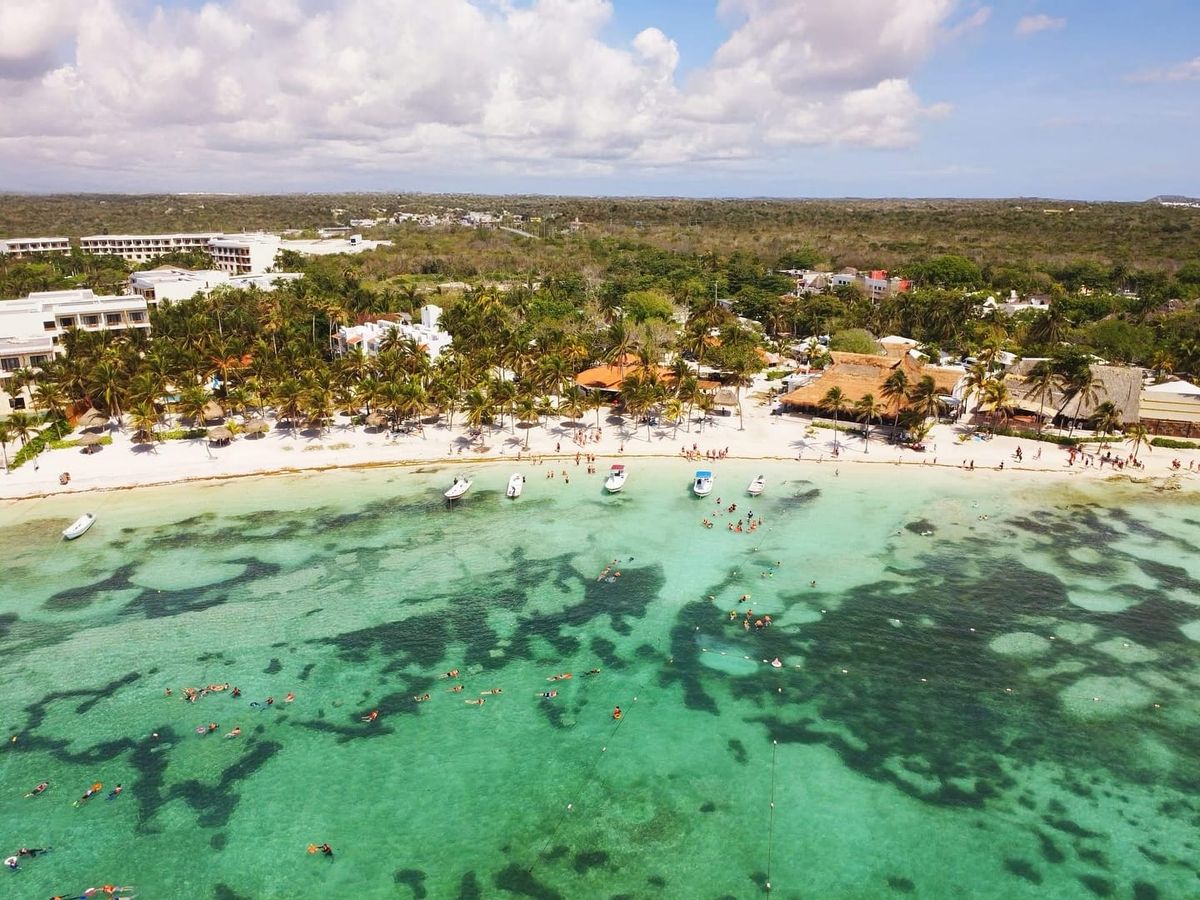
The turquoise dream of the Riviera Maya keeps getting tangled in brown tides.
Each year, the shores of Quintana Roo are carpeted in sargassum, the once-harmless seaweed that has evolved into a symbol of environmental and economic disruption. Now, in 2025, the stakes are higher than ever, and the fight has moved to Akumal.
This quiet bay south of Playa del Carmen will host the First International Forum on Sargassum Barriers, a high-stakes gathering where scientists, hotel groups, NGOs, and local actors will converge to dissect what works and what doesn’t when it comes to containment technology.
Why the Sargassum Crisis Keeps Growing
From Natural Phenomenon to Persistent Threat
Once a rare occurrence, the arrival of sargassum along Mexico’s Caribbean coast has become a seasonal crisis. With forecasts from the Red de Monitoreo del Sargazo now warning of landfalls exceeding 1,000 cubic meters in mere hours, coastal communities brace not only for cleanup costs but for the suffocating stench of decaying algae and the public health concerns it brings.

Environmental and Economic Impact on Riviera Maya
The decomposing macroalga releases gases like hydrogen sulfide, affecting marine fauna and even human health. For tourism, the economic lifeblood of Tulum, Cancún, and Playa del Carmen, the effects are immediate and devastating. Empty hotel rooms. Closed beach clubs. Visitors are choosing cleaner destinations.
“It’s no longer just a nuisance. It’s a force that shapes how this region lives and survives,” said a local business owner in Tulum, who has seen summer bookings drop by 40% in past years during peak sargassum waves.
The Akumal Forum: A First Step Toward Smarter Solutions
Behind the Initiative
Set in the pristine Bay of Akumal, the forum is being spearheaded by Seamos Internacional and Eco Protección Akumal, with critical support from the hotel sector and environmental advocates. The event promises a rare mix of academic insight, on-the-ground experience, and technical training, all aimed at confronting a growing regional emergency.
Iván Pennie, a coastal management specialist and key voice behind the forum, puts it plainly: “There is no perfect barrier. But we can avoid costly mistakes if we learn how to install them correctly.”

Training Over Hype
The forum’s focus isn’t just on innovation, it’s on implementation. From understanding marine currents to selecting anchoring systems that hold in shifting sands, the sessions aim to give stakeholders hands-on guidance.
“Too many barriers fail because they ignore the ocean’s behavior,” Pennie warned. “When installed wrong, they don’t stop sargassum, they trap it.”
By drawing on past failures and showcasing successful installations elsewhere in the Caribbean, organizers hope to cultivate a practical knowledge base that can be replicated across Quintana Roo’s vulnerable coastline.
Hybrid Format for Broader Reach
The event, free and open with registration, will run for approximately three hours in both in-person and virtual formats. Around 30 participants have already registered for on-site attendance, with expectations of 70–80 as the date nears.
Online access ensures that stakeholders from as far as Belize or the Dominican Republic can also join, reinforcing the forum’s regional ambition.

A Collective Response to a Shared Crisis
Collaboration Over Competition
Unlike previous attempts to tackle sargassum in isolation, this initiative pushes for coordination. Hotel managers, environmental agencies, universities, and vendors will sit at the same table, not to pitch their own fixes, but to co-design smarter, site-specific strategies.
It’s an approach that feels overdue. Tulum, with its spiritual allure and ecological fragility, has often felt the brunt of reactionary decisions and patchwork policies.
Building Knowledge to Face the Future
The forum’s deeper goal is to build collective knowledge. As the Caribbean increasingly becomes a frontline for climate-influenced events like massive sargassum blooms, the old playbook no longer applies.
This isn’t just about floating barriers. It’s about shifting mental models, moving from reactive cleanup to adaptive resilience.
What’s at Stake for Tulum and Beyond
This 2025 season is already shaping up to be one of the toughest. For towns like Tulum that rely heavily on eco-tourism, failure to manage sargassum could mean more than lost revenue, it could erode the very foundation of their identity.
But forums like Akumal’s offer a sliver of optimism. They suggest that change might come not through miracle technologies, but through shared lessons and local leadership.
And in a world increasingly overwhelmed by macro-scale problems, maybe the answers start small, with a better anchor, a smarter map of ocean currents, or a three-hour conversation in a quiet bay.
We’d love to hear your thoughts. Join the conversation on The Tulum Times’ social media.
What local innovations or experiences have you seen work, or fail, in the fight against sargassum?