
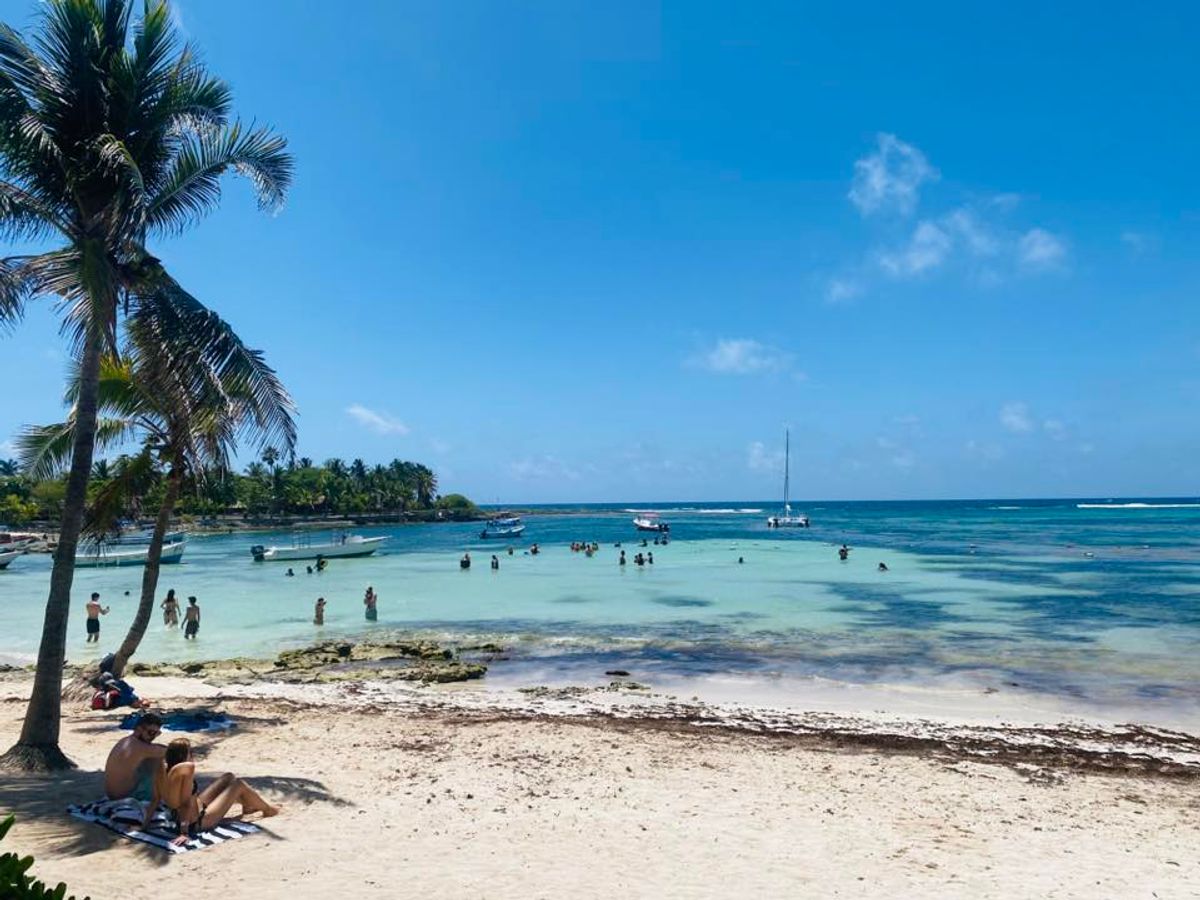
At sunrise in Akumal Bay, the beaches tell a different story. No matted clumps of seaweed choking the surf, no sharp scent of decay hanging in the air, just clean, golden sand and the rhythmic hush of waves doing what waves are supposed to do. And while Akumal takes the headlines for its success, all eyes in Tulum are fixed on this coastal neighbor, because the battle to keep beaches free of sargassum is one they’re fighting too, and they’re not planning to lose.
A Template for Tulum’s Coastal Resilience
Akumal’s recent victories aren’t a coincidence. They’re choreography. A synchronized effort involving tour guides, hotel staff, marine biologists, and government agencies like Conamp and Zofemat. Manual cleanups start before most people hit snooze. Surveillance teams scan the horizon, ready to respond to any green-brown smear in the distance. And this playbook isn’t staying locked in Akumal.
In Tulum, similar tactics are unfolding. What once felt like crisis management has matured into coastal strategy. Hotels fund cleanup crews, cooperatives coordinate logistics, and early-morning shifts have become the norm. It’s less about reacting and more about staying ahead of the tide, literally.
“We learned that waiting is what kills you,” says Manuel Jiménez, a snorkeling guide who splits his time between Akumal and Tulum. “Now we’re out there before the sun comes up. Everyone pulls their weight, otherwise we all go under.”
Tourism Without Disruption? Tulum’s Betting On It
For towns like Tulum, the stakes are higher than aesthetics. Seaweed isn’t just an eyesore, it’s a deal-breaker for travelers. One viral photo of a brown shoreline, and your booking calendar goes quiet. That’s why keeping beaches free of sargassum is about economic defense as much as ecological preservation.
“Guests are shocked when they arrive and see clear water,” says Anaí R., a local guide. “It makes all the difference. They snorkel, they book another tour, they tell their friends.”
And the payoff is tangible. Higher occupancy rates. Longer stays. Better reviews. More tips in the pockets of local workers who depend on the flow of tourism to keep families afloat. Tulum, once struggling with wave after wave of sargassum, is now stepping into a new era, one where the beach doesn’t just recover, it resists.
Still a Fight, But a Smarter One
Of course, the problem hasn’t vanished. Ocean currents don’t care about municipal boundaries or cleanup schedules. The sea still brings what it brings. But there’s a new kind of confidence pulsing through Tulum’s waterfront, one built on preparation, coordination, and a refusal to be caught off guard again.
The equipment is better. The response times are faster. And most importantly, the community is more united than ever. What used to be an environmental emergency has become a daily commitment. Not a burden, but a shared mission.
What This Means for the Future
As climate patterns shift and sargassum blooms become more unpredictable, the communities that adapt will be the ones that thrive. Tulum’s no longer just reacting. It’s setting an example, using Akumal’s success not as a crutch, but as a compass.
Together, these towns are drawing a new map for the Mexican Caribbean, one where travelers can count on open beaches, clear water, and the kind of natural beauty that drew them here in the first place.
We’d love to hear your thoughts, join the conversation on The Tulum Times’ social media.