
Tulum is a place that always feels on the verge of revelation, turquoise waves flirting with the shore, cenotes reflecting the sky better than any mirror ever could, and a jungle that exhales like a living cathedral.
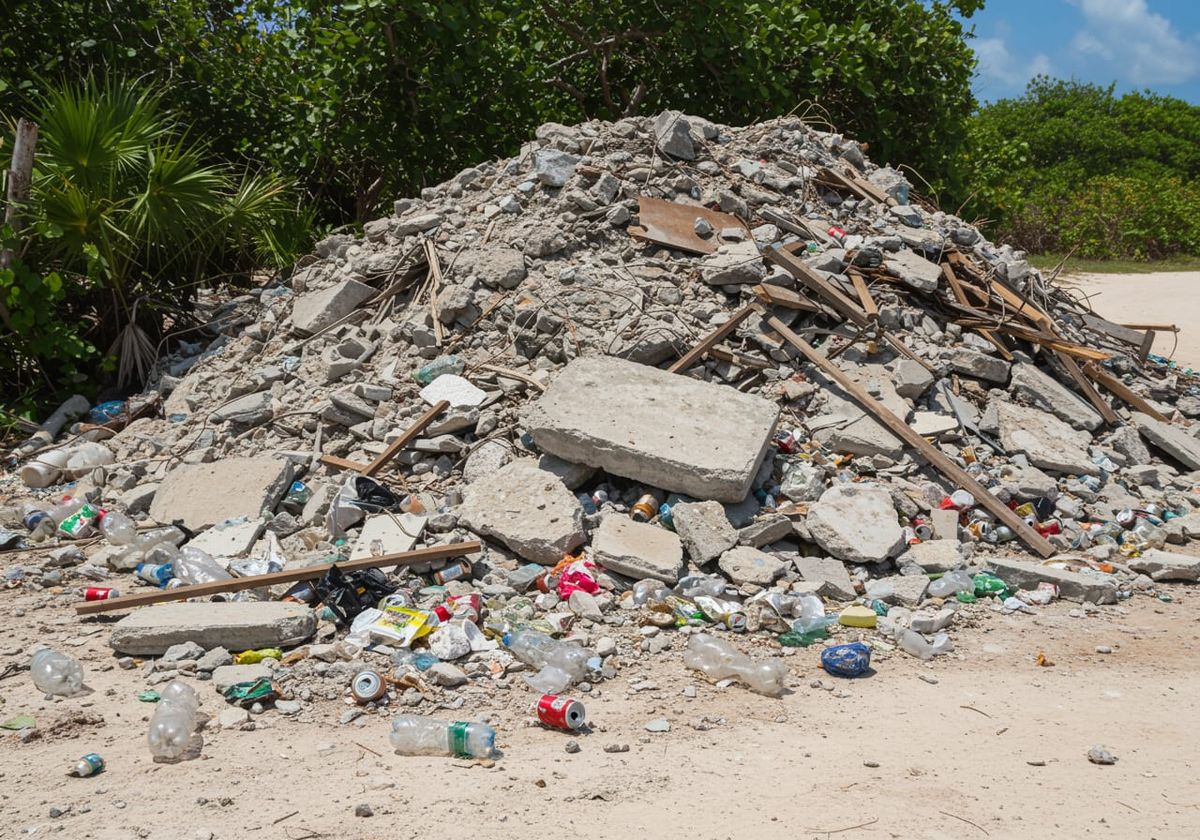
But while the town blossoms to meet demand, something far less photogenic is quietly spreading its roots: construction waste, blooming like concrete weeds where trees once ruled alone.
Eden or Dump Site?
Montes Gil, a well-known figure in Tulum’s real estate scene, isn’t shouting fire. He’s simply pointing to what he sees on his morning walks. According to his estimates, every new development in Tulum produces about two tons of solid waste per day. We’re not talking paper cups here, we’re talking plastic, rebar, treated wood, cement rubble, and even chemical debris.
The real gut punch? Gil believes up to 40% of that waste ends up in the jungle, unmonitored and unmanaged, like a dirty secret hidden behind eco-chic facades.
Walk a few meters past the sales office of a new luxury condo and you might find it: insulation foam clinging to tree trunks, discarded packaging lying like forgotten offerings to the gods of overdevelopment.
Not Just Bricks and Rubble, But Lives, Too
There’s another layer to the mess, a more human one. Beer cans, food wrappers, plastic bottles. Not left by tourists, but by the very workers building paradise.
It’s not about negligence. It’s about absence. Many of these workers live in makeshift shelters or directly on the construction sites. With no proper waste disposal services, no designated collection areas, trash builds up the way dust does in a neglected room: quietly and inevitably.
When infrastructure is missing, it’s not just the jungle that suffers, it’s dignity that takes a hit.
Regulations: Still Under Construction
Here lies the crux of the issue: while buildings rise fast, regulations crawl. Gil points out that building permits continue to be approved, even for massive projects, often without detailed environmental plans or proper waste protocols.
And so, the pattern repeats. Behind the polished promotional videos and “eco-conscious” branding, informal dumpsites flourish, hidden just out of frame.
No one’s wagging fingers (yet), but the unspoken truth hangs heavy: without coordination, even the best intentions leave scars.
The Jungle Isn’t Scenery, It’s the Soul
For Gil, the concern isn’t bureaucratic. It’s visceral. The jungle isn’t just a backdrop, it’s the essence of Tulum. It shelters biodiversity, purifies the water we drink, and gives the region its pulse.
Dumping waste here isn’t just an eyesore, it’s a slow unraveling of everything that makes this place matter. And in an age when travelers are becoming more conscious, Tulum’s future reputation could depend less on luxury and more on accountability.
But this isn’t a eulogy. Not yet. It’s a warning, and an invitation.
Solutions Over Shame
What’s needed now isn’t outrage. It’s coordination. Developers, local authorities, civil society, the responsibility is shared, not passed like a hot coal.
Protocols for waste management. Monitored disposal zones. Decent living conditions for workers. These aren’t revolutionary demands. They’re the bare minimum.
Gil isn’t preaching the apocalypse. He’s offering a window of opportunity. If we choose action over apathy, growth over greed, Tulum can continue to flourish, not despite its wildness, but because of it.
After all, what draws us here isn’t just what’s been built.
It’s what still breathes.