

Environmental activists from Sélvame MX report that multiple structural columns supporting the Tren Maya on Section 5 South continue to show significant damage, despite federal commitments made nearly a year ago to repair environmental harm linked to the project.
The findings are based on a recent underwater inspection carried out by members of the collective between Akumal and Chemuyil, an area where the railway runs on an elevated viaduct supported by columns embedded directly into the region’s aquifer.
According to the activists, the condition of the submerged infrastructure represents both a potential safety concern for the railway and an ongoing source of contamination in one of the most fragile freshwater systems in the Riviera Maya.
This report forms part of an ongoing investigation by The Tulum Times into environmental oversight and infrastructure integrity along Section 5 South of the Tren Maya.
What the underwater inspection documented
Members of Sélvame MX say their immersion revealed columns beneath the surface that remain fractured or “burst,” with visible deterioration of the concrete structure. They also report that the metal casing used during construction has partially detached in several locations, leaving reinforcement elements exposed to the surrounding water.

Video footage released by the collective through its public channels appears to show cracked concrete, missing protective layers, and sections of material that have broken away from the columns. The activists assert that these conditions match damage previously documented during earlier inspections.
José Urbina Bravo, a member of the collective who participated in the dive, said the inspection was conducted to verify whether promised repairs had taken place. According to his account, at least one column that had previously released large quantities of cement into the ecosystem remains in the same state.
The Tulum Times reviewed the footage shared by the group. While the images show apparent structural deterioration, the outlet was not able to independently inspect the underwater structures or verify the extent of the damage beyond what is visible in the material provided.
Section 5 South and its relationship to the aquifer
Section 5 South of the Tren Maya runs from Playa del Carmen to Tulum and was constructed as an elevated bridge rather than a ground-level rail line. The viaduct is supported by deep piles installed directly into the limestone subsoil, which contains interconnected caves, underground rivers, and the region’s primary freshwater reserves.

Environmental groups have repeatedly emphasized that this karst system is highly sensitive to physical disturbance. Any structural failure or material release within the aquifer can spread rapidly through the underground network, complicating detection and remediation.
Sélvame MX argues that damaged columns embedded in this environment create ongoing pathways for contamination, including cement residue and corrosion products, even after construction has been completed.
Federal commitments and what remains unclear
Nearly a year ago, federal authorities acknowledged environmental damage associated with construction in this section of the project. That acknowledgment came from the Secretaría de Medio Ambiente y Recursos Naturales, led at the time by Alicia Bárcena Ibarra.
According to Sélvame MX, the federal government committed to repairing damaged structures and addressing the environmental impact caused by spilled concrete. The collective maintains that the latest inspection shows those commitments have not yet been fulfilled.

What remains unclear is the scope of any remediation work that may have occurred beneath the surface. No public documentation detailing underwater repairs to the columns in this section has been released, and access to submerged infrastructure is limited to specialized dives.
The Tulum Times contacted federal agencies involved in the Tren Maya project seeking clarification on the status of repairs and maintenance protocols for submerged columns. No response had been received by the time of publication.
Distinguishing documented evidence from projected risk
The evidence presented by Sélvame MX consists of visual documentation of damaged columns and firsthand accounts from recent dives. These materials indicate that certain structural elements remain visibly compromised.
The potential consequences described by the activists, including long-term structural risk and continued aquifer contamination, are based on the known characteristics of karst environments and the continued presence of deteriorated materials. While these outcomes cannot be independently confirmed without official inspections, they reflect concerns consistently raised by environmental specialists familiar with the region.
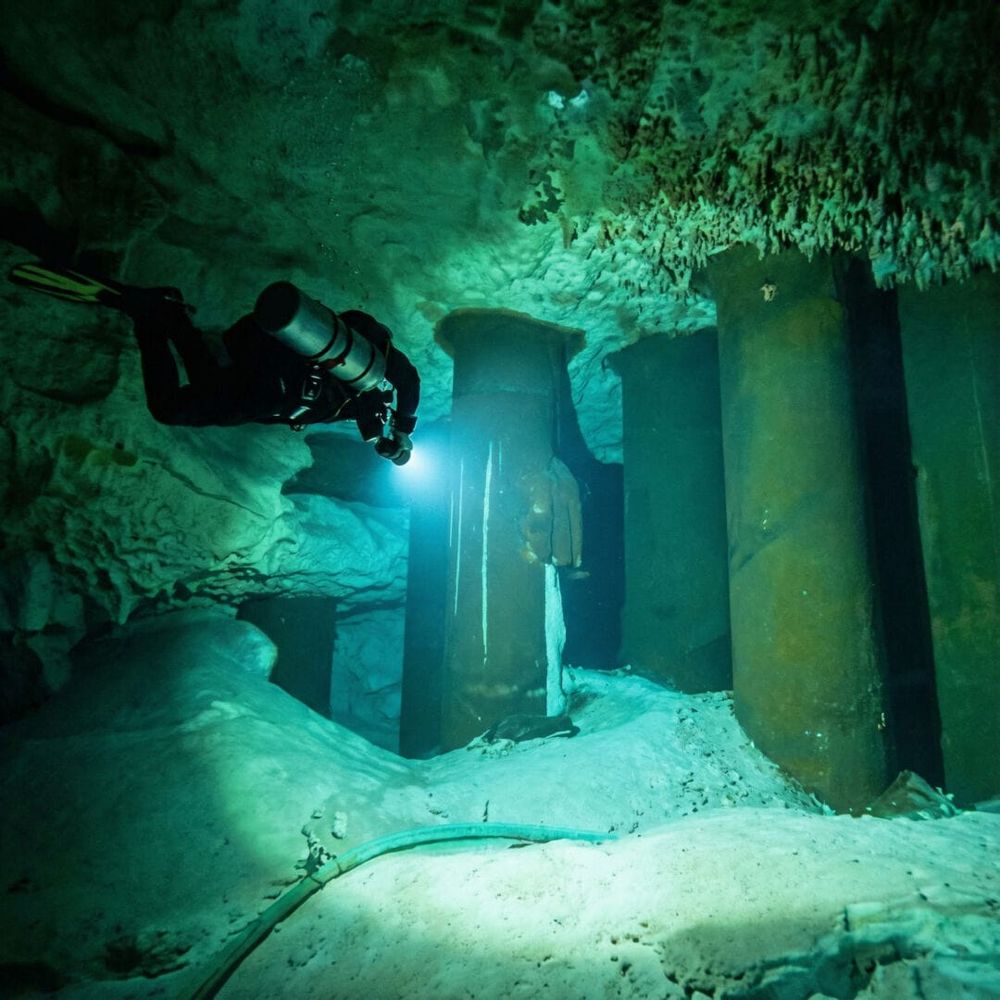
One challenge highlighted by this case is the limited visibility of underwater infrastructure once construction is completed. Unlike surface-level defects, submerged damage is rarely accessible to public scrutiny, making independent verification difficult and increasing reliance on official disclosures.
Calls for oversight and transparent verification
Sélvame MX has called on authorities responsible for the Tren Maya to conduct and publicly disclose independent underwater inspections of Section 5 South. The group argues that transparency is essential to determine whether structural integrity and environmental safeguards are being adequately maintained.
They also emphasize that addressing the issue at an early stage could prevent more complex and costly interventions in the future, particularly if rail traffic and vibration increase over time.
For The Tulum Times, this investigation underscores a broader question about infrastructure accountability in environments where damage is largely invisible to the public. What happens beneath the surface may prove just as consequential as what can be seen above it.
As this Special Investigation continues, the focus will remain on verified documentation, official responses, and the long-term implications of unresolved damage along Section 5 South of the Tren Maya.
What remains at stake is not only the safety of a major transportation project, but the protection of an aquifer system that sustains communities, ecosystems, and the regional economy. The issue of damaged Tren Maya columns continues to demand scrutiny.
We’d love to hear your thoughts. Join the conversation on The Tulum Times’ social media.
What level of transparency should be required for infrastructure built inside sensitive aquifer systems?