

The sky over the Riviera Maya rarely reveals what’s stirring just beyond the curve of the sea. One moment, it’s an endless canvas of turquoise and sun. Next, it harbors the beginnings of something formidable. Hurricane Season 2025 has arrived, and though the coastline still hums with the rhythm of tourism and beach life, beneath that surface runs an instinct, quiet, generational, unshaken. The people here know the signs. And they remember.
The Machinery Behind the Storm
Hurricanes are not sudden acts of chaos. They are precise events, shaped by elemental forces and predictable triggers. In the Atlantic basin, storm season begins on June 1 and ends on November 30, spanning six months in which nearly every major hurricane in modern history has formed. Though the calendar marks the boundaries, it is the ocean that dictates the pace.
Storms form when sea surface temperatures exceed 26.5 degrees Celsius, feeding evaporation that rises into the atmosphere. If the vertical winds are gentle, what meteorologists call low wind shear, and the upper air is moist, convection begins. Warm air rises, cools, condenses, and spins, drawn into a closed system by the Coriolis effect. What begins as a tropical wave crossing the Atlantic can, in time, become a cyclone. Or worse.
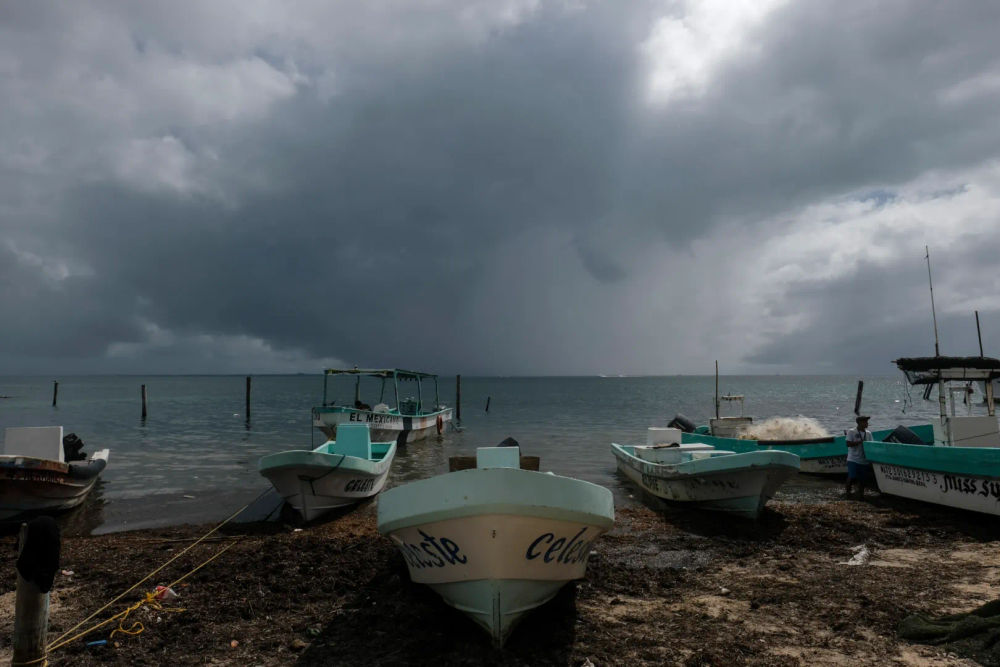
In 2025, the water is warmer than usual across the Gulf of Mexico and the Caribbean Sea. Wind shear is expected to remain low, and the absence of a dominant El Niño or La Niña system creates what meteorologists call a neutral ENSO state. But neutrality doesn’t mean stability. It means the atmosphere is listening, ready to respond to heat and moisture without interference. A blank canvas. A loaded chamber.
The Forecast: What the Models See
Forecast centers across the hemisphere are in rare agreement. Hurricane Season 2025 will be active, possibly among the most intense in recent memory. Predictions estimate 13 to 19 named storms, 6 to 10 hurricanes, and 3 to 5 major hurricanes (Category 3 or higher). That exceeds the thirty-year average, which sits closer to 14 named storms, seven hurricanes, and three major events.
These projections are not abstract. They are the product of historical data, sea surface temperature readings, wind patterns, and a complex matrix of satellite observations. They point to a season of high potential energy, storms that could form rapidly, strengthen quickly, and move fast. Especially in the second half of August through mid-October, when peak season traditionally unfolds.

The Memory of Wind
Tulum does not speculate about hurricanes in the hypothetical. This region has hosted them. And endured them.
In July 2024, Hurricane Beryl exploded into the record books as the earliest Category 5 storm ever recorded in the Atlantic. Beryl formed in the deep tropics and intensified over warm waters, then made landfall near Mahahual, just south of Tulum, as a strong Category 2. The winds flattened palapas. Rain cascaded through the jungle in sheets. Power failed across the region. But the human response was immediate. Crews cleared roads by dawn. Hotels opened their lobbies to stranded travelers. Volunteers delivered water where pipes had failed. Beryl did not stay long, but it made its point, 2025 would not be forgiving.
The echoes of Hurricane Milton in 2023 are still felt in Tulum’s readiness drills. Though it veered offshore before landfall, the storm’s rainbands flooded Holbox, closed beaches, and revealed weaknesses in some evacuation plans. It was not destruction, but disruption, and it was enough to provoke action.
Hurricane Grace, in August 2021, slammed into the coastline with Category 1 strength. Winds tore through trees. Entire neighborhoods lost electricity. Yet there were no fatalities in Tulum, a testament to growing infrastructure and a culture of preparedness. That same year, Hurricanes Gamma and Delta in October battered the peninsula with torrential rain, coastal flooding, and power failures that lasted days.

The lessons learned from these storms live in the bones of the town. They exist in the updated shelter maps, the reinforced hotel structures, and the neighborhood WhatsApp groups that activate when alerts go yellow.
Reading the Warnings
In Quintana Roo, hurricane communication follows a graduated scale. Each color represents a phase in the storm timeline, understood by every resident, hotel manager, and shopkeeper.
- Blue means watchful vigilance, a disturbance exists, but the threat is distant.
- Green signals a system is forming nearby, time to begin inventory, check supplies.
- Yellow means preparation, clear drains, secure rooftops, and verify emergency contacts.
- Orange is an active threat, evacuation planning begins, shelters open, and transportation halts.
- Red requires immediate action, movement ceases, residents and visitors seek safety, and the state enters emergency protocol.
These alerts are not passive broadcasts. They come via radio, television, municipal loudspeakers, and digital channels. In tourist areas, hotels provide multilingual briefings. Staff are trained to guide guests to internal shelters or designated municipal centers, of which there are more than 800 across the state.

Traveling During the Storm Window
To visit Tulum during Hurricane Season 2025 is not reckless. It is simply seasonal. The majority of days are clear. Rainstorms arrive like guests, sudden, loud, and gone by nightfall. But the wise traveler respects the weather. The wise traveler is ready.
Hotels here often include hurricane clauses in their booking policies, allowing rebookings or credits in the event of serious storm disruption. Comprehensive travel insurance, specifically covering weather-related cancellations, is more than an option. It’s the fine print that can save your trip.
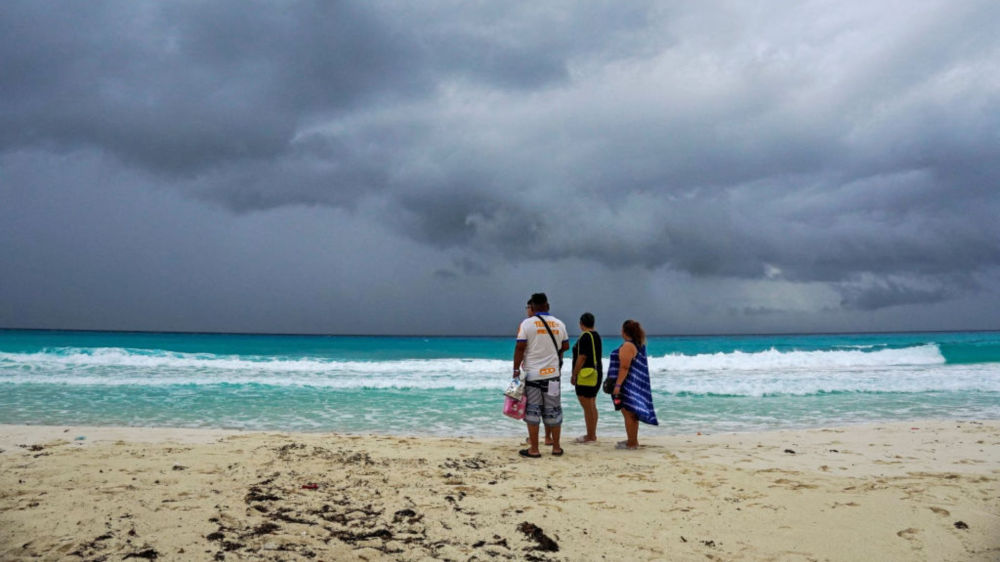
Visitors should stay connected to forecasts, understand the rhythm of alerts, and communicate with their hosts about procedures. If a storm threatens, your safety depends not only on government response, but on how early you act. In this region, timing is everything.
Infrastructure and Ecology as Defenses
Tulum is not passive in the face of risk. Investment in climate-resilient infrastructure has grown with each storm season. Hotels install hurricane shutters and secure water tanks. Solar installations often come with battery backups. Public shelters are reinforced and stocked before the first named storm is uttered.
Nature, too, plays its role. Mangrove forests lining the coast absorb storm surge and buffer communities from saltwater intrusion. Coral reefs break wave energy before it reaches land. Wetlands hold floodwaters that would otherwise invade homes. The loss of these ecosystems, through unchecked development or pollution, translates directly to human vulnerability.
Local conservation groups in Tulum are working not only for biodiversity, but for public safety. Every mangrove seedling planted is a small shield. Every reef restored is another breath of resistance against the sea.
A Region That Remembers
Storms do not erase this place. They reveal it. In the days before a hurricane arrives, you see the town bend without breaking. Windows close. Radios click on. Neighbors check on the elders. Tourists are offered shelter, not just rooms. And when the storm passes, and the sky turns that impossible shade of blue again, you see the town stand. Not untouched, but unbowed.

There is a moment after every hurricane, just after the rain has stopped, when everything is still. It feels like the world has been remade. In Tulum, that moment is not one of sorrow. It is the beginning of the rebuild, the return of music to cafés, the reopening of beach roads, the sharing of food under plastic tarps. That resilience is not an emergency response. It is culture.
Emergency Resources During Hurricane Season 2025
Preparedness is not only about sandbags and storm shutters. It’s also about knowing where to turn when time matters most. For residents and visitors in Tulum during Hurricane Season 2025, access to emergency services can make a critical difference. The following contacts should be saved in advance, written down, and made available offline in case of power or signal loss.
For any immediate emergency, the national hotline 911 remains the fastest route to assistance. This number connects you to medical services, police, fire departments, and disaster response teams. It’s free from all phones, including public and mobile lines. For anonymous tips or reports, the dedicated number is 089.
Tulum’s local response network is robust and well-practiced. Protección Civil, the civil protection authority, operates several phone lines: (984) 871 2688, (984) 871 3732, and (984) 802 5521. Their role becomes especially vital when coordinating evacuations, issuing shelter locations, and organizing post-storm recovery.
The Tulum Fire Department can be reached at (984) 879 3669, (984) 879 3670, and also by cellular at 116. Their role extends beyond fire suppression, they often lead in extraction, rescue, and water response during flooding events.
Tulum Police are available at (984) 871 2055 and work closely with Protección Civil during curfews, evacuations, and post-storm patrols to ensure community safety.
For medical emergencies, nearby Red Cross (Cruz Roja) locations include:
- Cruz Roja Cancún: (998) 884 1616
- Cruz Roja Playa del Carmen: (984) 873 1233
Additional ambulance services operate at (998) 887 2371 and 01 800 640 0333. The General Hospital in Playa del Carmen, often used for more serious injuries or complications, can be reached at (984) 873 0314.
If a hurricane approaches and local authorities issue an evacuation order, residents and tourists alike may be directed to designated shelters. Among the established options in Tulum are:
- Jardín de Niños Tun Ben Zacil, phone: 984 128 7028
- Escuela Secundaria Federal Zamna, phone: 984 871 2323
- Arca de Noé (temple shelter), phone: 984 807 3444
Refuges are opened and staffed based on real-time risk assessment. It’s critical to follow Protección Civil announcements closely through official channels and never attempt to shelter in unverified or informal locations.
When the wind begins to rise, clarity and access save lives. These numbers are not just helpful, they are essential.

What the Season Demands
Hurricane Season 2025 will not be quiet. The forecasts promise wind. The sea promises energy. And the people of Tulum promise they are ready.
Visitors are welcome, but not as bystanders. To come here in storm season is to participate in a living cycle of weather, of response, of survival. It is to stand in a place where nature is not the backdrop, but the protagonist.
In that participation lies a deeper understanding. You’ll hear it in the voices that shout warnings. See it in the hands that lift debris. Feel it in the silence between the last thunderclap and the next sunrise.
Not every hurricane becomes history. But everyone carries the potential to shape it.
We’d love to hear your thoughts, join the conversation on The Tulum Times’ social media.