
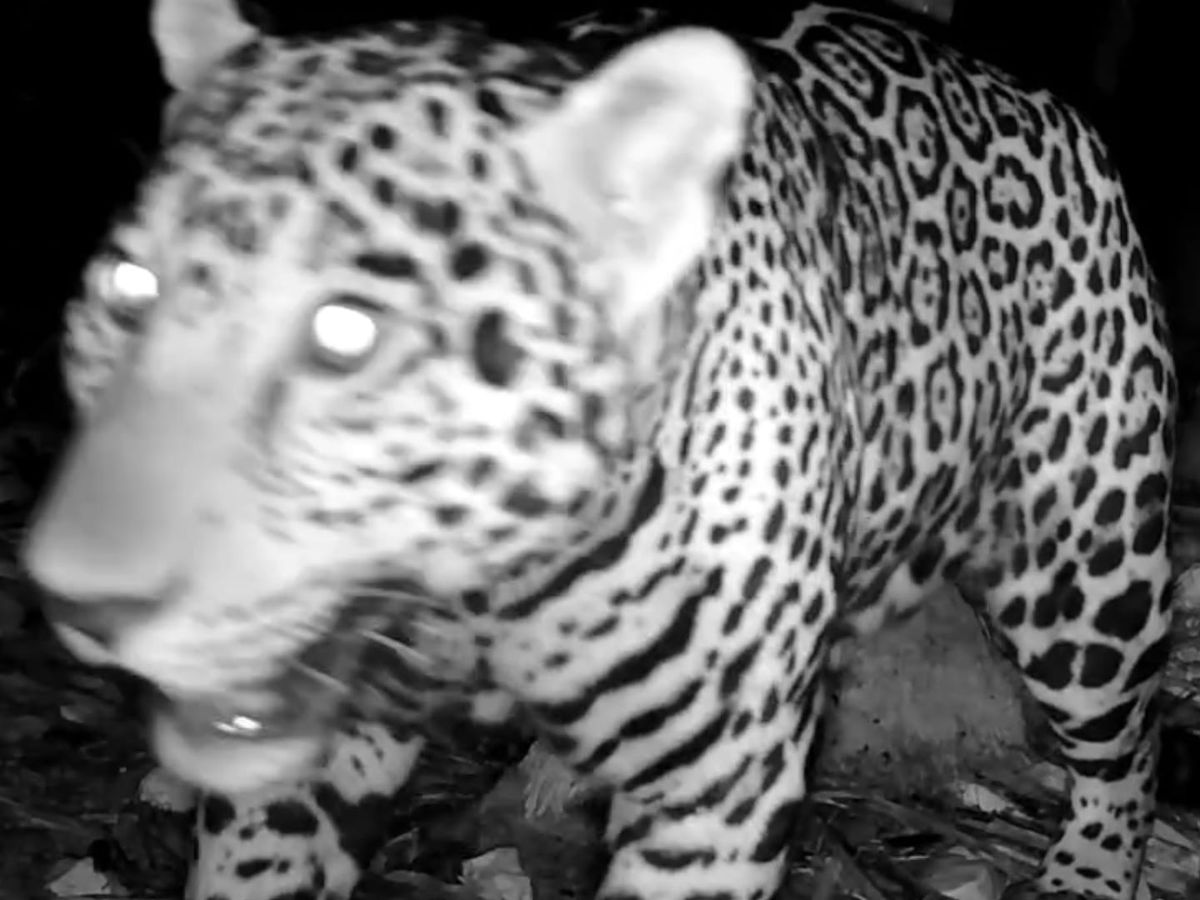
On January 11, during the early morning hours, a jaguar was recorded by a camera trap operating just 200 meters from the Tulum archaeological zone, according to information shared by Mexico’s Comisión Nacional de Áreas Naturales Protegidas. The footage, released this week through the agency’s social media channels, shows the adult feline calmly patrolling its territory within the boundaries of Parque Nacional Tulum, one of the country’s most visited protected areas.
The recording was captured by a device installed and monitored by the park’s Community Surveillance and Monitoring Group, a local team tasked with overseeing wildlife activity and human impact inside the reserve. The location of the camera trap, placed near the Tulum archaeological zone, underscores the proximity between an internationally known tourist site and a species classified as endangered at the global level.
A rare glimpse near a heavily visited site
The jaguar, scientifically known as Panthera onca, is the largest feline in the Americas and a key indicator species for ecosystem health. Its presence so close to an area that receives hundreds of thousands of visitors annually offers a rare glimpse into how wildlife continues to use territories that are under constant tourism pressure.
According to the federal agency, the footage was obtained shortly after midnight, a period when jaguars are most active. The animal appears to be moving deliberately through dense vegetation, a behavior consistent with territorial patrols commonly observed in adult individuals. Officials emphasized that the jaguar’s calm movement suggests familiarity with the area and continued use of the corridor as part of its established range.
The Comisión Nacional de Áreas Naturales Protegidas described the sighting as evidence that conservation measures implemented in and around the park are producing tangible results. These include zoning regulations, restrictions on certain human activities, and continuous monitoring designed to minimize habitat disturbance.

Community monitoring plays a central role
The camera trap responsible for the recording is part of a broader monitoring network maintained by local community members trained to support conservation efforts. The Community Surveillance and Monitoring Group regularly patrols the park, installs monitoring equipment, and reports wildlife activity to park authorities.
Their work focuses not only on documenting species presence but also on detecting potential threats such as illegal entry, habitat degradation, or disturbances linked to tourism operations. The jaguar recording, officials noted, directly reflects the effectiveness of this collaborative model, which combines federal oversight with local engagement.
Park authorities have stressed that maintaining these monitoring systems is essential in an area like Tulum, where rapid urban growth and tourism development continue to reshape the surrounding landscape. While the archaeological zone itself is strictly regulated, adjacent areas experience ongoing pressure from infrastructure expansion.
Conservation success within a fragile balance
In its public statement, the federal agency framed the jaguar sighting as a sign that environmental management strategies are allowing wildlife to persist even in complex settings. These strategies include designated conservation zones, controlled access routes, and enforcement of environmental regulations aimed at preserving natural corridors.
At the same time, officials cautioned that such successes remain fragile. Jaguars require large, connected territories to survive, and even small disruptions can have long-term consequences for local populations. The presence of an individual near the archaeological zone does not eliminate broader risks but highlights what is possible when protective measures are consistently applied.
A subtle but important point raised by conservation authorities is that coexistence between tourism and wildlife is not automatic. It depends on constant oversight, adaptive management, and sustained funding, particularly in destinations with global visibility like Tulum.

The Yucatán Peninsula’s jaguar population
The sighting also draws attention to the wider status of jaguars in southeastern Mexico. According to the Third National Jaguar Census coordinated by the Alianza Nacional para la Conservación del Jaguar, results presented in August 2025 estimate that approximately 1,600 jaguars inhabit the Yucatán Peninsula.
This figure represents the highest regional concentration of the species in the country. However, researchers involved in the census have consistently warned that population density does not equate to security. Jaguars in the region face ongoing threats, including habitat fragmentation, road fatalities, and conflicts with livestock producers.
Within this context, protected areas such as Parque Nacional Tulum serve as critical refuges and connective corridors. Even relatively small patches of conserved land can play an outsized role when they link larger forested zones and allow animals to move safely across the landscape.
Tourism pressure and environmental management
Tulum’s transformation over the past decade has placed unprecedented demands on its natural surroundings. The archaeological zone, perched on coastal cliffs, has become one of Mexico’s most recognizable heritage sites, drawing visitors year-round.
Environmental authorities have responded by tightening controls within the national park, including limits on certain activities, increased surveillance, and coordination with tourism operators. The jaguar footage, they argue, illustrates that these measures are not merely symbolic.
And yet, the challenge remains ongoing. Conservation officials note that continued vigilance is required to ensure that tourism growth does not erode the ecological integrity that makes the area unique in the first place. The jaguar’s presence so close to human activity serves as a reminder that the park functions as more than a backdrop for visitors.
What the sighting reinforces
Beyond its immediate visual impact, the recording reinforces the importance of long-term conservation planning. Jaguars are territorial and sensitive to changes in their environment, making them reliable indicators of broader ecosystem conditions.
The federal agency emphasized that maintaining protection, monitoring, and responsible land management is essential to guarantee the species’ survival. This includes preserving natural corridors, reducing human-wildlife conflict, and ensuring that development decisions account for ecological consequences.
For The Tulum Times, the sighting reflects a broader reality facing the region. Conservation successes are possible even in high-pressure destinations, but they depend on sustained commitment rather than isolated actions.
What remains at stake
As tourism and urban development continue to shape the Riviera Maya, the continued presence of jaguars near sites like Tulum will depend on whether current protections are strengthened or weakened over time. The January 11 recording offers evidence that conservation strategies can work, but it also highlights how narrow the margin for error remains.
The jaguar recorded near the archaeological zone is not just an isolated image. It represents an ongoing test of how effectively the region can balance economic activity with the preservation of its most iconic species, keeping the jaguar near Tulum as part of the living landscape rather than a memory.
We’d love to hear your thoughts. Join the conversation on The Tulum Times’ social media.
How should destinations like Tulum manage tourism growth while safeguarding species such as the jaguar?