

It starts with a slap. Then another. Then the hum you can’t unhear, a low buzz cutting through the still, humid air of a September evening. In the heart of Tulum, where jungle meets development and rain hangs heavy over cracked pavement, mosquitoes aren’t just back, they’re everywhere.
Across the Riviera Maya, locals and tourists alike have begun describing the situation in urgent tones. “It feels like a swarm,” said one hotel worker near Aldea Zama, “like the whole jungle came into town.” While “invasion” might be a word thrown around too freely, something has clearly shifted.
In September 2025, residents from across Tulum, from La Veleta to the beach zone, have reported a sharp uptick in mosquito activity. Complaints range from sleepless nights to interrupted dinners in high-end restaurants. In tourist hotspots and suburban corners alike, the question hangs: Why now? And how bad could it get?
Environmental Roots of the Surge
The answer, predictably, starts with the skies. September marks the peak of the rainy season in Quintana Roo, and this year the rains have come with a vengeance. Puddles, flooded lots, forgotten buckets, each becomes a miniature nursery. The mosquitoes hatch, multiply, and thrive.

But it’s not just the weather. Tulum’s setting, nestled between jungle, wetlands, and cenotes, provides a year-round invitation for insect life. Combine that with urban sprawl, half-finished developments, empty lots, and piles of construction debris, and the perfect storm takes shape. As concrete pushes into the forest, the line between wild and domestic blurs, and mosquitoes ignore boundaries as easily as they dodge slaps.
In short, the surge might look sudden, but it’s not. It’s a natural consequence of Tulum’s geography and pace of development, a problem that’s both old and new.

What’s Being Done on the Ground
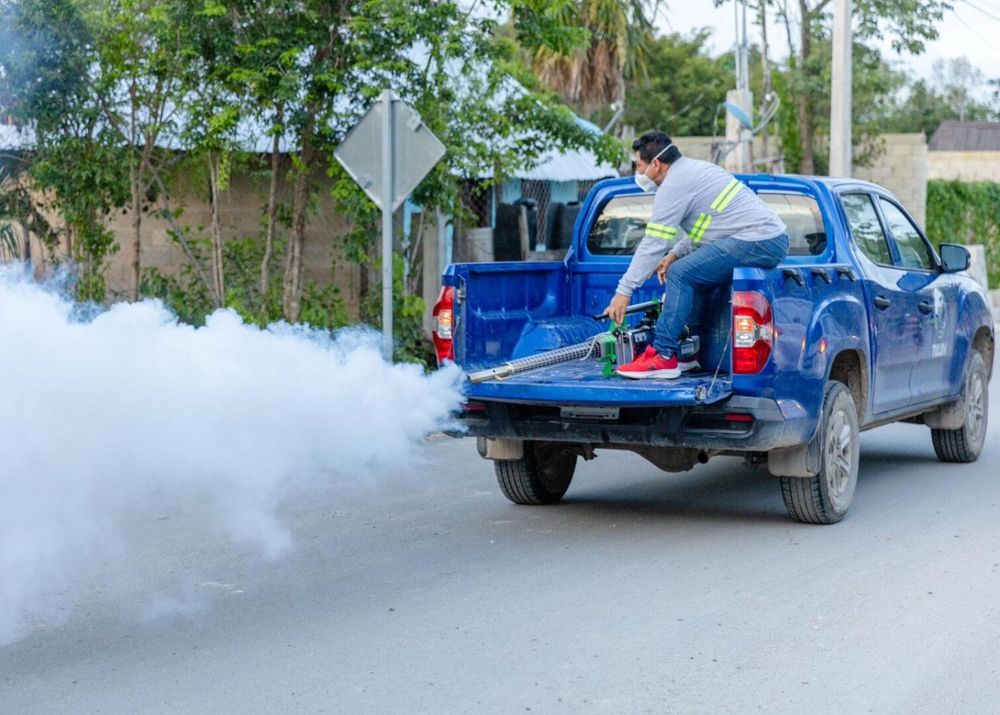
Municipal authorities aren’t standing still. In response to community pressure, fumigation teams have been deployed across neighborhoods, schools, and key public areas. The telltale scent of insecticide now lingers in the early mornings, part of a larger blitz that includes community clean-ups and public awareness campaigns.
Teams of volunteers have worked to remove tires, broken containers, and other objects where water tends to collect. Local media outlets, including The Tulum Times, have helped spread the word, urging residents to eliminate breeding grounds and take personal protective measures.
There’s also a growing role for the private sector. Hotels and restaurants, feeling the pressure to maintain a mosquito-free experience for guests, are stepping up. Traps, repellents, citronella candles, even strategically placed fans, all have become part of the frontline defense.
Still, the effort is uneven. Some areas remain under-serviced, and questions linger about the long-term strategy. Is this just a seasonal fight, or is Tulum facing a bigger problem?

The Local Impact
For most, the mosquitoes are a nuisance. For some, they’re a liability. Tour guides report more cancellations of cenote and jungle excursions. Families in Colonia Tumben Ka say children are coming home from school covered in bites. And for travelers drawn by Tulum’s promise of barefoot luxury, the reality stings, literally.
The hospitality industry is adapting fast. One boutique hotel in the beach zone now hands out eucalyptus oil upon check-in. A jungle café nearby has covered its outdoor seating with fine mesh screens. The message is clear: the experience must remain intact, bugs be damned.
But this shift carries cost, and not just financial. As one expat café owner put it, “When people picture Tulum, they imagine paradise. They don’t imagine swatting their legs every five seconds.”

A Cycle That Returns with the Rain
This isn’t the first mosquito spike in Tulum, and it won’t be the last. Residents who’ve lived through multiple wet seasons describe a familiar pattern: the rains come, the bugs bloom, then, slowly, they fade. By late October or November, when the skies clear and humidity drops, the mosquito population usually subsides.
Still, this year’s surge feels more intense, possibly due to extended rainfall and faster urban sprawl. It’s a reminder that Tulum’s environment isn’t just a backdrop, it’s a living, breathing system, and sometimes it bites back.
While the word “invasion” might oversimplify, the situation reveals deeper frictions. Nature and development are colliding. And as Tulum grows, the ecosystem adjusts in ways no one fully controls.
How Locals and Visitors Are Coping
Everyone seems to have their own method. Some swear by citronella; others double up on repellent and long sleeves. In the Pueblo, families cover beds with netting and keep fans running all night. In the jungle outskirts, residents burn dried herbs at dusk, hoping to mask human scent.
Restaurants now stash repellents behind the bar, alongside salt and limes. Airbnb hosts message guests in advance: “Pack bug spray, and lots of it.” One wellness retreat even incorporated mosquito awareness into its welcome ceremony, a small nod to the new reality.
There’s also a kind of dark humor emerging. “At least it’s not scorpions,” joked one local teacher. “We know the drill. This is part of life here.”
Weather, Action, and the Balance of the Jungle
What’s next? If the rains taper off as expected, mosquito levels should ease in the coming weeks. But long-term solutions remain elusive. Fumigation treats the symptoms, not the cause. And as Tulum continues to urbanize, the challenge will be to develop smarter, with better water management and more resilient infrastructure.
There’s an opportunity here. To not just chase away mosquitoes, but to plan a city where humans and nature don’t constantly collide. That balance won’t be easy. But it’s necessary if Tulum hopes to grow sustainably without losing what makes it magnetic.
For now, residents and tourists are doing what they can, swatting, spraying, covering up, and adapting. It’s uncomfortable. But it’s not chaos. It’s Tulum in September.
And maybe that’s the real story: a town navigating its own growth, one mosquito bite at a time.
We’d love to hear your thoughts. Join the conversation on The Tulum Times’ social media.
Have you experienced the mosquito surge in Tulum this season? What worked for you, or didn’t?