
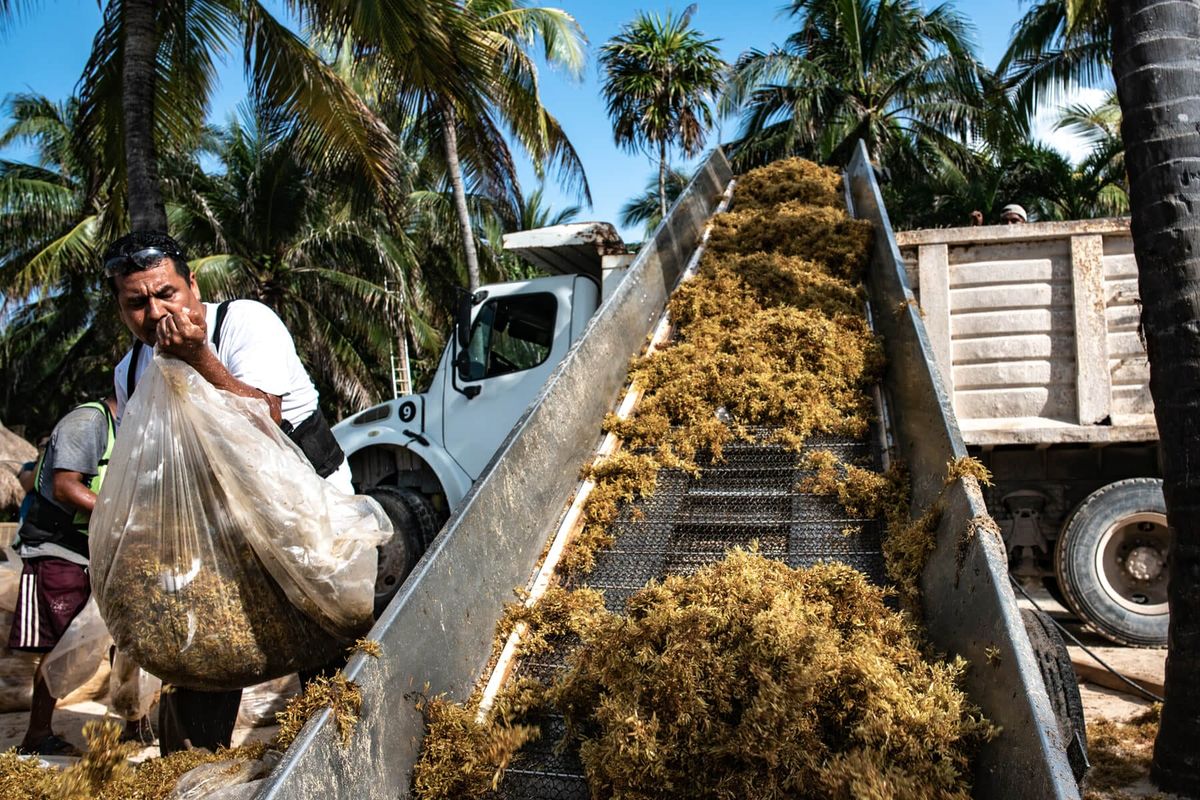
The turquoise waters of Quintana Roo, the jewel of Mexico’s Caribbean coast, are under threat. But this time, the danger isn’t a hurricane or a geopolitical crisis; it is an unprecedented influx of *Sargazo en Quintana Roo*, or sargassum seaweed, that is choking its iconic beaches. On Friday, July 4th, 2025, news broke of a significant initiative: a proposal for a circular economy park focused on tackling this pervasive environmental challenge.
**A Collaborative Approach to a Seaweed Crisis**
The announcement stemmed from a crucial meeting between Quintana Roo’s Governor, Mara Lezama Espinosa, and Alicia Bárcena Ibarra, the Secretary of Environment and Natural Resources (SEMARNAT). Their joint commitment underscores a burgeoning collaboration to address urgent environmental concerns. The core of their discussion focused on an ambitious plan: the creation of a circular economy park specifically designed to manage the sargassum crisis. Bárcena highlighted the potential significance of this park to incorporate all seaweed-derived product manufacturers, not just for Quintana Roo, but for the entire Caribbean region.
The meeting, a testament to the urgency of the situation, saw both leaders agree to establish technical follow-up mechanisms. These will enable working groups across institutions to address pivotal issues. Among these are integral waste management solutions, strategies to handle the overwhelming presence of sargassum, beach restoration initiatives, ecological planning, institutional capability reinforcements, and environmental screenings of important projects. This comprehensive approach signifies a move toward a sustainable solution, seeking to mitigate the impact of the seaweed on tourism and coastal ecosystems.
**Focus on Sustainability and Regional Leadership**
The meeting’s agenda also encompassed sustainability initiatives for other priority environmental areas. A significant part of the discussion centered on the progress in waste management in Holbox, a pivotal location. This aligns with a wider push to establish Holbox as a pioneering “plastic-free” island. Furthermore, the officials assessed critical plans in Isla Blanca. These strategies show a dedication to the larger picture of coastal environmental stewardship and also help in project assessment within Tulum. This collaborative strategy reflects an awareness of the challenges and the need for comprehensive environmental management techniques.
The Governor underscored the fundamental importance of environmental conservation for Quintana Roo. The economy of the region is inextricably linked to its natural beauty, attracting tourists with its beaches, seas, jungles, cenotes, and adventure attractions.
**A Path Towards a Sustainable Future**
The challenges facing Quintana Roo are complex, interwoven, and demand innovative solutions. The proposal to create a circular economy park is a bold step demonstrating the leadership of both Governor Lezama and the Secretary Bárcena in tackling this ecological crisis. The collaborative spirit, the scientific approach to the sargassum problem, and the prioritization of sustainable tourism all reveal a conscious desire to protect Quintana Roo’s natural inheritance. The decisions made, and the future results, will be crucial in influencing not only the environmental fate of Quintana Roo, but also in setting an example for how other regions can deal with similar environmental quandaries. The world will keep a close watch on these actions.
We’d love to hear your thoughts, join the conversation on The Tulum Times’ social media.