

Are you picturing the turquoise waters of Tulum as a safe paradise? In recent days, lifeguards and local authorities have confirmed the arrival of Portuguese man o’ war along the shores of Quintana Roo, including both Playa del Carmen and Tulum. Known locally as “carabela portuguesa,” this marine drifter is more than a curiosity; it can leave burns, trigger allergic reactions, and, in rare cases, prove deadly.
Context and background
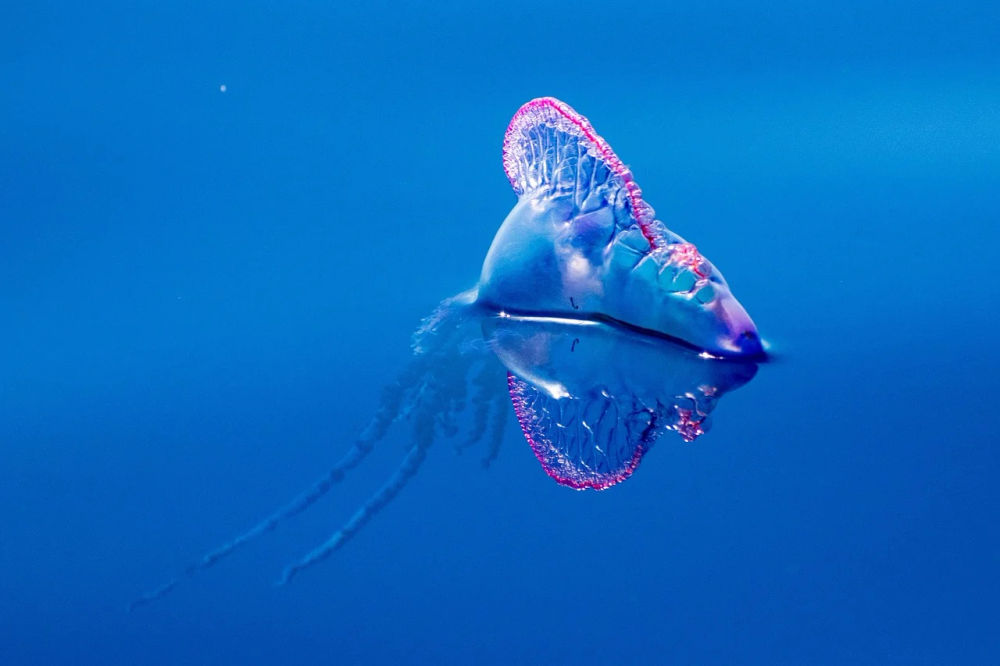
The Portuguese man o’ war is not a jellyfish in the strict biological sense, but a colonial organism composed of different polyps working together. Its gas-filled bladder floats on the water’s surface like a fragile balloon, while its venomous tentacles trail invisibly below, sometimes stretching for meters. The sight of one washed up on the sand might seem harmless, but its venom remains active long after death. That is why authorities in Quintana Roo are urging caution.
In the Caribbean, sightings tend to increase when seasonal winds and currents push these organisms closer to shore. The Riviera Maya, from Cancún to Playa del Carmen and down to Tulum, shares the same vulnerability: unpredictable drifters arriving without warning, leaving locals and tourists on edge.
What was confirmed this week
The Secretariat of Civil Protection, Risk Prevention, and Firefighters of Solidaridad issued a statement confirming that patrols along Playa del Carmen beaches, between Avenida CTM and Calle 88, found Portuguese man o’ war both in the surf and stranded on the sand. Lifeguards conducting routine rounds were the first to spot them.
“Because of climate conditions, these organisms reach the coast and can appear on the sand,” the communiqué explained. Officials reminded visitors that the stings may cause severe skin injuries and systemic health problems.
Reports quickly spread further south. In Tulum, the General Directorate of Civil Protection and Firefighters confirmed the same phenomenon, noting that intervals of 50 to 100 meters along several beaches showed evidence of the dangerous species. Their alert emphasized a chilling fact: the toxin released by the tentacles remains potent even after the animal has dried out.
Impact on tourism and daily life
For a region where tourism is the beating heart of the economy, the appearance of Portuguese man o’ war feels like an unexpected blow. Vendors who rent snorkel gear, restaurants along the beach, and tour operators all depend on carefree visitors stepping into the water. A red or purple flag waving on the lifeguard’s tower can change the rhythm of an entire day.
One vendor in Tulum shared a short story that captures the tension. He recalled a family from Monterrey who had barely unpacked their umbrellas before noticing a floating bladder washed onto shore. The father picked it up, thinking it was a child’s toy, only to be stopped by a lifeguard sprinting across the sand. “People think it’s just a balloon,” the vendor said, “but it can send you straight to the hospital.”
The Tulum Times has followed how marine conditions shape daily tourism here. From sargassum tides to turtle nesting seasons, now another natural presence joins the list of factors that can complicate a beach holiday.

The human risk
Contact with the tentacles of Physalia physalis can cause more than pain. Medical sources describe cases of temporary paralysis, irregular heartbeat, and breathing difficulties. Extreme scenarios include anaphylactic shock. Children and those with allergies are particularly vulnerable.
The sting’s effect has been compared to a sudden burn followed by electric jolts across the skin. Some locals say the sensation lingers for days, even when treated. And yet, the organisms drift without intention, carried by wind and current, indifferent to who might be in their path.
How to identify them
Officials advise that one of the clearest signs is the translucent, bluish bladder floating at the surface, sometimes tinged with pink or purple. Onshore, they look like deflated plastic bags, easily mistaken for harmless debris. The tentacles are less visible but far more dangerous.
Authorities insist on avoiding all contact, even with seemingly dead specimens. Vinegar rinses, hot water immersion, and immediate medical evaluation are part of the recommended treatment, though prevention remains the best defense.

Comparisons across the region
Tulum is not alone in this challenge. In Cancún, seasonal alerts have been issued in past years, sometimes forcing stretches of beach to close temporarily. Playa del Carmen has also faced occasional influxes, though the density this week appears unusual. The wider Caribbean, from Florida to Puerto Rico, reports similar waves when winds shift.
While sargassum has dominated headlines in recent summers, the man o’ war adds a different layer of complexity. Unlike seaweed that can be cleared with heavy machinery, these organisms cannot be controlled, only monitored. Their unpredictability is what makes them so unnerving.
Local voices and reflection
Tourists may see it as bad luck, but for residents, it feels like another reminder of living in a delicate balance with the sea. The Riviera Maya is a place where prosperity rides on the same waters that bring both beauty and danger.
As one lifeguard put it: “The ocean decides what we live with each season.” That line could double as a caption on social media, capturing the fragile relationship between humans and their environment here.
The editorial perspective is unavoidable. Tulum markets itself as pristine and carefree, yet the natural world constantly asserts its unpredictability. To ignore that tension would be to overlook what life here really means.

What lies ahead
For now, authorities continue surveillance along the beaches of Tulum and Playa del Carmen. Purple flags warn swimmers of dangerous marine organisms. Education campaigns remind visitors that curiosity can have consequences.
The Portuguese man o’ war may be just one more challenge layered onto the already complex picture of Quintana Roo’s coastal tourism. But the real question is whether visitors will adapt their expectations, understanding that paradise is never without risks.
The story is still unfolding. What is at stake is not only safety but the trust that travelers place in the Riviera Maya. Will future seasons see an increase in sightings, or will currents shift and carry the organisms elsewhere?
We’d love to hear your thoughts. Join the conversation on The Tulum Times’ social media.