
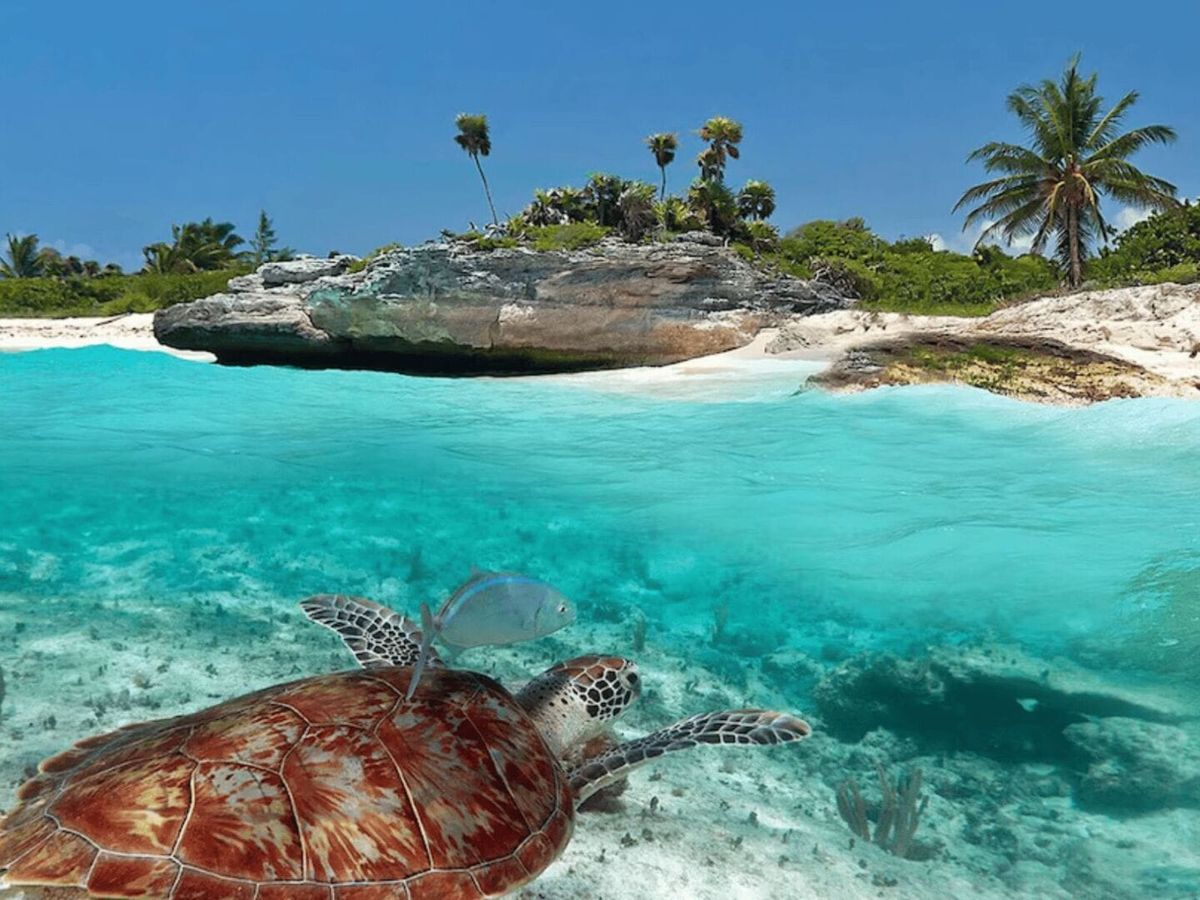
Xcacel Beach might be one of the Riviera Maya’s most protected stretches of coastline, yet most travelers racing between Tulum and Playa del Carmen barely realize what lies a short turnoff from Highway 307. White sand meets gentle Caribbean waves with no hotels in sight. The beach sits only 20 minutes from Tulum’s high-priced beach clubs, but it feels worlds apart. And unlike destinations shaped by commercial pressure, Xcacel Beach remains defined by conservation and community priorities rather than tourism-driven development.
Visitors pay just six dollars to enter this state-managed sanctuary. That small fee funds monitoring, habitat protection, and the biologists who safeguard Mexico’s most important turtle nesting grounds. The contrast is sharp. Nearby clubs charge a minimum consumption exceeding fifty dollars, amplifying a regional pattern where untouched ecosystems become exclusive commodities. Xcacel Beach resists that trend, creating a different kind of coastal experience.
“People think paradise is expensive. Xcacel proves it doesn’t have to be.”
A protected corridor shaped by jungle, dunes, and sea turtles
The route to the beach reveals why this coastline looks the way it does. Highway 307 cuts through dense jungle north of Tulum, and a modest dirt road branches toward the sea. After a walk beneath coastal vegetation, visitors arrive at the entrance to the Xcacel-Xcacelito Natural Protected Area, a 905-acre ecological mosaic that includes mangroves, dunes, beaches, cenotes, coral reefs, and lowland forest. Each habitat supports the next in ways scientists argue make the area unusually resilient.
Xcacel Beach stands out most for its role in sea turtle reproduction. Green turtles and loggerheads consistently select these shores more than almost any other nesting beach in Quintana Roo. Conservation teams monitor the coastline from May through October, and during the 2024–2025 season, they tracked 1,247 nests. The figure places Xcacel Beach second only to Sian Ka’an Biosphere Reserve for nesting activity in the Riviera Maya. Biologists warn that even small changes in lighting, sand composition, or coastal construction could jeopardize decades of progress.
Night patrols form the core of protection efforts. Staff walk the shoreline identifying nests, documenting species presence, and warding off predators. The work is methodical and repetitive, yet every nest carries ecological weight. A local biologist described it simply: “Every egg we protect today shapes the next thirty years of turtle populations.”

A coastline that defies the commercial logic of nearby resorts
A short distance south, Akumal draws hundreds of snorkelers to turtle tours priced at more than one hundred dollars. Xcacel Beach looks similar in photographs, but could not operate more differently. No bars, no restaurants, no rented cabanas. There are no music systems projecting into the dunes. Instead, raised sand mounds mark protected nesting corridors, and visitors rely on palm fronds or portable shade.
The reef sits only 150 feet offshore and serves as a natural barrier that breaks incoming waves. The absence of development means freshwater from inland mangroves filters naturally into the sea, sustaining seagrass beds where juvenile turtles graze even outside the nesting cycle. In December, swimmers frequently report spotting young greens drifting in clear water where visibility often reaches beyond thirty feet.
This protected landscape offers a reminder of what much of Mexico’s Caribbean coast looked like before mass tourism reshaped it. The Tulum Times has reported previously on the tension between economic opportunity and environmental limits, and Xcacel Beach appears to occupy one of the region’s last strongholds of policy-backed restraint.
Why Xcacel Beach attracts a different kind of visitor
Activities anchored in nature rather than consumption
The lack of commercial amenities does not equal a lack of experiences. Snorkeling along the northern reef provides access to underwater formations of brain coral, elkhorn, and sea fans. Tropical fish gather in schools along the reef edges, benefiting from water quality that remains unusually clear because of limited human impact.
Inland, a freshwater cenote sits about 300 yards from shore. Its steady temperature near seventy-five degrees offers relief from midday heat. The cenote ties into the Yucatán Peninsula’s vast underground river system, a feature that continues to intrigue hydrologists studying freshwater–saltwater interactions along the Riviera Maya.
Mangrove channels provide opportunities to paddle quietly through wetlands where more than forty bird species appear throughout the year. On some mornings, frigatebirds circle high above the canopy while herons stalk the shallows. And unlike at heavily trafficked parks, these encounters often occur in silence.

December’s seasonal advantages for travelers seeking calm
December marks the beginning of the dry season across Quintana Roo. Rainfall drops, temperatures hover between seventy-two and eighty-two degrees, and mosquitoes thin out. Water temperatures around seventy-eight degrees allow long swims without discomfort. Because nesting season ends in October, the beach opens fully without the restricted access common during summer months. Operating hours extend from sunrise to late evening.
Visitor numbers fall noticeably during this period. While Tulum welcomes more than two million tourists each year, Xcacel Beach maintains strict capacity limits to prevent erosion and disturbance. The result is tangible. Early arrivals often find the entire stretch of sand nearly empty. One traveler described stepping onto the beach at dawn to see turquoise water glowing in first light while jungle birds called from the tree line.
A glimpse of the Riviera Maya before development transformed the coast
Many visitors arrive at Xcacel Beach after experiencing Tulum’s increasingly commercialized shoreline, where beach clubs charge entry fees between eight hundred and twelve hundred pesos and encourage additional spending once inside. Xcacel Beach offers a counterpoint. The 114-peso entrance fee covers conservation costs and nothing more. There are no servers, no menus, and no pressure to purchase anything. A carry-in, carry-out policy keeps waste low and supports the protected area’s management plan.
The distance from major resort zones preserves a more local atmosphere. Fishing boats continue to operate in nearby waters, and mangroves remain largely intact. The state designation prevents future hotels from being built within the protected boundary. This regulatory certainty appears to strengthen long-term conservation efforts, although officials acknowledge ongoing threats from regional development pressures.
Visitors frequently note that they leave with a stronger understanding of sea turtle biology and coastal ecology than they expected. Education, rather than entertainment, shapes most interactions here. For some, this feels refreshing. For others accustomed to curated resort experiences, it can feel sparse. But that contrast underscores why Xcacel Beach remains different.

Practical insight for travelers deciding when and how to visit
Reaching the sanctuary from Cancun International Airport requires roughly one hour and forty-five minutes by car. Highway 307 runs directly to the turnoff near Chemuyil, marked around kilometer 65. Shared vans known as colectivos operate frequently, charging modest fares from Playa del Carmen and Tulum. The final walk through coastal vegetation reinforces the remoteness of the destination.
Strict rules govern what visitors may bring. Fresh fruit and water in reusable containers are allowed, but bottled beverages and processed foods are prohibited to reduce waste and wildlife exposure. Biodegradable sunscreen is mandatory. These regulations echo policies implemented at other protected coastal zones globally, signaling a shift toward stricter management of fragile environments.
Choosing when to visit depends on expectations. December through April offers ideal weather and full access. May through October brings nesting activity, heightened supervision, and reduced hours. Weekdays remain calmer than weekends year-round, though even peak days rarely exceed one hundred visitors. The beach may appear minimalistic, but many find meaning in that simplicity.
Returning to the question at the heart of Xcacel Beach
The story of Xcacel Beach is ultimately a story about what remains when development yields to conservation. It shows what a Caribbean shoreline might look like when ecological priorities guide decision-making. The experience feels understated, but it carries purpose. And in a region known for rapid construction, Xcacel Beach stands as an exception that could influence broader debates about coastal protection in Mexico.
Xcacel Beach continues to demonstrate that natural beauty and ecological stewardship can coexist without resort infrastructure. The challenge now is ensuring that future pressures do not erode the protections that make this sanctuary possible. Xcacel Beach remains a reminder of what is still at stake across the Riviera Maya.
We’d love to hear your thoughts. Join the conversation on The Tulum Times’ social media.
What coastal places have shaped your understanding of conservation?