
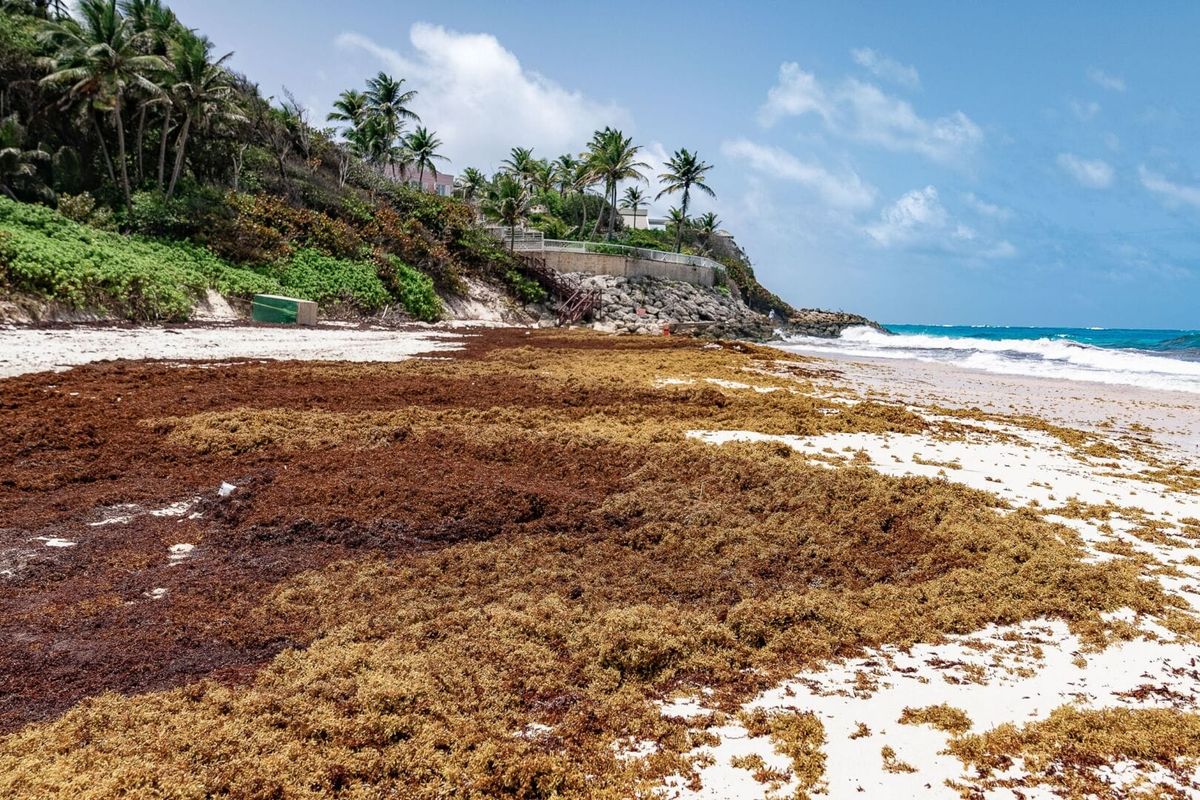
Stretching over 5,500 miles and weighing more than 31 million metric tons, the 2025 sargassum bloom has already shattered previous records, and the season is far from over. This unprecedented influx of floating seaweed, drifting in dense brown mats, is not merely an aesthetic nuisance; it’s a mounting ecological and economic threat to coastal regions across the Atlantic, particularly along the vibrant shores of the Riviera Maya.
While sargassum naturally serves as a crucial habitat in the open ocean, supporting marine species such as turtles and fish, its excessive accumulation near land transforms it into a harmful algal bloom. The Caribbean coast of Mexico, especially the popular Riviera Maya, has been caught in the grip of this phenomenon for over a decade. Now, it faces one of the most severe outbreaks to date.
Coastal Economies at Risk as Tourism Faces a Murky Future
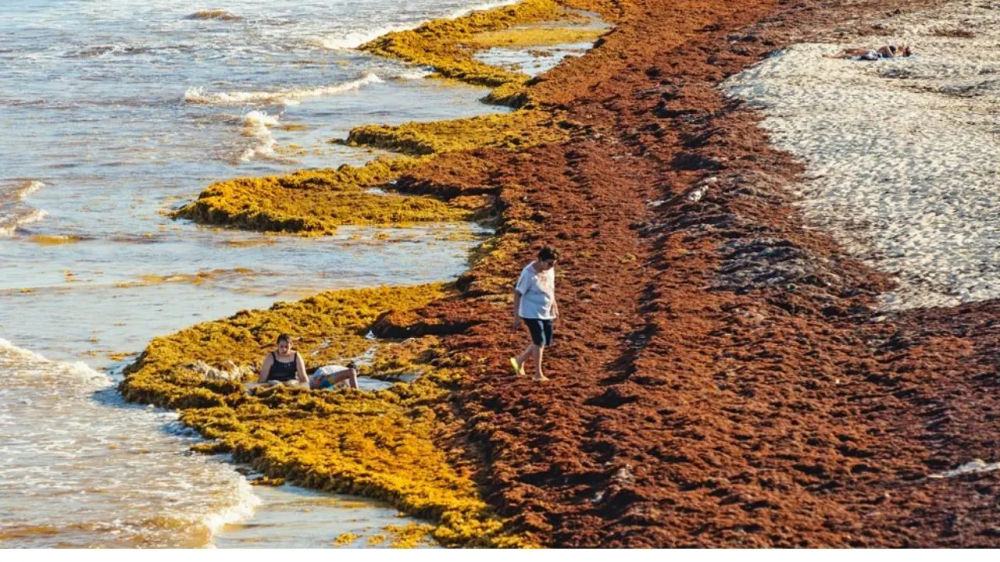
The consequences of sargassum in the Riviera Maya are far-reaching. Once-pristine beaches, essential to the local tourism economy, are blanketed in decaying seaweed emitting a pungent odor. The hydrogen sulfide released during decomposition can cause respiratory discomfort in humans and poses health hazards for marine life. In the water, the thick mats block sunlight, disturbing the photosynthetic balance vital to coral reefs, mangroves, and seagrass beds. As the oxygen levels plummet, marine species vanish or perish, transforming once-thriving ecosystems into zones of biological silence.
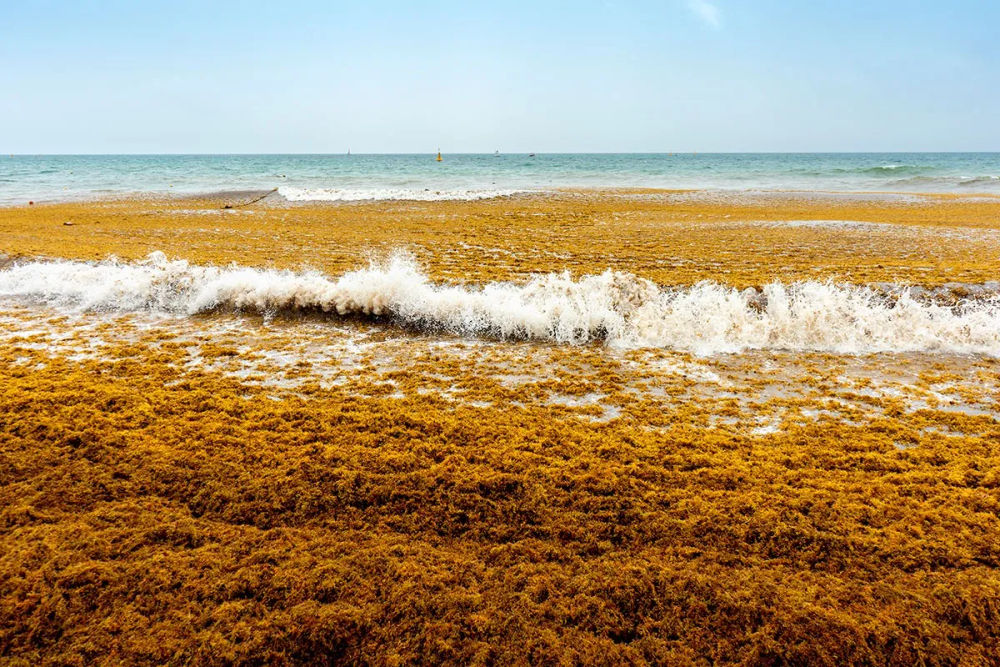
For destinations like Playa del Carmen, Mahahual, and Puerto Morelos, the impact is both environmental and deeply economic. Tourists drawn to the Riviera Maya’s tropical appeal find themselves confronted by unsightly and odorous shorelines. In peak season, this deters bookings and forces many visitors to cut their vacations short, or not come at all. In response, hotels and resorts invest heavily in cleanup efforts, using mechanical equipment from dawn to dusk. However, these measures are expensive and imperfect, often causing further disruption to delicate beach ecosystems.
What Fuels the Sargassum Surge?
Experts agree that climate change and nutrient pollution are the primary drivers behind this explosion of sargassum. Rising ocean temperatures, linked to human-induced global warming, stimulate algal growth at alarming rates. Simultaneously, vast quantities of nitrogen-rich agricultural runoff from the Mississippi Basin and the rapidly deforested Amazon region pour into the Atlantic via rivers, fertilizing these marine blooms. During prolonged droughts, as seen recently in the Amazon basin, dried organic matter is swept into waterways during the first rains, creating a potent cocktail of nitrogen and phosphorus that feeds the sargassum surge.
Airborne nitrogen deposition, carried across the Atlantic by Saharan dust or fossil fuel combustion, adds to the complexity. These sources collectively create a nutrient-rich corridor stretching from West Africa’s coast to the Americas, placing the Caribbean at the heart of this unfolding crisis.
Government Response and Coastal Defense Efforts
Authorities in Quintana Roo are mounting an aggressive response. Governor Mara Lezama has announced collaboration with Mexico’s Navy to intercept sargassum at sea before it reaches the beaches. A six-mile barrier system, similar to those used for oil spills, has been deployed strategically to shield vulnerable coastal areas. Although helpful, these floating barriers are not foolproof and require continuous maintenance and monitoring.
At sea, the collection efforts are coordinated and intensive, yet the sheer volume of biomass presents logistical challenges. Meanwhile, the communities onshore continue to bear the brunt, with many relying on tourism for their livelihoods. Hoteliers and residents are searching for long-term, sustainable strategies to live with, or benefit from, this recurring invasion.
Can Sargassum Be Part of the Solution?
Despite its disruptive presence, sargassum is not without potential value. Researchers in Mexico and abroad are exploring its utility as a raw material. Promising developments include its conversion into biofuel, construction bricks, biodegradable packaging, and even membranes for water purification. Its high absorbency makes it effective in capturing heavy metals and pollutants, although this trait contributes to its toxicity.

Innovative proposals suggest the possibility of carbon sequestration by sinking sargassum deep into the ocean, thereby removing excess biomass while storing carbon in the seafloor. Others envision a future where single-use plastics are replaced by sargassum-based materials, addressing two environmental challenges simultaneously.
While still in development, such initiatives highlight a shift in perspective, from managing sargassum as waste to treating it as a resource. However, tapping into this potential will require robust investment, technological scaling, and international cooperation.
A Wake-Up Call from the Sea
What’s unfolding along the Riviera Maya is more than a seasonal inconvenience. It’s a tangible sign of broader planetary imbalances. The record-breaking sargassum bloom of 2025 is a stark warning that the cumulative effects of climate change, deforestation, and unsustainable agriculture are not distant threats but immediate realities. As Christian Appendini of UNAM put it, these events urge humanity to reconsider how we develop, consume, and coexist with the natural world.
The Riviera Maya, with its mix of vulnerability and resilience, now finds itself on the front lines of this environmental challenge. Its scientific, civic, and governmental response may well shape how coastal communities worldwide prepare for a future where seaweed could become either a curse or an unlikely ally.
We invite our readers to join the conversation and share their thoughts on this issue by connecting with us on The Tulum Times’ social media channels.