
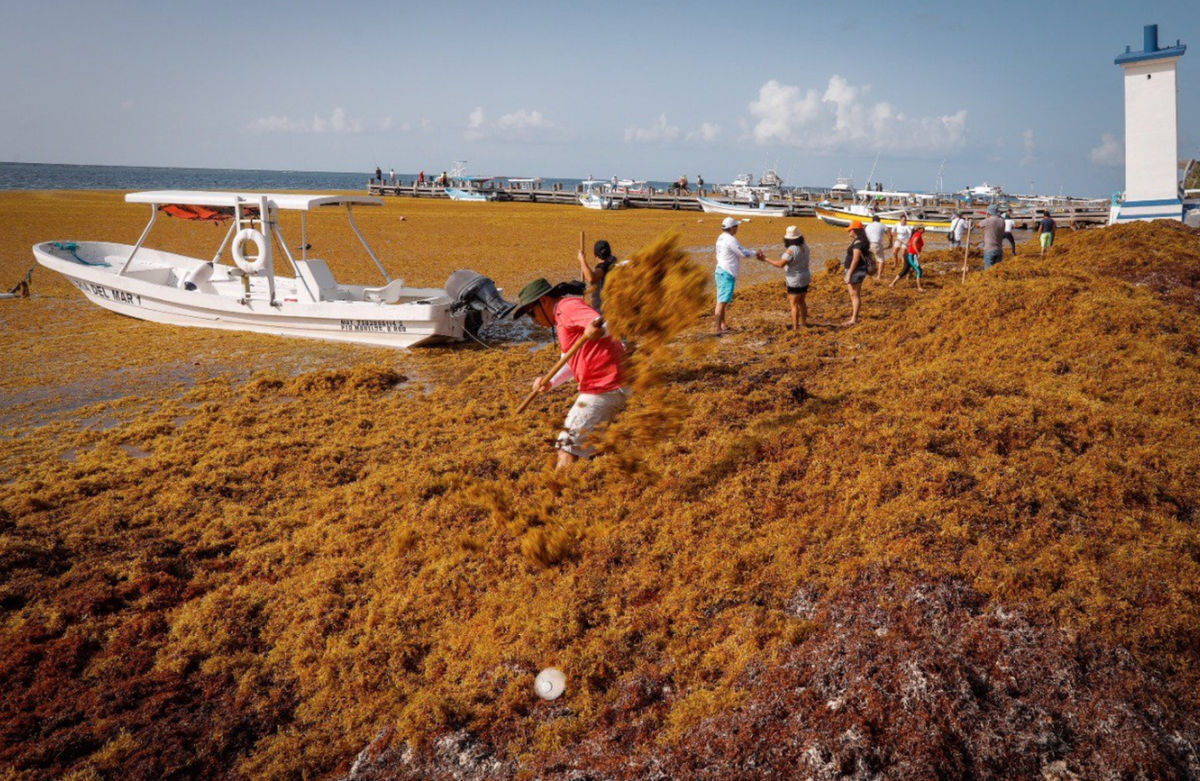
Sargassum in Mexico 2025: Beaches Braced for Record Seaweed. Communities along the Mexican Caribbean coast are bracing for an unprecedented tide of this brown, foul-smelling seaweed. Golden beaches from Cancún to Tulum are already being littered with slimy mats of sargassum, forcing early cleanup crews to scour the sand. The putrid odor of rot hangs heavy in the air, a rotten-egg stench that leaves visitors choking and locals uneasy. Scientists warn this year’s surge could be the worst on record, driven by a supercharged tropical bloom. The looming crisis threatens not just the region’s turquoise image and booming tourism industry, but also the livelihoods, health and marine ecosystems that depend on those shores.
2025 Sargassum Forecast: Satellite Warnings
Even before it reaches shore, the seaweed tide has alarmed scientists. Satellites and ocean buoys are tracking a vast sargassum belt stretching across the tropical Atlantic, a phenomenon that researchers say has become unprecedented in scale. By early June, satellite data showed roughly 37 million metric tons of brown algae floating in the western Atlantic, far above any previous year’s total. This figure dwarfs the previous record of 22 million tons set in 2022. Ocean currents are now expected to sweep much of that mass into the Gulf of Mexico and along Mexico’s Caribbean coast.
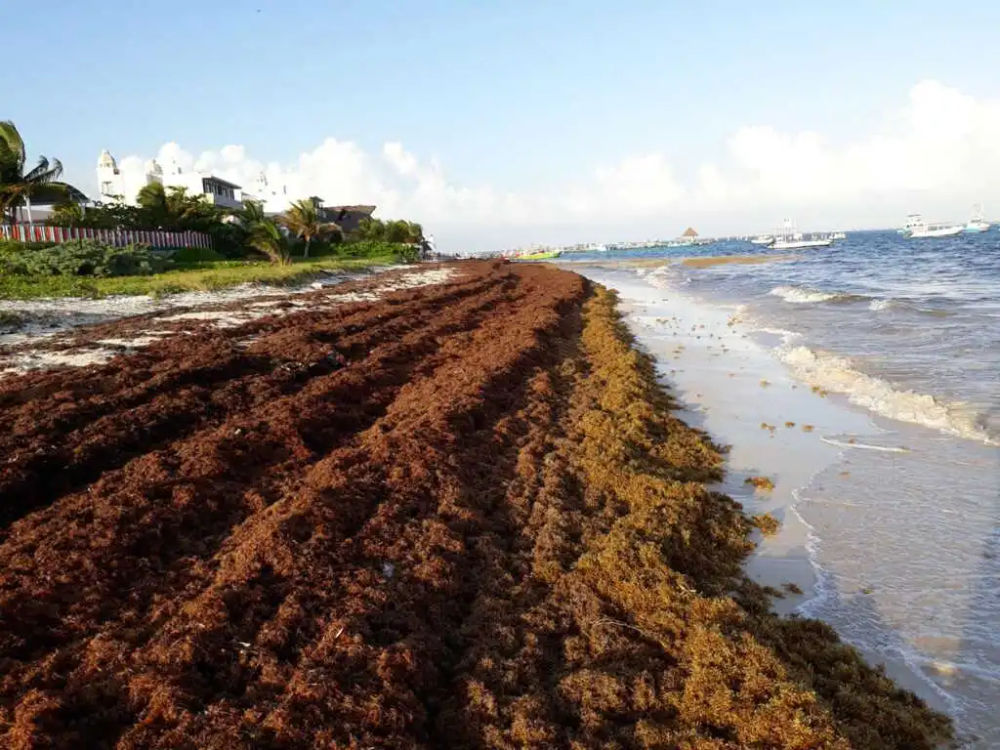
Experts point to a toxic mix of climate factors. After a severe Amazon drought, torrential rains last year flushed massive nutrients into the ocean, fertilizing the bloom. Meanwhile, authorities have already mobilized: by late April Mexico’s Caribbean officials declared the season officially underway, more than 10,000 tons had been hauled off beaches and marinas. Nearly ten kilometers of floating boom barriers now block major bays, and crews of workers patrol the water with nets. If current trends hold, 2025 will rewrite the record books on sargassum.

Tourism and Marine Ecosystems Under Threat
Sargassum Smothers Resorts and Residents
The invasion is more than a cosmetic nuisance for locals and visitors. In resort towns crews don masks to ward off the stench as they drag nets through the surf, and hotels have added extra rounds of sand raking to their daily routines. Photos of vacationers often capture only the edges of brown clumps; many admit they feel betrayed by the contrast between promotional turquoise images and the brown reality on the sand. The impact on business is palpable. Vendors and tour operators report a spike in cancellations and a slowdown in bookings whenever news of heavy sargassum hits. Industry analysts warn a prolonged bloom could cost the Riviera Maya economy millions. After all, this stretch of Mexico’s Caribbean coast built its boom on pristine beaches, an annual seaweed siege directly erodes that very appeal.

Coral, Fish and Air: Ecosystems Under Siege
Beneath and above the waves, the marine ecosystem is under siege too. When sargassum arrives en masse it blocks sunlight and depletes oxygen in nearshore waters. Researchers have documented dead zones in the Caribbean where rotting mats have smothered coral and seagrass, leading to large fish kills. Even sea turtles and seabirds can become entangled or disoriented by the drifting rafts. On land, piles of decaying weed release hydrogen sulfide, the same sulfurous gas in rotten eggs, which can irritate eyes and lungs. Health officials urge pregnant women, young children and asthmatics to keep their distance from affected shores. In short, an algae explosion that might be benign offshore has become a coastal calamity, threatening to leave lasting scars on the marine life and communities here.

Battling the Bloom: Cleanup and Innovation
In response, local authorities have launched a massive cleanup campaign. Boats and crews now tow drifting mats offshore, while teams of workers rake and shovel the slimy seaweed off the beaches at dawn. Nearly ten kilometers of floating boom barriers have been strung across key bays to intercept the algae before it lands. Dozens of trucks haul away thousands of tons each week to dump sites or compost piles. Even with such extraordinary effort, the volume is staggering: what might be a few handfuls in a normal year now arrives in stacks taller than a person, often requiring heavy machinery to clear.
Innovators, meanwhile, are racing to turn the problem into an opportunity. Across the Caribbean, entrepreneurs and scientists are eyeing sargassum as a renewable resource. Ideas range from bioenergy to fertilizers and even plastics. Mexican start-ups have proposed everything from reactors to ferment algae into fuel to projects that convert seaweed into animal feed or bricks. One cooperative in Yucatán is already composting sargassum into organic fertilizer for local farms. In Mérida, engineers are developing pilot systems that gasify the seaweed to generate power. The logic is that converting even a fraction of this biomass into useful products could offset some cleanup costs. These efforts reflect a common determination to meet the sargassum season head-on, rather than simply watching it pass by.

Looking Ahead: Resilience and Response
Communities along the coast are bracing together. Volunteers, dive instructors and students are teaming up for beach clean-ups, and social media groups share tips for coping with the invasion. Conservationists note that the sargassum surge is part of a larger climate trend, and tackling it has become part of a broader environmental challenge. If history is any guide, the region’s famed resilience will make the difference. The Mexican Caribbean has weathered hurricanes and coral bleaching in recent years, and locals believe this summer’s seaweed test will be no different. We’d love to hear your thoughts, join the conversation on The Tulum Times’ social media.

Amid an unprecedented surge of sargassum in Mexico’s Caribbean waters, coastal communities confront choking seaweed on their beaches. This crisis tests tourism, livelihoods, resilience, and deep hope!