

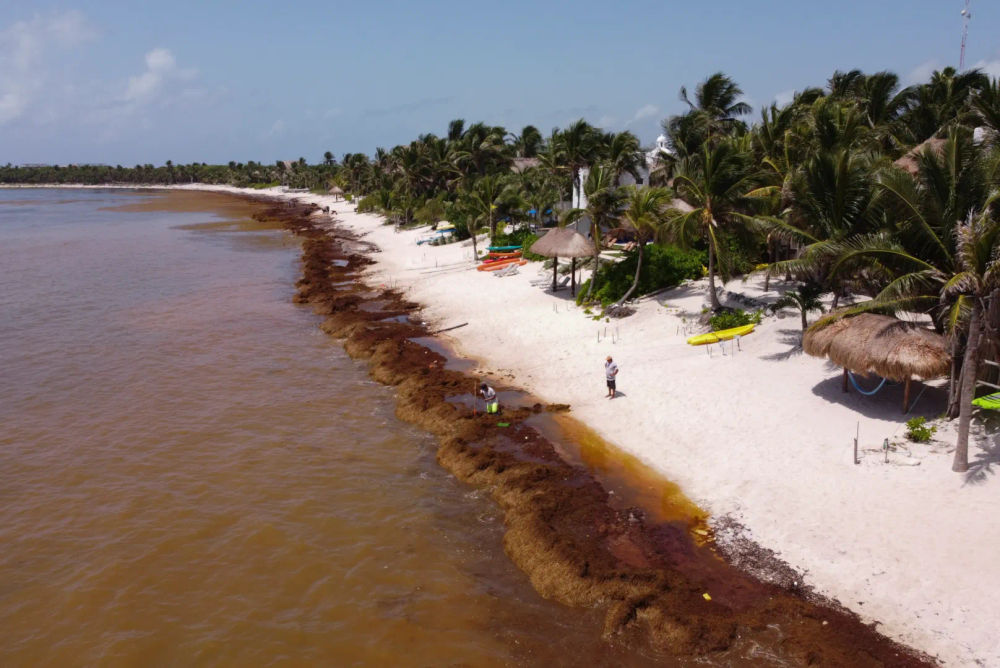
I walk along a stretch of once-pristine beach in Quintana Roo as the sun rises and my heart sinks. Where there should be powdery white sand and turquoise water, there lies a thick brown carpet of seaweed. The air smells of rotten eggs, a sulfurous odor wafting from mounds of decaying algae. This is sargassum season on Mexico’s Caribbean coast, and it feels like the ocean has heaped an uninvited guest at our doorstep. Locals in beach towns like Tulum, Playa del Carmen, and Cancún wake each day bracing for what the tide brought in overnight – often, it’s tons of sargassum piled high. Tourists who dreamed of idyllic tropical shores now find themselves asking: What happened to our paradise? And those of us who call this coast home wonder how much more we can take.
The New Normal of a Golden Invasion
Not long ago, the very idea of sargassum in Mexico barely crossed anyone’s mind. Sure, a few stray clumps of this brown seaweed would wash up now and then – nothing a morning rake couldn’t handle. Historically, sargassum would flourish harmlessly offshore in the Sargasso Sea and other parts of the Atlantic, providing habitat for fish and turtles. Back then, it was more friend than foe, a floating “golden rainforest” of the ocean that sailors marveled at in tales. On shore, it was a rarity. But around 2011, everything changed. Seemingly out of nowhere, massive waves of sargassum began inundating Caribbean beaches. Coastal communities from Barbados to Cancún were stunned as huge brown mats of algae rolled in on the currents, smothering the shoreline. Every year since, except perhaps one brief respite, this invasion has returned – often larger and more relentless. What started as an anomaly has become the new normal.
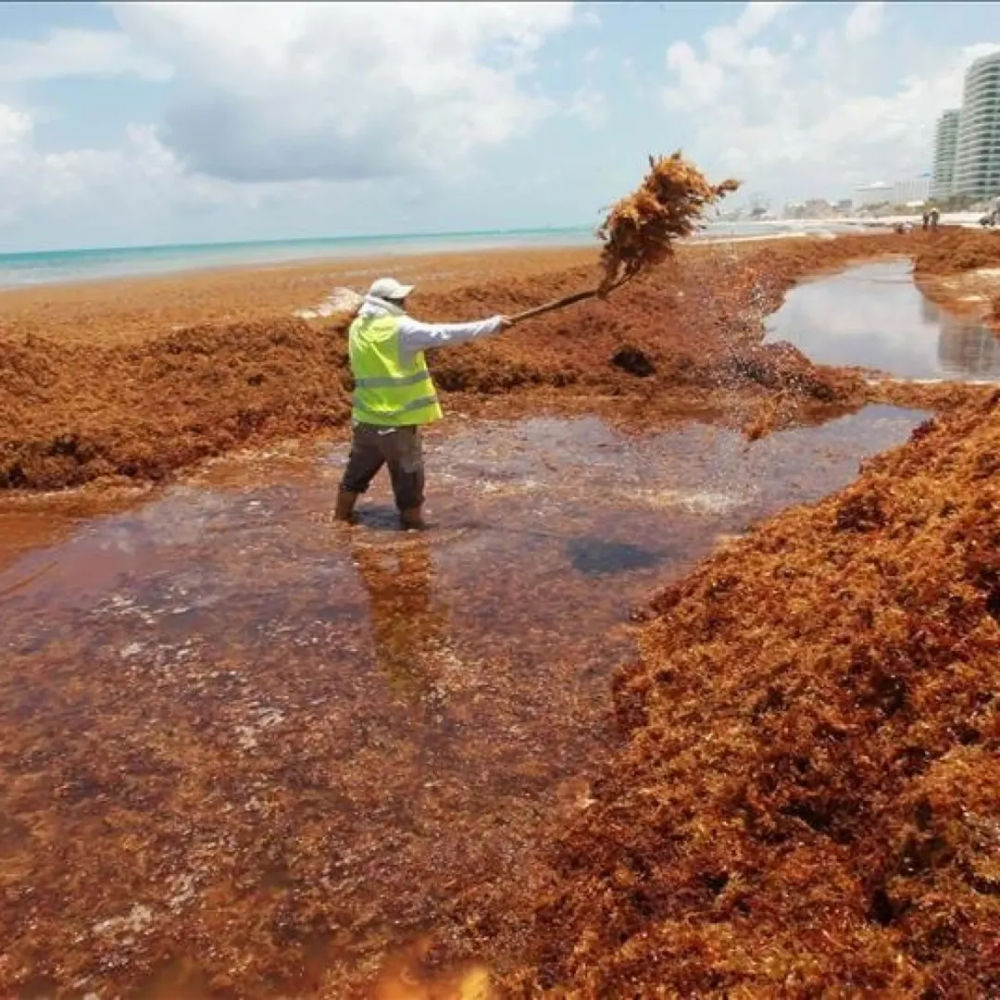
By mid-decade, the phenomenon only grew. Long-time residents remember the summer of 2015 when Quintana Roo even declared a state of emergency as sargassum buried its beaches. Then came 2018, a terrible year when the seaweed blooms hit record levels, and again in 2019 and 2021, we saw enormous inundations. We learned new vocabulary: “sargassum season” – those months when resorts line up sandbags and barriers, and cleanup crews race against each incoming tide. Typically, it begins in spring (sometimes as early as March) and peaks through summer. There have been freak years of hope: in 2024, to everyone’s surprise, the sargassum levels dropped drastically. For a moment, the Caribbean waters gleamed blue again,n and hoteliers sighed in relief, thinking perhaps the worst was over. But nature had other plans. As 2025 rolled in, the brown tide came roaring back. Early that year, local officials reported double the seaweed landing on Tulum’s beaches compared to the same time the year before. All that respite in 2024 felt like a cruel tease. Now in 2025, we brace for what could be one of the heaviest sargassum seasons yet. It’s as if the ocean is telling us: I’m not done – not by a long shot.
Why Is This Happening?
Standing on the beach, it’s hard not to shout, “Why? Why now?” at the discolored waves. Scientists have been asking the same thing, piecing together clues from satellites and water samples to understand the sargassum explosion. The picture that emerges points to a perfect storm of human and natural factors.
First, consider nutrients – the fertilizer of the seas. Over the past decade, massive amounts of agricultural runoff and sewage have been flowing into the Atlantic. Think of the Amazon River, coursing through Brazil’s farming heartland, flushing nitrogen and phosphorus into the ocean. Across the ocean, rivers in West Africa do the same. Even the mighty Mississippi adds its share of nutrients into the Gulf. It’s as if we inadvertently “fed” the sargassum. Normally, this seaweed drifts in relatively nutrient-poor waters, keeping its growth in check. But once given an overdose of fertilizer, it grows like algae on steroids. Scientists believe an extreme influx of nutrient-rich water in 2009 and 2010 primed the Atlantic for a bloom. By 2011, sargassum that would ordinarily linger in modest patches went into overdrive, multiplying across a vast area.
Then there’s climate change, the ever-present backdrop to so many environmental crises. Our oceans are warmer than before, and sargassum seems to love warmth – it thrives in the balmy temperatures that now extend further north and last longer into the year. Changing climate patterns may also be altering ocean currents and wind, helping to create a sprawling “delivery system” that pushes sargassum into the Caribbean. Meanwhile, strong upwelling currents off West Africa have been bringing cold, nutrient-laden water to the surface. And even the Saharan dust blowing off Africa’s deserts – yes, dust from halfway around the world – plays a role. Those great dust clouds carry iron and other minerals and drop them into the ocean like a nutrient supplement. In 2015 and 2018, researchers noted especially large Saharan dust events coinciding with huge sargassum invasions. It all adds up: extra nutrients, warmer water, shifting currents, and climate-driven oddities have essentially turned the Atlantic into a giant sargassum farm.

By analyzing satellite images, scientists identified what they now call the Great Atlantic Sargassum Belt – a loose chain of seaweed blooms thousands of kilometers long, stretching from the coast of West Africa all the way to the Gulf of Mexico. This belt wasn’t observed at such a scale until the last decade. Now, it’s an almost annual feature, and when parts of that belt break off and ride the currents, they inevitably end up smothering Caribbean shores like those in Mexico. It’s important to note: this isn’t the “normal” sargassum from the Sargasso Sea (that legendary calm patch of ocean far north of the Caribbean). No, this is a new source originating in the tropics, a byproduct of modern changes. We have essentially created a monster bloom, and the Mexican Caribbean sits right in its crosshairs – the way the currents flow, our coast is often the end of the line for all that drifting seaweed.
Paradise Under Siege: Ecological and Health Impacts
When I bend down and dig my hands into a pile of beached sargassum, I can feel the heat emanating from it. Beneath the top layer, it’s decomposing, black and foul, alive with sand fleas and flies. This once-living ocean habitat becomes a toxic nuisance on land. The effects on the environment here are devastating.
In the sea, thick rafts of sargassum block sunlight from reaching coral reefs. If you’ve ever gone snorkeling in Cozumel or Akumal, you know how vital sunlight is for those vibrant corals and seagrasses below – without it, they suffocate. Marine biologists have observed oxygen levels in the water plummet when sargassum mats rot, creating dead zones where fish literally gasped for breath. Entire beds of seagrass – crucial nurseries for juvenile fish – have died off in areas chronically hit by sargassum. A researcher from Mexico’s UNAM described the situation as brown tides that have killed seagrass meadows; those underwater forests might take decades to grow back, he warned if they ever do. Coral reefs, already stressed by warming and pollution, are now getting an extra layer of burden as wet, heavy sargassum piles on and eventually sinks onto them, smothering the delicate corals.

Wildlife also finds itself entangled in this mess – sometimes literally. Sea turtles, which faithfully return each summer to nest on these beaches, have been finding their path blocked by mountains of seaweed. Picture a baby turtle hatching under the moonlight, instinctively scurrying toward the sea… only to encounter a barrier of sargassum two feet high. Many turn back or become trapped, falling prey to dehydration or predators. Adult turtles have been seen struggling through the mats offshore, and tragically, some drown when they can’t surface for air. Even dolphins have reportedly met this fate in extreme cases, tangled in thick algae. The natural harmony of the coastline is under siege – and not just for wildlife.
Human health is another concern. If the smell alone weren’t bad enough, rotting sargassum releases hydrogen sulfide gas – that’s the culprit behind the “rotten egg” stench that hits your nose. In open air on a breezy beach, it’s usually not dangerous, but step too close to a large, confined hea,p and your eyes might burn and your throat might sting. People who live near affected beaches have reported headaches, nausea, and dizziness when the sargassum is at its worst. I’ve had nights where the odor was so strong I couldn’t sleep with the windows open. Authorities reassure us that the health risk is low for short-term exposure – it’s certainly not cyanide or anything – but they do advise caution. Pregnant women, young children, the elderly, or anyone with respiratory issues like asthma are told to avoid prolonged exposure to the fumes just to be safe. It’s a bitter irony: the same sea breeze that once carried the smell of salt and promise now carries a whiff of decay that can irritate our lungs.
And then there’s the simple emotional toll. This coast is our livelihood and our love. Many locals feel genuine grief seeing their beloved shoreline in this condition. In a single decade, we’ve watched a vibrant ecosystem turn into a crisis zone each year. We worry about the fish we no longer see, about the turtles struggling to nest, about what the future holds if this doesn’t stop. The environment here is resilient – we see new sprouts of seagrass, we see pelicans still diving between patches of floating weed – but for how long can it endure this annual onslaught? That question lingers like the odor in the air.
The Cost to Communities and Tourism
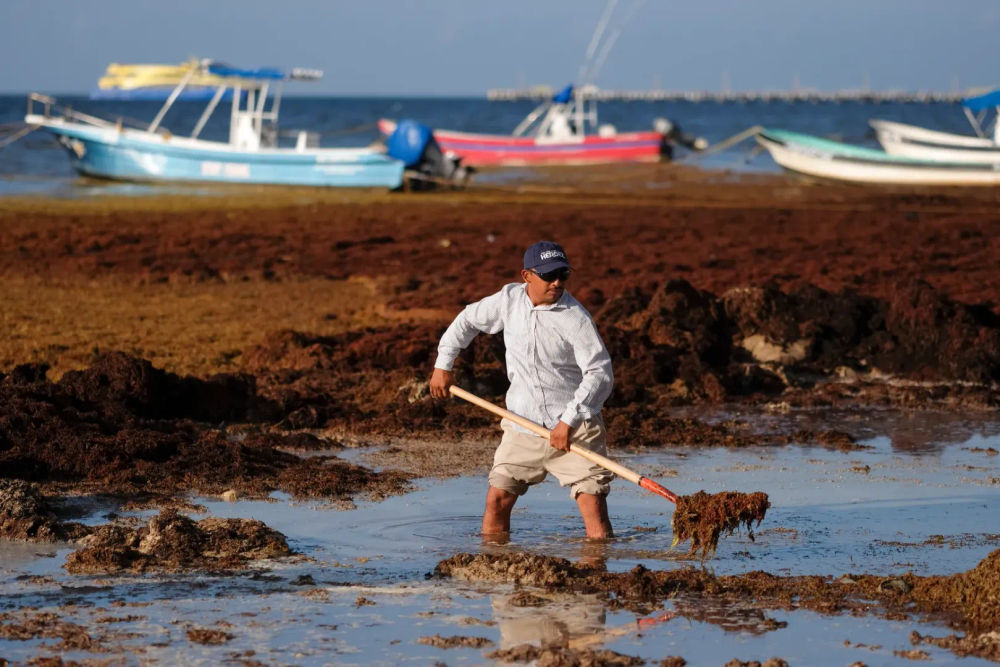
Every morning, as dawn breaks, armies of workers descend on the beaches with rakes, shovels, and even heavy machinery. Their silhouettes dot the shoreline, heaving piles of seaweed into wheelbarrows and dump trucks. It’s a Sisyphean task – by the time they clear one stretch of sand, the tide often brings in a fresh batch by afternoon. For local communities along Mexico’s Caribbean, this daily battle has become a way of life in sargassum season. And it’s costing us dearly.

Tourism is the lifeblood of Quintana Roo. This state thrives on visitors coming for the palm-fringed beaches and clear waters. When those beaches are buried in stinking sargassum, the impact is immediate and sharp. Tourists complain and flee to find clearer shores. Hotels that once boasted of “paradise” now field anxious calls from guests asking if the beach is usable. I’ve spoken with hotel managers who, during bad sargassum weeks, have had to issue refunds or arrange shuttles to other locations in hopes of salvaging a guest’s vacation. During the worst surge in 2018, average hotel occupancy dipped – not dramatically, but noticeably enough that everyone from resort owners to street vendors felt it. Some hotels slashed their rates to entice visitors despite the seaweed. Others started promoting their pools and cenotes more heavily – basically saying, “If the beach is bad, don’t worry, we have other ways for you to enjoy the water.”
For small businesses, it’s especially hard. A dive shop in Tulum that I know watched its bookings plummet whenever the water was murky with sargassum. Fishermen – perhaps the most directly hit – sometimes can’t even launch their boats because thick mats clog the shallow waters and outboard engines. One fisherman from Puerto Morelos told me it was like trying to push through a floating swamp. Their nets come up heavy and fouled with algae instead of fish. In some seasons, fishermen’s incomes have nose-dived alongside the fish populations. These are folks whose families have fished for generations; now they’re pondering if they need to find a completely different livelihood because the seaweed isn’t just an annoyance, it’s breaking their profession.
And let’s talk about the sheer logistical cost. Keeping the beaches clean has become a multi-million dollar operation. The Mexican government and local hotels alike have poured resources into it. On a given day, thousands of tons of sargassum might be collected across the entire coastline. Imagine the dump trucks lined up, each brimming with wet, heavy seaweed, driving off to disposal sites that themselves are a problem (piles of sargassum rotting on land can leach contaminants into groundwater if not handled properly, another headache altogether). Some estimates suggested that in peak years, hotels were spending tens of thousands of dollars per month on cleanup crews, special equipment, and barriers. And the government has had to invest in everything from beach tractors to paying overtime for cleanup personnel, as well as research into solutions.

For those working on these cleanups, it is grueling work. Under the blazing sun, masked up against the smell, raking endlessly – it’s no surprise many locals refer to sargassum as a nightmare. But it’s a nightmare we can’t afford to ignore. Tourism accounts for the majority of the economy here; in fact, nearly eight out of every ten pesos in Quintana Roo might be tied, directly or indirectly, to the tourism sector. A bad sargassum season doesn’t just inconvenience tourists – it threatens jobs, incomes, and the well-being of our communities. From Cancún’s luxury resorts to tiny family-run hotels on Isla Mujeres, everyone is affected in some way.
And yet, even amid the struggle, you’ll find people trying to keep their sense of humor or optimism. I remember seeing a traveler on Cancún’s Marlin Beach during a mild sargassum day in 2021: he was literally tossing armfuls of dried seaweed into the air and laughing as his friend snapped photos – perhaps making the best of a bad situation or crafting that perfect “Instagram vs Reality” vacation post. A tourist playfully throws sargassum into the air on a Cancún beach. While some visitors find humor in the situation, many others are dismayed by the unexpected seaweed drifts. But for each tourist like that, there are dozens who walk onto a brown beach, turn around, and go straight back to their hotel in disappointment. We locals watch this and feel a mix of emotions – embarrassment, frustration, and a resolve to do whatever we can to restore the beauty that’s been lost under all that gunk.
Fighting Back: Cleanup Crews, Barriers and Innovation
Day after day, the battle continues. The Mexican Navy itself has been enlisted in the war against sargassum – an almost surreal development if you think about it. Soldiers and sailors fighting seaweed instead of some human adversary. In 2019, facing an especially dire forecast of seaweed inundation, the federal government put the Navy in charge of a coordinated response. Soon, naval vessels known as “sargaceros” (essentially, seaweed-collecting boats) were patrolling offshore. By a couple of years later, a dozen of these ships were skimming the coastline, hauling in sargassum mats before they could reach shore. The strategy is straightforward: intercept the enemy at sea. To a degree, it works – every ton collected out in the water is one less ton stinking on the beach. But the ocean is vast, and these brown tides are relentless. Even the Navy, with all its resources, sometimes looks outmatched by nature’s sheer volume. An admiral who oversaw the effort once admitted candidly that they don’t expect this problem to go away anytime soon. Hearing a seasoned Navy man effectively say, “This fight has no clear end,” sends a chill down my spine, but it’s a reality we have to face.

Alongside the Navy, local governments and hotels have installed floating barriers near popular beach areas. These long yellow or blue booms bob on the waves, designed to snag the sargassum and divert it to collection points (or to “sacrifice beaches” that are easier to clean or deemed okay to let it pile up). If you fly into Cancún and look down as you approach, you might spot these thin lines in the water parallel to the shore – our last line of defense. They do catch a fair amount, but they’re not foolproof. Storms can dislodge them, and in heavy influxes, the seaweed just overtops or sneaks around the barriers. Still, on calmer days, they can reduce how much reaches the sand, buying a bit of time for cleanup crews.
Speaking of those crews – they are everyday heroes in this saga. Armed with everything from simple rakes to heavy-duty beach tractors, they clear what they can each morning. In places like Tulum, the municipal government has dozens of workers dedicated solely to sargassum removal each season. They load the seaweed into trucks, which cart it off to disposal sites inland. The effort requires coordination between municipal, state, and federal authorities, plus private businesses. It’s heartening in a way: when faced with a common threat, people come together. I’ve seen hotel staff, local volunteers, and even tourists join hands in bucket brigades to help clear a beach for an important event or just to make a small stretch swimmable for a day. There’s a sense that we’re all in this together, even if it’s mixed with exhaustion.
But mere removal isn’t a sustainable answer by itself. What do we do with all this seaweed once it’s collected? That question has sparked a wave of creativity and entrepreneurial spirit in Mexico’s Caribbean communities. If life gives you lemons, make lemonade, they say. Well, life gave us mountains of sargassum; can we make something useful out of it? Some are certainly trying. In Puerto Morelos, not far from Cancún, I met a man who locals affectionately dub “Señor Sargazo.” A nurseryman by trade, he initially used sargassum as compost for plants. But in 2018, he had a bold idea: what if we make bricks out of this stuff? He began mixing dried seaweed with other organic materials and pressing them into bricks, baking them under the sun. To his delight, the bricks held strong. He started building small structures with them – and ended up constructing actual houses. These sargassum bricks, or “sargablocks” as he calls them, turned out to be a low-cost building material. In fact, he even donated several sargassum-brick houses to families in need. Seeing a home’s walls made partly from the very seaweed we’ve all been cursing was a poignant sight – a reminder that problems can sometimes be turned on their head. Now, there’s talk of scaling this idea up, maybe even a business venture around it. Who would have thought, right?
Others are experimenting with converting sargassum into biofuel and biogas. One bioenergy company collected tons of it and managed to produce methane gas from it in digesters – essentially turning seaweed into cooking gas or electricity. The process isn’t trivial (they have to wash the salt and heavy metals out of the seaweed first, which is a whole process on its own), but the promise is there. The resulting biogas was decent quality and incredibly cheap to produce once the system was up and running. The vision these innovators have is compelling: imagine hotels in Cancún heating their water or powering their kitchens with gas derived from the very sargassum that plagued their beaches. It’s almost poetic. There are also research teams looking at extracting useful substances from sargassum – things like alginates (used as thickeners in food and cosmetics), or compounds that might serve pharmaceutical purposes. One Barbados scientist even mused that the Caribbean might be “blessed” with this glut of seaweed if we learn to harvest it as a resource. That might be too optimistic for my taste, but I admire the optimism.
In Cancún, I visited a small workshop where a group of women are turning sargassum into paper and artisanal products. I watched as they spread a slurry of pulped seaweed onto screens, letting it dry into rough sheets of paper. The end result had a charming, earthy look. They said these would become notebooks, and they’re also making soaps and even shoes with sargassum components. The idea is to create local products that solve an environmental problem and provide jobs. It’s hard work and early in development, but it’s innovation born from necessity. And we have plenty of raw material to go around.
However, despite all these efforts, one cannot sugarcoat the situation: the sargassum keeps coming faster than we can find uses for it. No single solution has emerged as the silver bullet. Barriers and boats mitigate but don’t stop it. Cleanup is constant and costly. New uses are promising but still relatively small-scale. We’re basically doing our best to coexist with this unwelcome tide, hoping that over time, we’ll get better at managing it (or that it will ease up – though hope for that is thin).

An Uncertain Future: Adapting to a Seaweed-Filled Sea
As I finish writing, I glance out my window towards the coast. The evening sky is turning orange, and normally, I’d be able to see a band of bright turquoise where the sea meets the horizon. Tonight, though, that line is a dull brown. Another raft of sargassum drifting in, lit by the setting sun. This problem isn’t going away overnight – we all know that now. The question is, what do we do next? How do we adapt and possibly, overcome?
On one hand, there is a push for better regional cooperation and early warning. In the same way we track hurricanes, scientists are now tracking sargassum blooms via satellite and modeling currents to predict landings weeks in advance. That gives coastal towns some time to prepare – to get barriers in place, schedule cleanups, warn tourists, or even orchestrate coastal activities around the incoming waves. It’s not perfect, but in 2025, our predictive capabilities will be better than they were a decade ago. There’s talk of Caribbean-wide efforts since this is truly a regional issue beyond just Mexico. We’re sharing notes with Barbados, Belize, Florida, and others on what works and what doesn’t in terms of mitigation.
There’s also a growing realization that the root causes must be addressed eventually. All our cleanup is treating the symptoms; what about the source? That points to global issues: climate change and pollution. Reducing agricultural runoff in the Amazon, improving wastewater treatment in Brazil and West Africa, and addressing climate change to stabilize ocean conditions – these are monumental tasks far beyond the scope of Quintana Roo or even Mexico alone. It can feel discouraging, knowing that our beautiful beaches are at the mercy of actions half a world away. But it underscores how interconnected we all are on this planet. A decision by a farmer in the Amazon to use less fertilizer, or global efforts succeeding in cutting emissions, could in some small way ripple down to less sargassum on Mexican beaches in the future. That’s a long game, though, and meanwhile, we have to live with the reality in front of us.

Every sargassum season that passes, we learn and adapt a little more. Some resorts have redesigned their beachfronts knowing they might not always have a picture-perfect beach every day – they’ve built infinity pools and rooftops with ocean views to give tourists alternatives. Tour operators now might include a “sargassum clause” in their offerings, proactively taking people to cleaner beaches on Cozumel or Isla Mujeres if the main shoreline is hit badly. Locals swap tips: this bay tends to stay clear, or that beach, due to how currents work or because an island offshore blocks the flow. It’s almost like we’ve had to re-learn our environment.
Yet, for all the adaptation, there is still hope stubbornly alive that one year, maybe not too far off, we’ll see a real break – a year when the sargassum belt fizzles and the Caribbean waters stay that postcard blue. Is it wishful thinking? Perhaps. The trends suggest we should brace for more, not less. But nature always has surprises. Until then, we continue to fight, to cope, and to find meaning in the fight. The sargassum crisis has, in a strange way, brought out both the worst and best in our situation – the fragility of our environment under human influence and the resilience and ingenuity of communities responding to a challenge.
As I step outside after finishing this piece, the night has fallen. The sea is out of sight, but I catch a faint whiff of that now-familiar odor on the breeze. I shake my head and smile wryly – you got us again, I think, almost as if addressing the sargassum itself. We’ll be back out there tomorrow morning, shovels in hand, fighting to take our beaches back. This is our home, and we’re not giving it up. In the darkness, I can’t see the waves, but I can hear them. And I know, beyond the edge of night, they’re bringing both the relentless tide and the promise that we’ll meet it with equal determination when the sun returns.
Workers clear sargassum from a beach near Tulum in 2019. Daybreak cleanups like this have become routine along Mexico’s Caribbean coast as communities band together to reclaim their beaches from the seaweed invasion.