
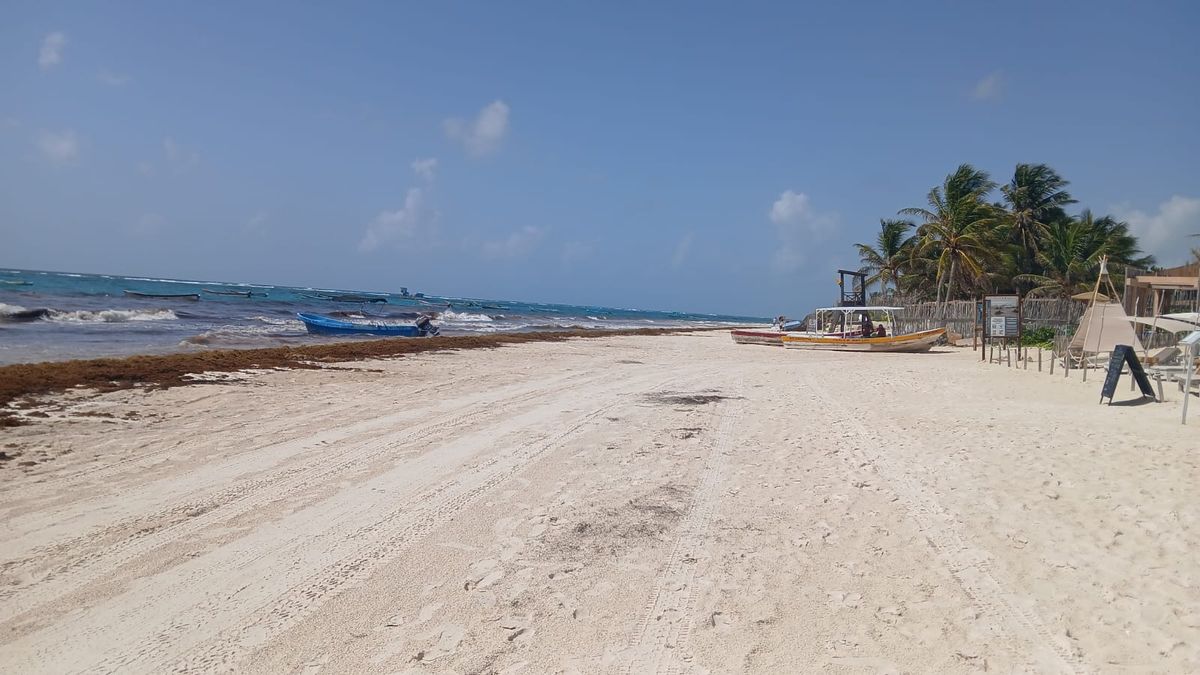
For a brief moment, it looked like the sea had healed. After several days of crystal waters and barely a trace of the brown invader, sargassum has returned to the beaches of Tulum, thick, pungent, and unmistakably present.
The sudden recale, or landfall, of sargassum was confirmed by David Buchanan, head of the Federal Maritime Terrestrial Zone (ZOFEMAT), who has become something of a familiar voice during these seasonal episodes. For locals and visitors alike, the change was immediate. Yesterday’s transparent waves gave way to tangled, rust-colored lines along the shore.
From Clear Waters to a Sea of Brown: What Changed?
Until recently, Tulum’s coastline enjoyed a rare stretch of relief. Overcast skies, a week of intermittent rain, and shifting ocean currents had created the perfect cocktail to disperse the algae.
“It’s been calm,” Buchanan said. “We had several days with almost no arrivals, which helped us push ahead with cleaning and gave the sea that turquoise color we all hope for.”
But the ocean has a rhythm of its own. According to Buchanan, the arrival of new patches is part of a larger natural cycle, driven by wind shifts and tidal patterns. And this morning, that cycle pivoted. The sargassum came ashore once more.
Santa Fe in the Crosshairs Again
One area of growing concern is Santa Fe Beach, tucked inside the Parque Nacional Tulum. Known for its rocky terrain and postcard-perfect scenery, this spot has also become notorious for sargassum buildup. When the algae piles up here, it stains the beach in deep ochres and mars the visual experience for visitors.
“It’s one of the toughest spots to manage,” Buchanan admitted. “But with the support from the Navy, we’ve been able to remove large volumes and keep it under control.”
This inter-agency effort reflects a broader recognition: Tulum’s tourism economy doesn’t just rely on hotel rooms and Instagrammable cenotes, it depends on clean, swimmable beaches.

Why the Rain Might Actually Be Helping
Ironically, the same rainy weather that can keep tourists indoors may be helping the beaches in ways that aren’t immediately visible. While heavy storms can bring debris, light and consistent rainfall helps to flush out stagnant waters and promote movement.
“It helps us more than people think,” Buchanan said. “Rain keeps the water flowing and supports the recovery of the beach’s natural color. That’s what everyone comes here to see.”
Tulum’s beaches aren’t just a backdrop for vacation selfies, they’re a living ecosystem, and like any living thing, they respond to the shifts in their environment.
The Battle Is Constant, and Far from Over
Despite the temporary setbacks, ZOFEMAT crews are out every morning. The work is physical, relentless, and thankless at times. There are no guarantees, just vigilance.
The reality, Buchanan explained, is that sargassum isn’t going away anytime soon. Some days, the sea offers up a clear horizon. Other days, it brings in the tide loaded with algae. The only constant is the need for readiness.
But what stands out most is the local commitment. The cleanup teams don’t just work for aesthetics, they’re preserving a lifestyle, a local economy, a reputation. In many ways, they’re protecting the very identity of Tulum.
Sargassum in Context: A Regional Struggle
While Tulum wrestles with its own shoreline, it’s not alone. Neighboring destinations like Playa del Carmen and Cancún have faced similar, often worse, outbreaks this season. The Riviera Maya, in general, has seen fluctuations in sargassum levels that complicate everything from hotel bookings to flight itineraries.
Unlike the predictable tides of spring breakers, sargassum follows no calendar. It’s this unpredictability that makes it such a nuisance, and such a threat.
What’s happening in Tulum is a snapshot of a broader ecological shift in the Caribbean basin. And while efforts like those of ZOFEMAT and the Navy are commendable, the long-term solution may require bigger strategies, regional cooperation, research funding, and perhaps most importantly, public pressure to act.
A Story Written in Seaweed
Imagine a couple walking down Playa Paraíso at sunrise, expecting turquoise and finding rust. That emotional letdown is hard to quantify, but it’s happening every day.
And yet, there’s another image worth holding onto: the same couple returning the next day, surprised by a newly cleared beach, the sea glistening blue again. That transformation isn’t magic, it’s muscle, coordination, and morning after morning of hard labor.
The sargassum might keep coming. But so do the people cleaning it up.
As The Tulum Times continues to follow this evolving story, one thing is clear: the health of our beaches is no longer just a seasonal issue. It’s a year-round challenge, one that touches every part of life in Quintana Roo, from tourism and employment to environmental stewardship.
What’s Next, and What’s at Stake
Whether the current recale is an isolated surge or the beginning of another prolonged season remains to be seen. But for now, the message from local authorities is simple: eyes on the tide, boots on the sand.
We’d love to hear your thoughts. Join the conversation on The Tulum Times’ social media.
Will Tulum’s beaches be ready for the next wave, or are we simply playing defense in a losing game?