
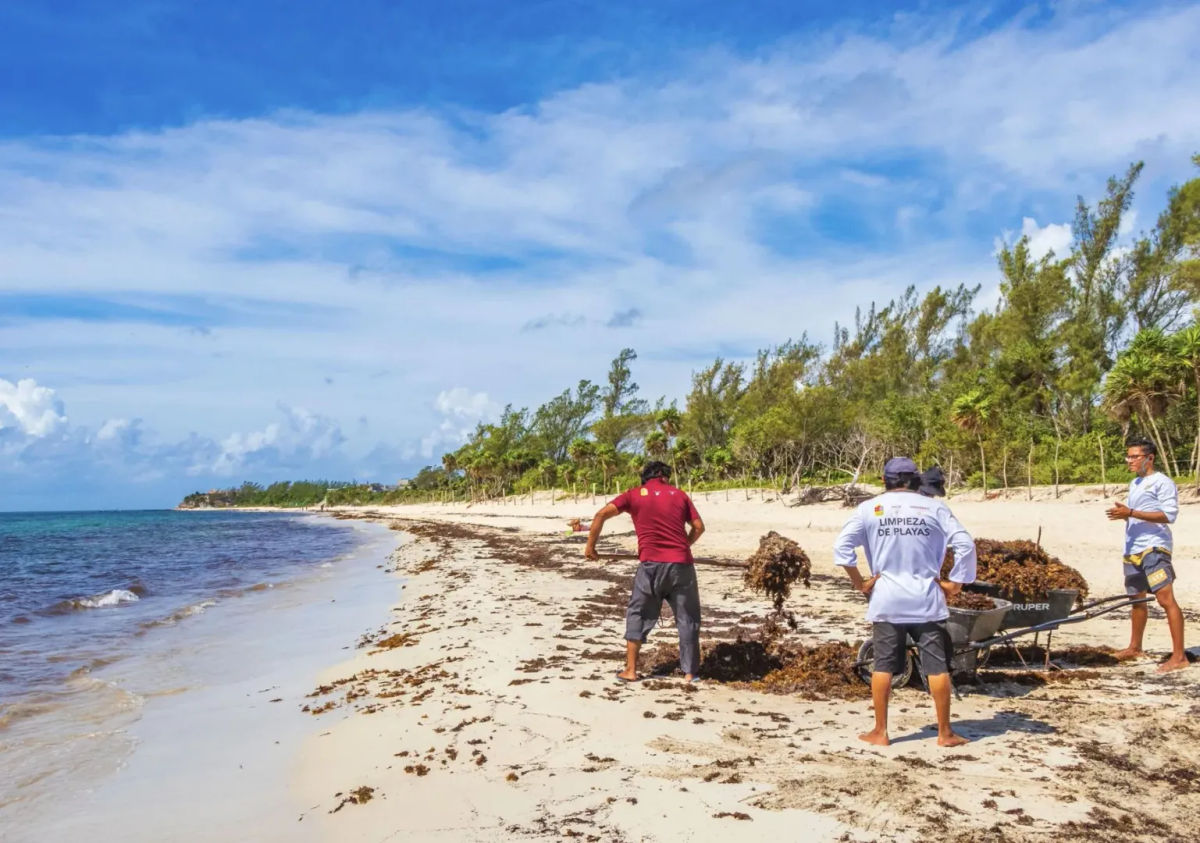
The turquoise dream of Tulum remains interrupted. Early September brings a mixed picture: some beaches appear almost free of sargassum, while others still battle daily arrivals of the invasive seaweed. Official monitoring across Quintana Roo confirmed that out of 140 beaches, only seven were entirely clean. Tulum, as usual, falls somewhere in the middle.
Which Tulum Beaches Are Still Covered in Sargassum
Not all shores look alike. Akumal and Tankah offered stretches of nearly pristine sand, categorized green by monitoring networks. But the story shifts quickly, just a few kilometers away. In the hotel zone, at Punta Piedra, Arco Maya, Playa Houston, Campechen, and Boca Paila, the classification remained orange, meaning abundant arrivals.
A local worker cleaning Boca Paila described the routine with exhaustion: “We remove it every morning, and by midday the sea brings more.” His words capture the endless loop of the season, where shovels and trucks become part of the landscape.
Why the Season Persists Beyond Summer
Sargassum follows a seasonal rhythm tied to warmer waters. Typically, April through August bring the strongest arrivals, while autumn and winter reduce the problem significantly. December, January, and February often mark the cleanest months across the Riviera Maya.
Yet in 2025, the story took an unusual turn. Satellite analyses suggested record-breaking volumes across the Atlantic. Researchers warned that arrivals might stretch into October or even November. That anomaly has left Tulum’s cleanup crews and hoteliers on edge, waiting for relief that seems delayed.

Impact on Tourism and Local Economy
For visitors, sargassum can be a nuisance. For locals, it cuts straight into survival. A taco stand owner near the southern hotel zone said her sales dropped sharply during the peak arrivals in July. By September, foot traffic improved, but she confessed, “If the seaweed returns tomorrow, the tourists will stay away again.”
This is not just an environmental concern. It’s an economic equation with human consequences. Hotels, restaurants, tour operators, and street vendors all depend on clear beaches. Each extra week of arrivals is another test of resilience.
Tulum Compared to Other Riviera Maya Destinations
The Riviera Maya as a whole faces the same challenge. Playa del Carmen and Cancún also endure heavy arrivals, though their larger infrastructure sometimes allows faster cleanups. Tulum, with its identity built on a promise of unspoiled nature, feels the contradiction more sharply. A paradise branded on purity struggles to hide the stains of brown tides.
Signs of Relief and Outlook for 2025
Despite the difficult year, the trend is bending downward. By early September, arrivals were clearly lower than July’s suffocating peaks. The monitoring network hinted that only “a few more days of strong arrivals” remained before the beaches could breathe easier.
It is a cycle familiar to locals. Sargassum season is like a fever: it spikes, lingers, then breaks with cooler waters. Winter promises a clean reprieve, but the abnormal extension of 2025 leaves a lingering question: what happens if record-breaking years become the new norm?
Editorial Reflection
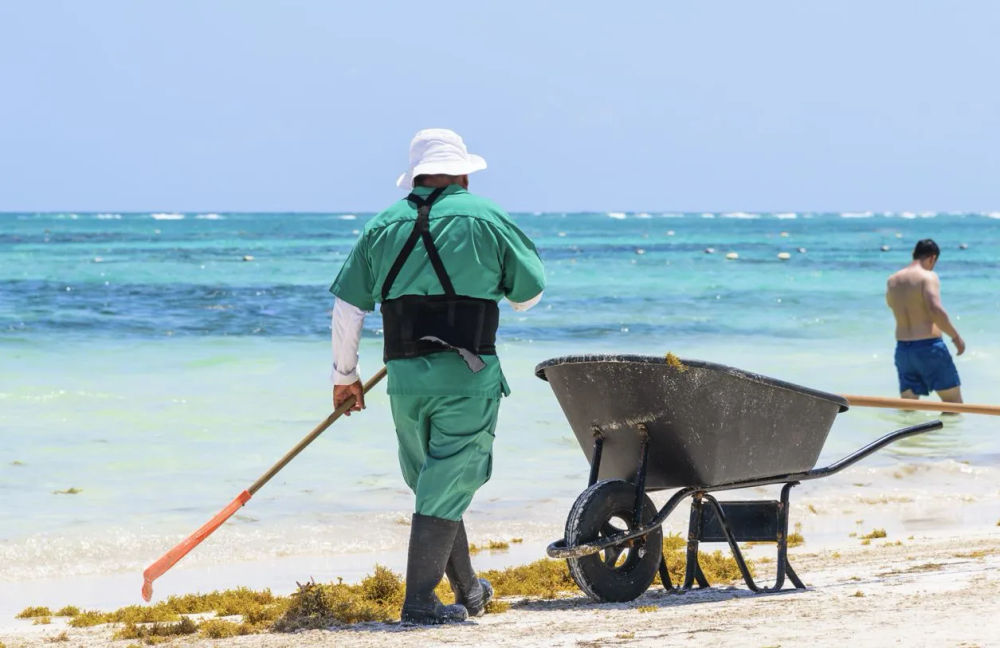
There is resilience in the daily grind of workers, in the small businesses adjusting to each tide, in the authorities sending cleanup trucks at dawn. But resilience has limits. If 2025 is a sign of future seasons, Tulum will need more than shovels and goodwill. It will need long-term strategies, cooperation across the Caribbean, and perhaps a rethinking of how to sell paradise in an age of brown tides.
For now, visitors in September 2025 will see a patchwork: one stretch of perfect turquoise, another marred by seaweed. Locals will continue their daily labor, tourists will adjust expectations, and everyone will watch the tide.
What’s at stake is more than beauty. It’s the economic heartbeat of a town and the ecological balance of a region. Will Tulum adapt before these record years become the rule rather than the exception?
We’d love to hear your thoughts. Join the conversation on The Tulum Times’ social media.