
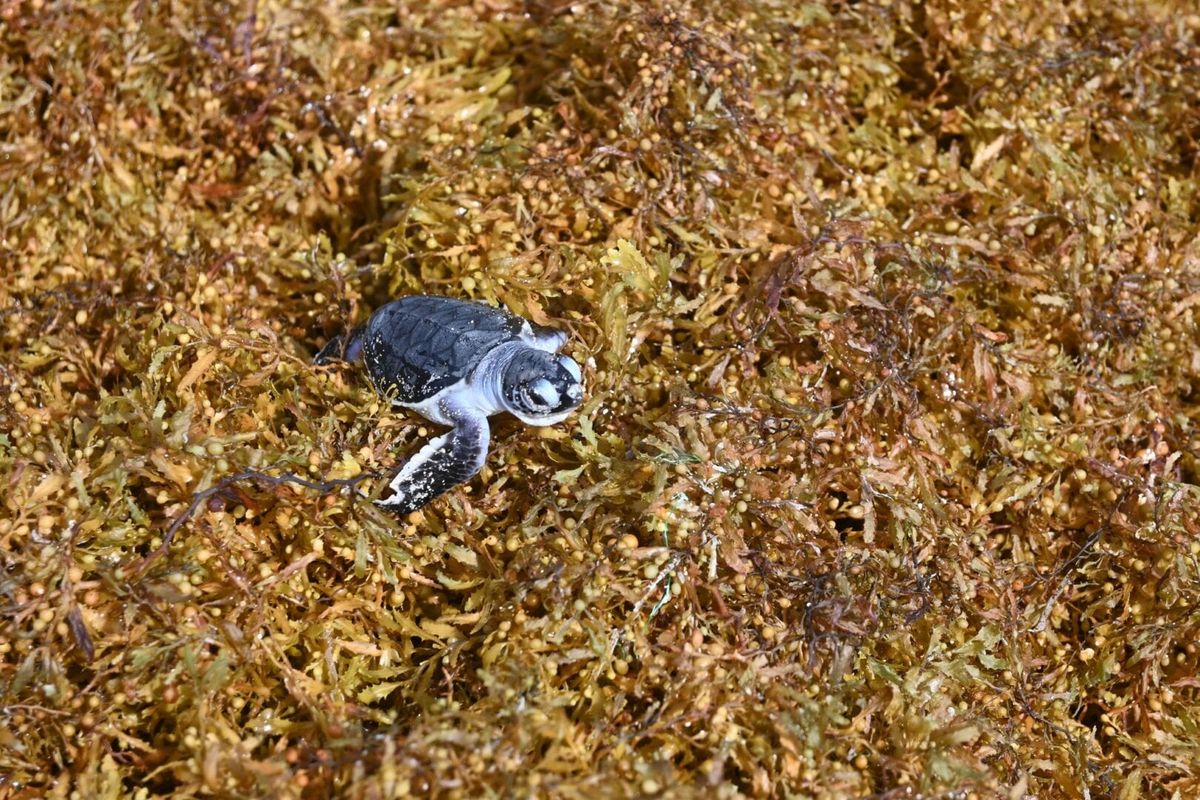
Some mornings, the shoreline doesn’t just smell of salt and sea. It smells like something’s breaking. The waves roll in thick and slow, pushing mountains of sargassum ashore. People walk past it now like it’s always been there. But what happens beneath that floating tangle is not just a mess. It’s a crisis. And it raises a question that many still avoid.
What’s doing more damage to the coast: the sargassum, or us?
A Crisis That Starts Far from the Sea
This seaweed isn’t new. Sargassum has long been part of the Atlantic’s balance. In normal quantities, it drifts through the ocean as a floating habitat, sheltering fish, crabs, and even baby sea turtles. But what we’re seeing now, this overwhelming surge, this yearly invasion that turns beaches into swamps and reefs into shadows, is something else entirely.
The story doesn’t start at the shoreline. It begins far inland, in the vast agricultural fields of Latin America, where synthetic fertilizers saturate the soil. When it rains, excess nutrients wash into rivers, which then carry them all the way to the Atlantic. There, in the warm tropical currents, the ocean becomes overfed. The sargassum blooms uncontrollably, growing into a belt of algae that stretches across thousands of kilometers. Every year, it thickens. Every year, it returns stronger.
In 2022, satellite data showed this floating belt surpassing 20 million metric tons. That’s not nature behaving naturally. That’s a system under pressure, and starting to rupture.
What Happens When It Reaches the Shore
Once the sargassum arrives, the damage unfolds quickly. The piles on the beach begin to rot, releasing a strong smell of sulfur and methane. For some, it’s just unpleasant. For others, especially those with asthma or respiratory issues, it can be dangerous.
But what’s worse happens in the water.

As the algae decompose, they consume oxygen, creating low-oxygen zones where life suffocates. In these dead zones, marine biodiversity collapses. Entire populations of bottom-feeding fish, sea urchins, and crustaceans vanish. In some areas, scientists have reported mortality in more than half of all marine species present. In 2018 alone, over 78 species were recorded dead during peak blooms.
Coral reefs are smothered in darkness. The sargassum mats block sunlight, which is vital for corals to survive. Without light, corals lose their symbiotic algae and begin to bleach. Eventually, they die.
Turtles, some of which have traveled thousands of kilometers to nest, now struggle just to cross the beach. Many don’t make it. Hatchlings get trapped in the seaweed and die before ever reaching the ocean. Shorebirds lose access to their feeding grounds. Even the sand itself changes, stripped of life, weakened, and less able to resist erosion.
This isn’t just about seaweed. It’s about the unraveling of a living coastline.
How We Respond, and What It Costs
Faced with this problem, we act. We send in bulldozers. We build floating barriers. We mobilize to protect the beaches and save the economy. But often, our solutions become part of the problem.
Heavy machinery scrapes the beach to remove the algae, but in doing so, it destroys the delicate ecosystems just beneath the surface. Tiny creatures that live in the sand are crushed. Nesting zones are disturbed. The sand is compacted and loses its natural softness and structure. Over time, this leads to accelerated erosion, making the beach thinner and weaker after every season.

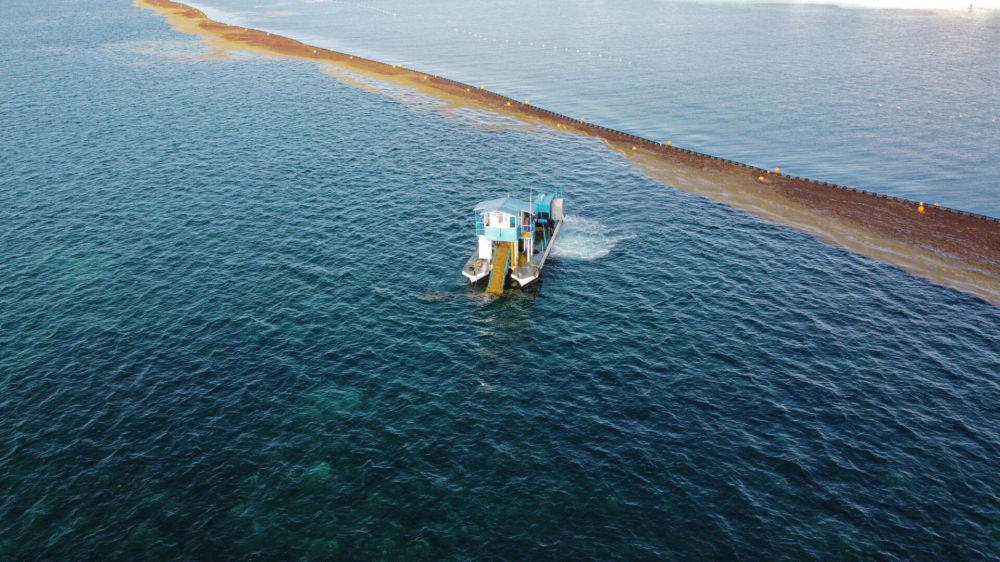
Offshore, floating barriers are set up to stop the sargassum before it reaches land. But when those barriers trap the algae in one place, the water behind them turns stagnant. Oxygen levels drop. The algae begin to rot in place, creating a deadly soup. Marine turtles become entangled. Fish migration routes are blocked. Entire stretches of reef and seagrass suffer, cut off from light and circulation.
In some cases, up to 60 percent of marine life within these barrier zones has died within weeks. What was meant to protect becomes a floating graveyard.
And yet, this is still the dominant response. We react quickly, dramatically, and publicly. But the real solution requires something slower. Something deeper.
The Other Way Forward
There are better ways. Gentler ways. Manual removal of the sargassum during early arrival is far less harmful to ecosystems. It gives us time to sort, process, and even reuse the algae. With the right infrastructure, sargassum can be turned into compost, biofuel, building materials, and even fabric.
But that kind of change takes planning. It takes investment. It takes a different mindset.
The real turning point begins long before the seaweed arrives. It begins upstream, where policies can regulate the use of chemical fertilizers. Wetlands can be restored to act as natural filters, where rivers can be protected from industrial runoff.
It begins with the understanding that what happens on land always ends up in the ocean.
The Coast Is Watching
This is not a seasonal inconvenience anymore. It’s not a bad summer. It’s the new pattern of a coastline pushed to the edge. The sargassum is a symptom. The disease is systemic.
And yet, there’s still time.
The reefs haven’t all died. The turtles still return. The beach still shifts under our feet, alive and waiting. If we keep scraping, bulldozing, blocking, and blaming, we’ll lose it. But if we choose to listen, to adapt, to protect, to restore, this place can heal.
The choice isn’t just between sargassum and sand. It’s between reaction and responsibility. Between treating the coast like a disposable asset, or honoring it as something sacred.
We can do better. And the coast is waiting to see if we will.