
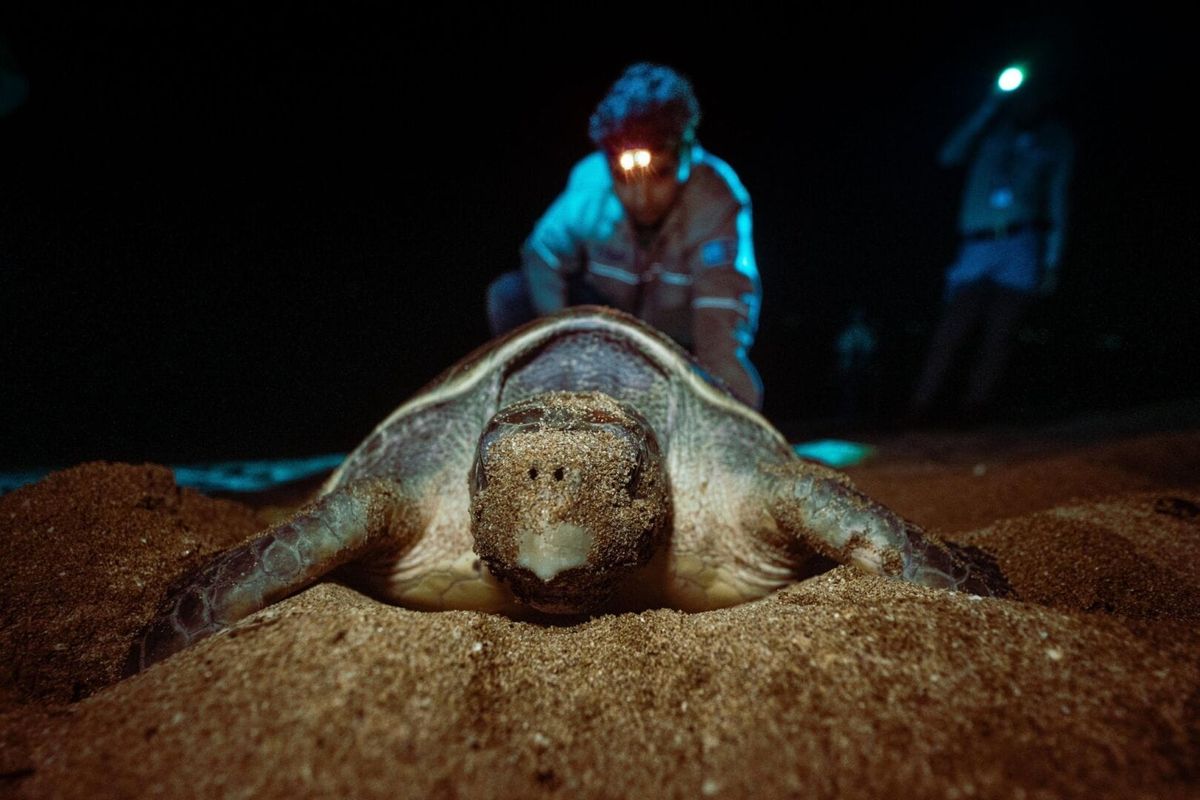
Sea turtle nesting in Tulum stirs hearts and science in 2025, as beaches glow with ancient rituals and community dedication. Turtles return to the very sands where they were born, and volunteers, guided by moonlight, bear witness to nests teeming with hatchlings, reminding us both of nature’s resilience and of our responsibility to protect it.
A timeless ritual set against Tulum’s living backdrop

Tulum’s shores have witnessed the sea turtle rite of return for millennia. Beneath the watchful gaze of ancient Mayan ruins and swaying palms, female turtles, mostly green (Chelonia mydas), loggerhead (Caretta caretta), hawksbill (Eretmochelys imbricata) and the occasional massive leatherback (Dermochelys coriacea), emerge from the Caribbean depths between May and October, each species guided by instinct and ancestral memory. Turtles navigate under starlight, dragging themselves across the sand to dig nests where they deposit an average of 100 to 120 eggs, the process lasting roughly an hour.
For the Maya, the turtle (ak) symbolized endurance, the cosmos, and the Earth itself. Their round shells mirrored the celestial vault, while the slow, patient journey of the animal reflected a sacred rhythm of life. Watching a sea turtle nest in Tulum today is not just a biological event, it’s a moment deeply intertwined with the region’s spiritual heritage, echoing ancestral respect for life cycles and lunar harmony.

Species count and science behind the surge
In Quintana Roo during 2023, over 62,000 nests were counted, a total including roughly 58,000 green turtle nests, 3,000 loggerheads, 1,500 hawksbills, and four leatherback nests, the first leatherback nesting in 36 years. Tulum alone contributed over 17,000 green and more than 2,200 loggerhead nests in previous seasons. Scientific data shows warming temperatures are fueling higher nesting counts in the short term across the Caribbean. Yet this same climate shift risks skewing hatchling sex ratios toward females, a tension between immediate numbers and long-term population balance.
Scientific observations record incubation lasting 50–60 days; emergence success depends on beach width, sand temperature variations, and conservation actions. In nearby Akumal, loggerhead nests yield a hatching success rate of over 78 percent. Though younger nesting females now dominate, the population trend remains hopeful.

Volunteers: heartbeats on moonlit sand
Volunteers, students, retirees, travelers, take to the beaches at night and dawn, lanterns dimmed with red filters so as not to disturb nesting turtles and hatchlings. They carefully monitor tracks, mark nest locations, measure egg depths, and erect protected corral fences. About 45–60 days later, they return to guide hatchlings to the sea. Volunteers describe the awakening soil as if “it felt like the ground was alive” when tiny claws burst forth. These dedicated individuals share measurements, emergence counts, and sand temperatures with researchers, forming a vital bridge between community and science.

How volunteers contribute meaningfully
Every pair of eyes on the sand helps. Night patrols detect nesting and prevent poaching. Nest protection guards fragile eggs from human disturbance and stray animals. Volunteers organize beach clean-ups, monitor sand temperatures, record hatchling success rates, and facilitate respectful hatchling releases. Many tourists become volunteers for a night, or for a season, moved by the vulnerability of life underfoot and the stillness of the moment.
Becoming part of this effort doesn’t require expertise, only presence and care. Those wishing to join can approach local community centers or turtle camps that offer short training. Even observing silently from a respectful distance or participating in a morning release can make a difference. As one volunteer shared, “The moment you see them reach the water, you stop being a tourist and start being part of something greater.”

Tulum context: blending ecology, culture, and tourism
Tulum lives at the intersection of ancient history, tourism, and environmental urgency. The influx of resorts and lighting threatens turtle nesting, but a growing eco-conscious shift is underway. Hotels now enforce “lights-out” from May through October, raise awareness signage, and offer eco-tours. Local cafés chalk turtle art, beach bars stock cold water for volunteers, and small dawn-viewing tours, with quiet guides, help fund conservation while deepening awareness among visitors.

Nearby Xcacel and Sian Ka’an preserve swaths of relatively untouched shore, critical refuges for turtle nesting. The blend of Mayan presence, vibrant tourism, and grassroots conservation gives Tulum a unique context, where volunteers become stewards of both heritage and the future.
Climate crossroads and hope for future seasons
Tulum’s 2025 nesting forecast reflects cautious optimism. While warmer sands may continue to boost nesting numbers, long-term climate change challenges must be addressed. Volunteers and beach managers are planting beach vegetation, reinforcing dunes, and modeling erosion scenarios. Satellite tracking of post-nesting turtles reveals migration corridors and foraging grounds, data informing broader marine management.

A fragile balance shaped by empathy and action
Under moonlit skies, as hatchlings dash into waves that once bore their mothers, the moment feels mythical. Volunteers feel time slow, and nature’s cycle feels intimate and urgent. In Tulum, this season is more than a conservation effort, it’s a collective act of love, science, and cultural continuity. Each nest saved echoes in the community’s pulse and underlines the fragile bond between humans, turtles, and the sea.
We’d love to hear your thoughts, join the conversation on The Tulum Times’ social media.
Images shown are for illustrative purposes only.