
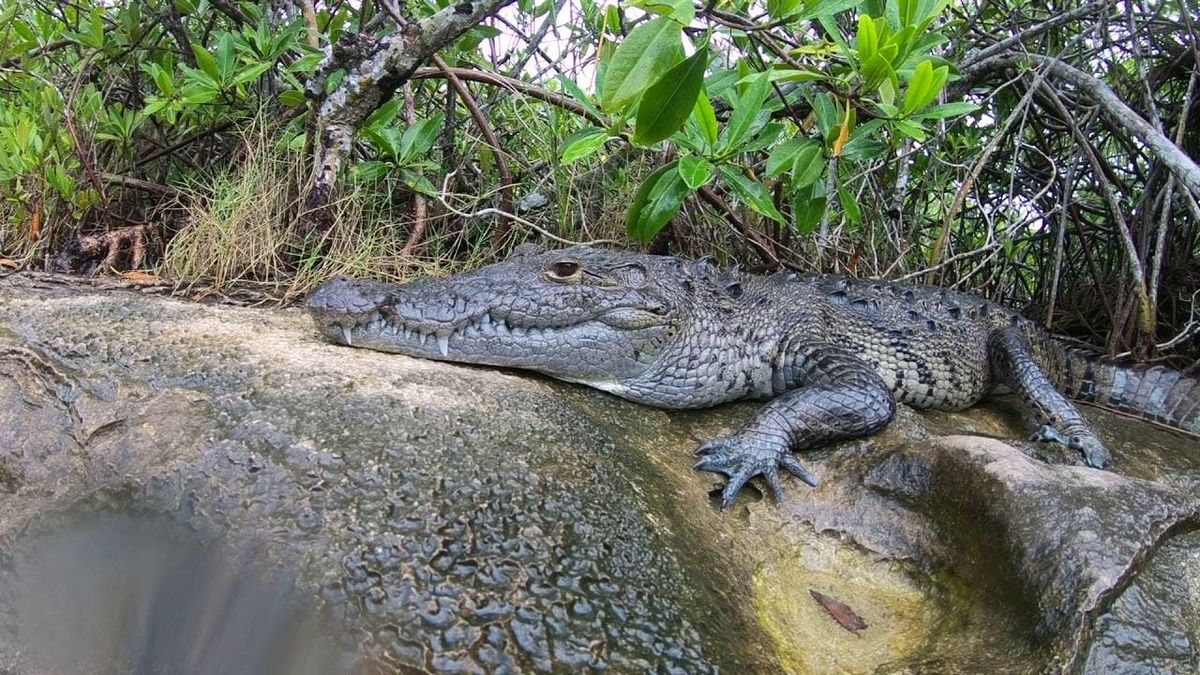
A short video filmed during a kayak tour in a cenote in Tulum spread quickly across TikTok. It showed two young women disturbing a crocodile in Tulum because they believed the reptile was only a decorative figure. The reaction was immediate. Viewers from Mexico and abroad questioned how such a mistake could happen in a region where wildlife is visibly present and where visitors are routinely warned not to interfere with animals.
The recording begins with laughter. The pair, both tourists according to comments attached to the clip, navigate through a narrow corridor of calm water typical of cenotes in Quintana Roo. As one of them turns the camera toward the shoreline, an unmoving crocodile appears in frame. Its stillness convinced them that it posed no risk. They paddled past it at first, then circled back, unsure if they had seen a real reptile or a crafted prop placed for effect.
One single sentence from the clip stood out on social media. “We thought it was fake,” one woman said while leaning toward the animal. The phrase became a reference point in reactions that followed. Many users argued that the moment captured a broader problem with careless tourism in the Riviera Maya.
This is where the micro-story takes shape. The video shows one of the women splashing water toward the crocodile in an attempt to force movement. When the reptile stayed still, they tapped the ground near its tail with the kayak paddle. Seconds later the animal shifted slightly, then lifted its head. The women screamed and pushed the kayak away in a panic. The reptile did not chase them. It simply moved enough to signal that it had been disturbed.
How a Misjudgment Turned Into a Viral Lesson
The moment the crocodile moved, the tone of the clip changed entirely. The two friends, who had been joking only seconds earlier, rushed to paddle down the channel and put distance between themselves and the bank. Their reaction underscored a common misconception among visitors who believe that cenotes, despite being natural formations, function as curated attractions where spontaneous encounters with wildlife are unlikely.
Local guides in Tulum often remind travelers that cenotes are part of interconnected ecosystems that run beneath much of the Yucatán Peninsula. Reptiles such as Morelet’s crocodile, which inhabits various freshwater bodies in Quintana Roo, frequently rest at the edges of cenotes where the temperature is stable and vegetation provides shade. Wildlife specialists note that these animals tend to avoid humans and react only when approached too closely.
Comments under the viral post raised a series of questions about responsibility. Some users criticized the women for provoking the animal. Others wondered if the cenote operator had offered proper safety instructions. Several pointed out that the reptile’s position and posture were typical of a resting crocodile and should not have been mistaken for a decorative display.
There is a subtle reflection here. Incidents like this reveal how the rapid expansion of outdoor tourism in Mexico can lead to gaps between visitor expectations and environmental reality. More travelers arrive with limited knowledge of local species, and that disconnect can lead to risky behavior.
The Role of Wildlife Awareness in a Tourist Hub
Authorities in Quintana Roo did not issue a formal statement about the event, but environmental educators in the region often warn about the increasing pressure on natural habitats. The popularity of cenote tours in Tulum, Playa del Carmen, and Akumal has created a need for stronger information campaigns that explain how to behave around reptiles, amphibians, and migratory birds.
Some tour companies share guidelines at the start of each excursion. These briefings usually stress that animals must be observed from a distance. But other operators focus primarily on the recreational portion of the activity. This inconsistency can result in situations where visitors cannot identify species accurately or understand how to respond when they encounter wildlife unexpectedly.
A guide interviewed offline by The Tulum Times described the video as predictable. He explained that first-time visitors sometimes assume that anything motionless inside a cenote must be part of the setting. According to him, the misconception grows when tourists spend most of their time in urban resorts or amusement parks where props are common.
“Respect is more than a rule. It is what keeps humans and animals safe,” he said in a quote suitable for social media.
A Closer Look at What the Video Shows
Frame by frame, the video highlights behaviors that environmental educators say should be avoided. The women approached the crocodile too closely, splashed water directly toward its head, and used a paddle to prompt a reaction. Specialists note that these actions can cause unnecessary stress or increase the chance of defensive behavior.
The reptile’s response in this case was limited. It shifted its body position, lifted its head, and remained still again. This reaction appears consistent with Morelet’s crocodile, which tends to avoid confrontation unless cornered. Had the animal felt trapped, the outcome could have been different.
The surrounding environment in the clip resembles cenotes throughout the Riviera Maya where green vegetation forms natural ledges and where reptiles sometimes rest unnoticed for hours. The water’s clarity can mislead inexperienced visitors into thinking they have full visibility of their surroundings when in fact animals can blend into shadows along the bank.
Why the Story Resonated Across TikTok
Social media amplified the clip because it combined humor, fear, and a moment of unexpected education. Many viewers admitted that they had not realized crocodiles were commonly found near cenotes. Others pointed to the growing disconnect between social media habits and responsible behavior in natural areas. Several commenters noted that filming for entertainment appears to override safety considerations for some travelers.
The reaction also reflects shifting expectations about how tourists should behave in ecological zones. As Tulum positions itself as a destination with a strong environmental identity, public tolerance for irresponsible encounters appears to be shrinking. The debate grew beyond the video. It turned into a discussion about the balance between tourism revenue and conservation.
What This Incident Suggests About Tulum’s Future
Tulum’s growth makes interactions like this more visible. When infrastructure expands quickly, education often struggles to keep pace. The confrontation between the two women and the crocodile exposes a gap that might widen if not addressed through consistent messaging and stronger collaboration between tour operators and environmental groups.
At the same time, the event shows how rapidly public sentiment can swing when animals are placed in stressful situations. Viewers from Mexico City, Cancún, Mérida, and even international travelers posted similar reactions. Many argued that the women should not be singled out but that the system around them should do more to encourage safe behavior.
But the core message from the incident is straightforward. Natural spaces in Mexico are shared environments, and respect, even when not legally enforced, remains essential. As tourism in the Riviera Maya continues to grow, that principle might become even more important.
What Is at Stake for Tulum and Its Wildlife
Encounters between tourists and animals are not new, yet the scale of today’s social platforms turns minor episodes into regional debates. This gives local communities an opportunity to shape expectations and set norms that could influence how visitors behave in cenotes, mangroves, and protected zones.
What happened with the crocodile in Tulum serves as a reminder that natural environments require caution, understanding, and patience. The incident may fade online, but the questions it raises will remain central as the region balances popularity with preservation.
We’d love to hear your thoughts. Join the conversation on The Tulum Times’ social media.
How should tour operators improve visitor education to prevent similar situations?