
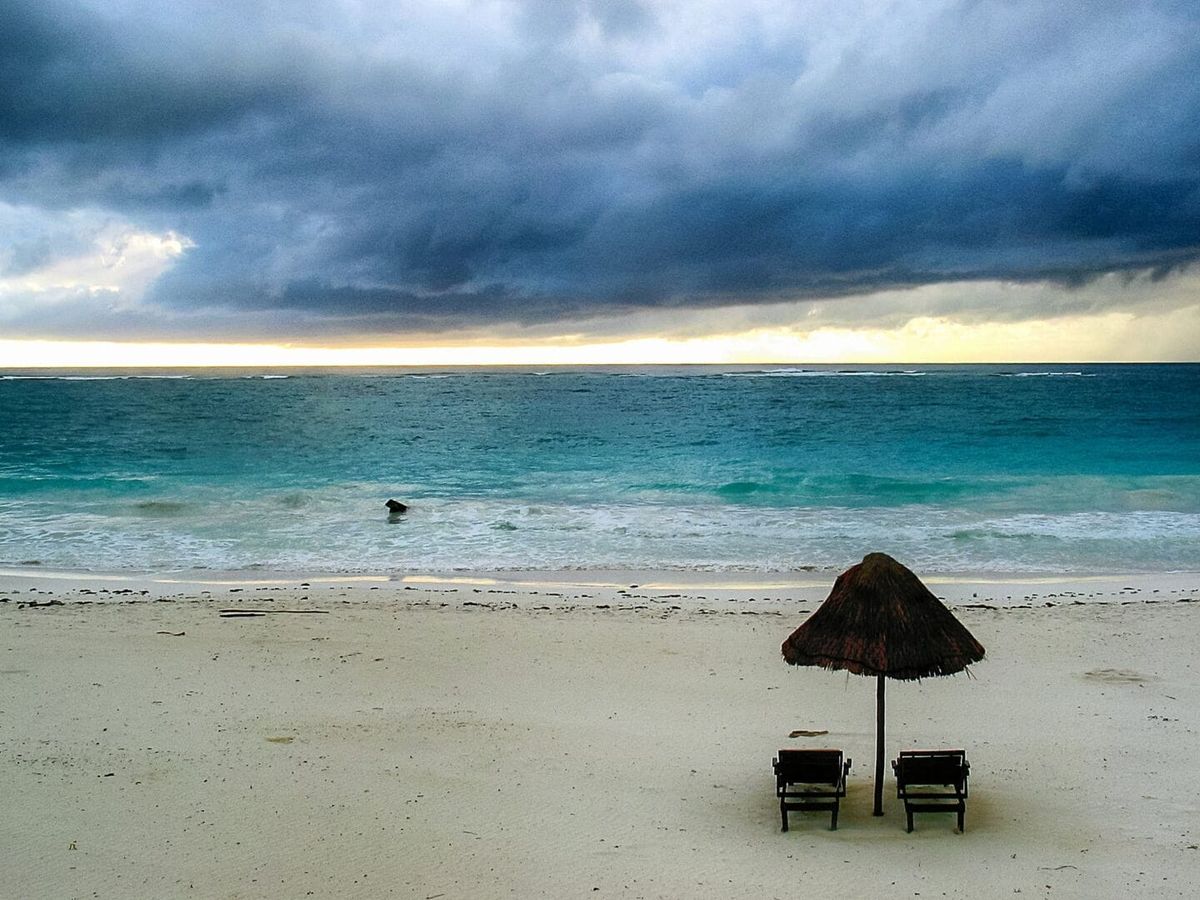
The air had been thick all morning, a heavy, humid blanket pressed down upon the asphalt and the struggling palms. Then, as if on cue, the sky ripped open. It wasn’t the usual five-minute downpour, the kind that washes the dust from the streets and then retreats, leaving the air fresh and vibrant. No, this was different. This was the raw, unbridled force of nature, a true deluge. The forecast, for days now, had whispered warnings, growing louder and more insistent, about a **Tropical Wave Unleashing Storms in Tulum**. Today, those whispers had become a roar.
The rain started around 9:00 AM, a gentle patter at first, almost deceptively soft. But within minutes, it escalated. It wasn’t just rain; it was a cascade, a relentless drumming that swallowed the sounds of traffic, the distant construction, even the chirping of crickets that usually accompanied the early morning hours. Water pooled quickly, transforming familiar streets into murky rivers, reflecting the bruised, pewter sky. By 10:00 AM, the city was virtually submerged in parts. Reports filtered in, fragmented at first, then coalescing into a clear picture of widespread disruption. The National Water Commission, CONAGUA, had issued their bulletins with quiet authority, yet nothing truly prepares a place for this specific kind of elemental fury.
The heart of the storm, as the Meteorological Service had projected, seemed to settle directly over the municipality. The sheer volume of water defied immediate drainage. Basements, even those seemingly impervious, began to take on water, their inhabitants scrambling to lift precious belongings above the rising tide. The main arteries, usually bustling with early morning commuters and the occasional fearless scooter, lay abandoned, swallowed by the accumulating sheets of water. Visibility plummeted, turning the normally vibrant landscape into a muted, impressionistic painting of grays and blues. Local authorities, particularly the Civil Protection Directorate, had been on high alert since the first atmospheric pressure drops were noted. Their preparations, the clearing of storm drains, the warning advisories sent out through every available channel, were now being put to the ultimate test.
The most immediate concern, beyond property damage, was public safety. The sheer force of the water, coupled with the potential for downed power lines, posed a significant threat. Drivers who found themselves caught in the initial onslaught were advised to pull over, hazard lights blinking futilely against the blinding rain. The advice was clear and concise even as the conditions became anything but: avoid flooded areas. Easier said than done when the very infrastructure of the city seemed to be disappearing beneath the current. Yet, a coordinated effort began, with emergency services vehicles, their sirens a mournful wail through the downpour, navigating the treacherous conditions, responding to calls for assistance. Their presence offered a small, flickering beacon of reassurance in the maelstrom.
Beyond the immediate chaos, the long-term implications loom. This isn’t merely a day of heavy rain. The saturated ground, the overflowing cenotes, the altered landscape, all of it speaks to a deeper shift, a reminder of the delicate balance between human habitation and the raw power of the natural world. The municipality’s infrastructure, designed to handle a certain threshold of rainfall, was unequivocally overwhelmed. This event, officially designated as a result of Tropical Wave 2, moving steadily at 20 to 30 kilometers an hour, brought with it not just rain but the threat of severe electrical storms and gale-force winds. The lightning cracked open the sky, illuminating briefly the ferocity of the storm, followed by the deep, guttural rumble of thunder that seemed to shake the very foundations of the earth.
The information disseminated by official channels, though perhaps not fully grasping the sheer sensory overload of the event for those enduring it, was crucial. They spoke of the need to secure objects that might be swept away, to stay indoors, to unplug appliances. These were practical instructions, born of experience and a deep understanding of the potential aftermath. The warnings were not just about the immediate hours, but for the prolonged effects, the potential for overflowing rivers, mudslides, and the lingering threat of standing water as a breeding ground for mosquitos once the sun inevitably returned. It was a comprehensive plea for caution and preparedness, echoing through the roar of the wind and the relentless pounding of the rain.
As the afternoon wore on, the intensity began to slightly abate, leaving behind a city transformed. The streets, though still waterlogged, showed signs of receding puddles, revealing the debris of branches, leaves, and the occasional displaced piece of street furniture. The very air, though still heavy with humidity, carried a different scent, a mingling of wet earth, churned asphalt, and the metallic tang of newly washed greenery. The immediate emergency may have begun to pass, but the recovery, the assessment of damage, the collective recalculation of resilience, that was only just beginning. This was a day that etched itself into the collective memory, a powerful reminder of nature’s dominion, and of the enduring spirit of those who live at its mercy.
What are your thoughts on how our community can better prepare for such intense weather events? Share your opinions on The Tulum Times’ social media channels.