
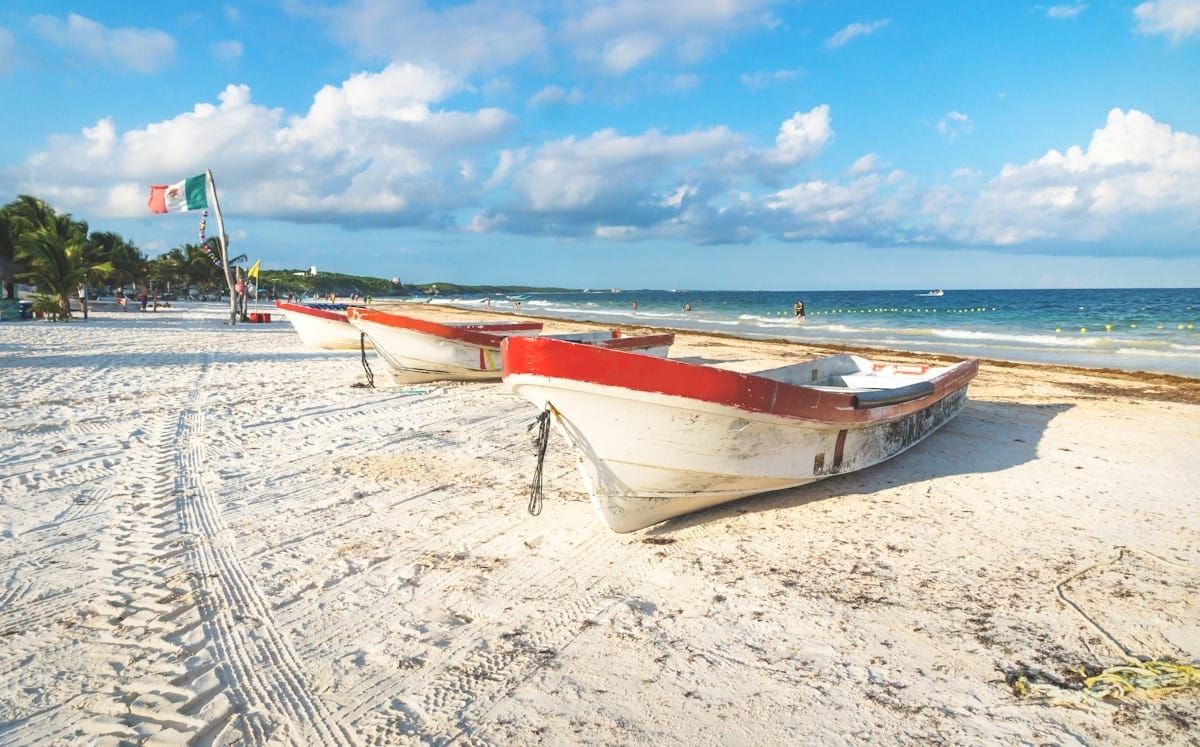
The sand tells a story. In Tulum, it’s now a cleaner one.
Santa Fe, Pescadores, and Playa Maya have quietly achieved something few beaches in Mexico can claim: the NOM-120 “White Flag” certification for conservation. That might sound like another bureaucratic stamp, but in a coastline overrun by development and tourist footprints, this badge is rare, and hard-earned.
It wasn’t a glamorous reveal. No ribbon-cutting, no drone shows. Just a local official, David Buchanan García, head of the local ZOFEMAT (Federal Maritime Land Zone), standing under the punishing Caribbean sun, admitting how “complicated and methodical” the process had been.
And that’s putting it mildly.
A Clean Slate in a Complicated State
NOM-120-SSA1-1994 isn’t the kind of title that sparks headlines. But behind the alphabet soup is one of Mexico’s most rigorous environmental benchmarks. We’re talking water quality tests, waste management audits, and sustainability reviews, the kind of inspection that doesn’t flinch at a candy wrapper buried in the dunes.
Until recently, only four beaches in all of Quintana Roo held this certification. Now, Tulum has added three more to the list. Not just any certification either, this one’s awarded under the conservation modality, signaling that these beaches aren’t just clean, they’re committed to staying that way.
In a region where development often tramples preservation, that matters.
Inside the Fight for Clean Sand
“It’s been a lot of work,” Buchanan admitted. “Especially around waste and sustainability. But we can proudly say we scored a perfect 100.”
Perfect. Not a number you hear often in public service or environmental inspections. And yet, here it is, whispered between the palms and tidepools of Tulum.
The team behind the certification, whose names may never make a press release, spent months checking boxes most tourists will never see. Trash separation points. Ecosystem buffers. Water testing logs. It’s the kind of invisible labor that makes a visible difference.
And when the awards are handed out officially this September, there’s a possibility that more beaches might join the list. But for now, these three stand alone, an ecological trio holding the line.
Why This Win Isn’t Just for the Tourists
You could say this is a win for tourism. And it is. Clean beaches attract clean-minded travelers. But it’s also a win for residents, those who fish, clean, walk, and live beside these sands every day. These certifications don’t just mean better Instagram posts. They mean fewer microplastics in your morning swim.
In a place like Tulum, where the skyline changes faster than the tide, locking down conservation status is almost a radical act.
It’s a stake in the ground that says: Not everything here is for sale.
The Riviera’s Uneven Environmental Ledger
Compare this to Cancún or Playa del Carmen, where the buzzword is often “luxury” rather than “longevity.” Mega-resorts polish their beachfronts but struggle with runoff, overcapacity, and erosion. Tulum, in its better moments, chooses differently.
This certification might not grab international headlines like sargassum outbreaks or celebrity sightings, but it reveals something more lasting. It shows what’s possible when preservation leads the narrative.
The Tulum Times has followed these shifts for years, documenting the slow, often frustrating dance between ecology and economy. This latest move? It’s a step in the right direction.
The Quiet Revolution of ‘Conservation Mode’
“Conservation modality” isn’t just bureaucratic jargon. It means creating a de facto reserve, an area with restricted impact, ecological buffers, and managed waste streams. It’s like putting a beach on a budget, not in money, but in environmental cost.
And this kind of budgeting pays off.
Because beaches aren’t infinite. They erode, they choke, they disappear under the weight of carelessness. But a conserved beach? That’s a beach that might still be here for your children’s children.
Or, as one local lifeguard put it while watching tourists lay down towels on Playa Pescadores, “People think paradise maintains itself. It doesn’t. We clean it every morning.”
An Invitation, And a Challenge
This recognition doesn’t mean the job is done. It’s a moment of pride, yes, but also a challenge to other municipalities in Quintana Roo and beyond. If Tulum, with all its pressures and politics, can pull off a 100 in sustainability, what’s stopping the rest?
Environmental wins aren’t accidents. They’re engineered, by policy, by people, by the quiet daily grind of those who believe in more than short-term gains.
It’s tempting to see the “White Flag” as a finish line. But it’s really a starting one. A marker saying: this is what’s possible when the tide turns the right way.
We’d love to hear your thoughts. Join the conversation on The Tulum Times’ social media.
Do you think other beaches in Quintana Roo should adopt conservation standards like Tulum’s? What’s the real cost of keeping paradise clean?