

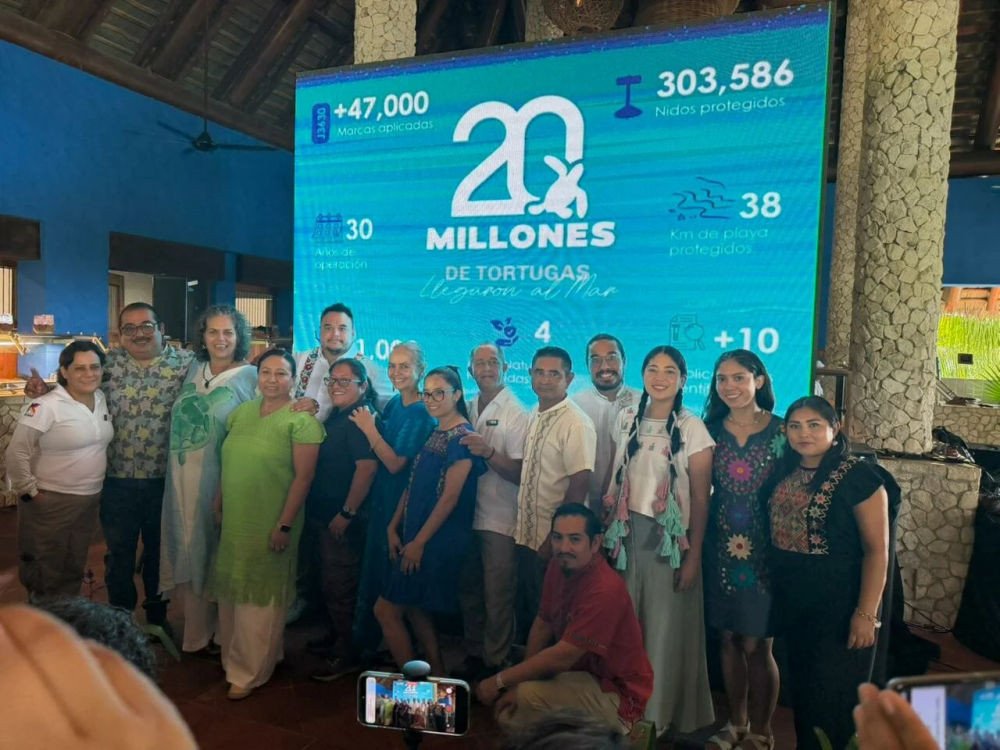
For nearly three decades, a stretch of coastline in the Riviera Maya has quietly rewritten the story of marine turtle conservation in Mexico. This week, the Programa de Conservación de Tortugas Marinas Riviera Maya–Tulum announced that it has surpassed a landmark few initiatives worldwide can claim: more than 20 million sea turtle hatchlings born and released into the ocean since 1996.
The announcement was made in Tulum by Guadalupe Quintana, director general of Flora, Fauna y Cultura de México A.C., during an event that blended celebration with caution. The figure represents 29 uninterrupted years of work along the beaches of Tulum and the wider Riviera Maya, an area that today hosts some of the highest nesting densities of sea turtles in Quintana Roo and the country.
“It is a powerful reminder that long-term conservation can deliver results,” Quintana said. “But it is also a reminder of how fragile those results remain.”
From colonial abundance to modern collapse
Quintana began by situating the achievement within a longer historical arc. When Christopher Columbus reached the Caribbean in 1492, he described beaches so densely covered with turtles that, according to his chronicles, one could almost walk across their shells. Those accounts, echoed in other early records from the Americas, speak of an abundance that is difficult to imagine today.
The arrival of Europeans marked the start of centuries of exploitation. Turtle meat, eggs, and shells became valuable commodities. Their ability to survive for long periods aboard ships turned them into a convenient source of fresh protein for long voyages. Over time, extraction intensified. And then came habitat loss, coastal development, marine pollution, and the steady expansion of human activity along shores and at sea.
By the late 20th century, populations that had survived for millions of years were pushed to the brink of extinction. It was against this backdrop that organized conservation efforts in Quintana Roo began to take shape.
A program born in 1996 and sustained by alliances
The current marine turtle protection program in Tulum traces its roots to 1996, when Grupo Xcaret assumed responsibility for initiatives previously led by the Centro de Investigaciones de Quintana Roo, or CIQRO, a pioneer in turtle research and conservation in the state.
In 2002, Flora, Fauna y Cultura de México A.C. took over the program’s direction, supported by Grupo Xcaret and joined by a growing network of hotel operators, academic institutions, environmental organizations, and volunteers. Over time, the program expanded far beyond basic nest protection.
Today, it is widely regarded as a national and international reference point. Its work spans beach monitoring, protection of nesting females and hatchlings, scientific research, environmental education, technical training, and coordination with public authorities. According to organizers, this integrated approach has been key to reaching the 20 million hatchling milestone.
And it has required persistence measured not in seasons, but in decades.

The people who walk the beaches at night
During the event, Quintana paused to honor those who rarely appear in headlines. For six to eight months each year, turtle guardians patrol nesting beaches day and night, often under difficult conditions. Their job is physically demanding and repetitive, but critical.
She mentioned several by name: Estela, Leo, Itzel, Ana, Pepe, Álvaro, Judith, Joel, Tito, and Tilo. Some have dedicated much of their working lives to this effort, returning season after season as tourism grew around them and pressures on the coastline increased.
She also acknowledged researchers such as Roberto Herrera, Fernando Muñoz, and Rodolfo Raigosa, as well as hundreds of collaborators and thousands of volunteers who have contributed time, expertise, and patience.
“It is easy to celebrate numbers,” Quintana said. “It is harder to recognize the human commitment behind every protected nest.”
That sentence, delivered without flourish, captured the mood of the gathering and quickly circulated among attendees on social media.
Institutional backing and the role of the private sector
The program’s continuity has depended heavily on institutional and financial allies. Among those recognized were Grupo Xcaret, the La Nueva Vida de Ramiro hotel, Bahía Príncipe Tulum and its EcoBahía Foundation, the Mexican Navy, and the Casa del Cielo Sea Turtle Sanctuary.
Media organizations were also singled out for amplifying conservation messages beyond the beaches of Tulum. As Quintana noted, public awareness has become an essential layer of protection in a destination where tourism, lighting, and coastal infrastructure can unintentionally undermine nesting success.
The presence of private sector actors alongside civil society groups reflects a broader reality in Mexico’s conservation landscape: long-term environmental protection often hinges on collaboration rather than isolated efforts.
Historic nesting season reinforces Tulum’s role
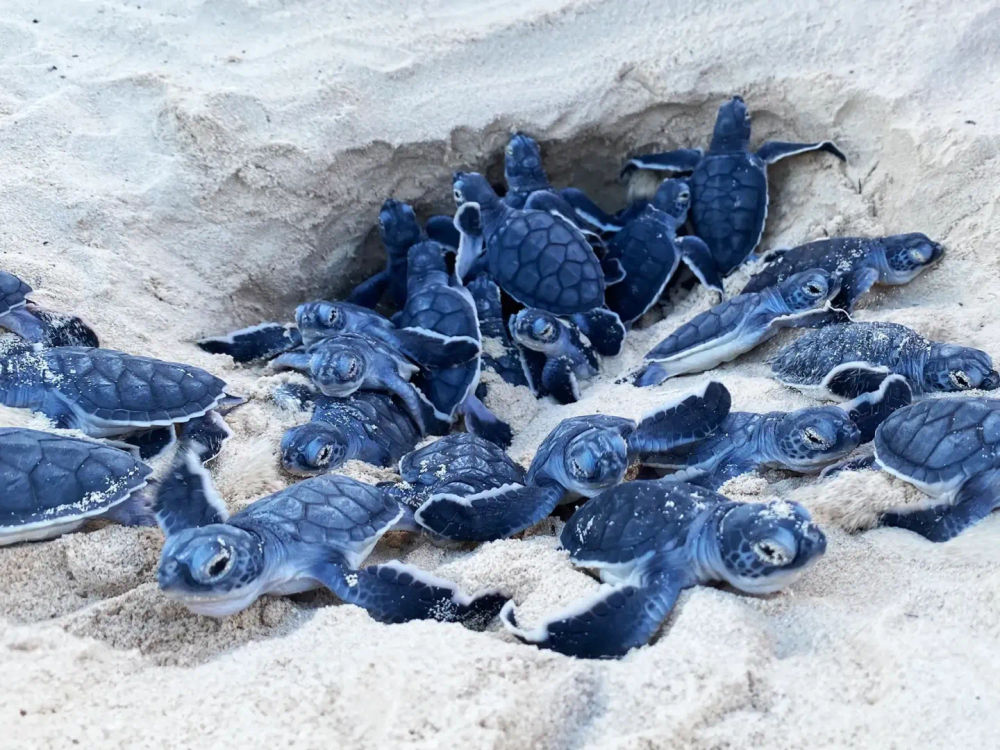
The celebration coincided with the close of the 2025 marine turtle nesting season in Tulum, which municipal authorities described as historic. From May to November, more than 15,000 nests were protected, and 1,085,347 hatchlings were recorded along the municipality’s coastline.
According to data from the General Directorate of Environmental Sustainability, Tulum’s beaches continue to register the highest number of turtle arrivals in Quintana Roo. This distinction brings visibility, but also responsibility.
Of the documented nests, 15,848 belonged to green turtles, Chelonia mydas. Another 2,309 were loggerhead turtles, Caretta caretta. Three nests were identified as hawksbill turtles, Eretmochelys imbricata. All three species are classified at different levels of risk under national and international conservation frameworks.
More than one million hatchlings emerged from these nests and were released under established environmental protocols. Although the official season ended in November, authorities confirmed that some nests remain active, prompting continued surveillance to ensure hatchlings reach the sea safely.
Coordination across government and civil society
The 2025 operations were led by the Municipal Committee for the Protection of Marine Turtles, working in coordination with federal, state, and local authorities, civil organizations, scientific institutions, and turtle camps.
Participating groups included Flora, Fauna y Cultura de México, the Bahía Príncipe Tulum Ecological Foundation, Programa Kanan Áak, Centro Ecológico Akumal, Save Akumal, Bahía Solimán, Desarrollo Turístico Tukal, and the National Commission of Natural Protected Areas, or CONANP.
Municipal officials said the scale of coordination reflects both the ecological value of marine turtles and their role as indicators of coastal ecosystem health in Tulum and the Riviera Maya.
The mayor of Tulum, Diego Castañón, has repeatedly described marine turtle protection as a strategic axis for the municipality, citing its importance for biodiversity, sustainable tourism, and long-term environmental stability.
Success does not erase the risks ahead
Despite the celebratory tone, Quintana was careful to temper optimism with realism. Marine turtles remain endangered. Artificial lighting, beachfront construction, plastic pollution, climate change, and intense tourism activity continue to pose serious threats.
In places like Tulum, where global attention has transformed once-quiet beaches into international destinations, conservation efforts must constantly adapt. Measures that worked a decade ago may no longer be sufficient.
“There is no finish line in conservation,” Quintana said. “Only the next season, and the next generation.”
That perspective aligns with the program’s closing message for the day, a phrase that resonated beyond the event itself: “Let’s go for the next 20 million.”
A local effort with global implications
What has unfolded on the beaches of Tulum over the past 29 years illustrates a broader truth about environmental protection in Mexico. When institutions, communities, researchers, and businesses align around a shared goal, measurable progress is possible, even against long odds.
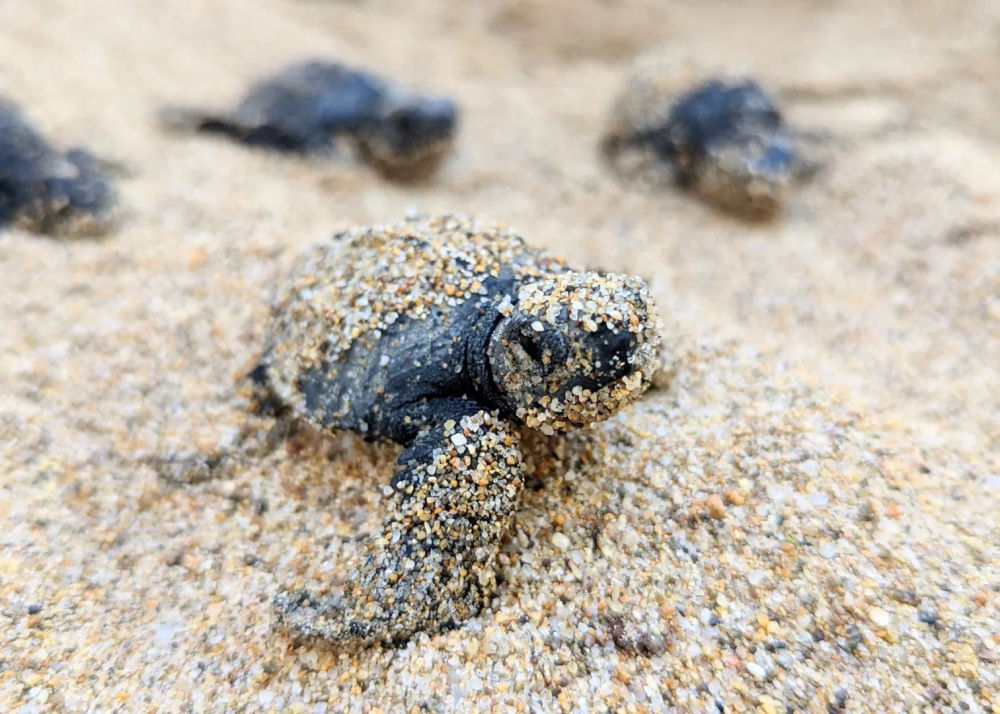
At the same time, the numbers underscore how much remains at stake. Of the millions of hatchlings released, only a small fraction will survive to adulthood. Conservation success is therefore cumulative, built on persistence rather than guarantees.
As The Tulum Times has reported in past seasons, the future of marine turtles in the Riviera Maya will depend not only on patrols and protocols, but on how development, tourism, and policy choices evolve in the years ahead.
The milestone of 20 million hatchlings offers hope. It also sets a demanding benchmark for what comes next.
We’d love to hear your thoughts. Join the conversation on The Tulum Times’ social media.
How can destinations like Tulum balance tourism growth with the long-term protection of species that define their natural heritage?