
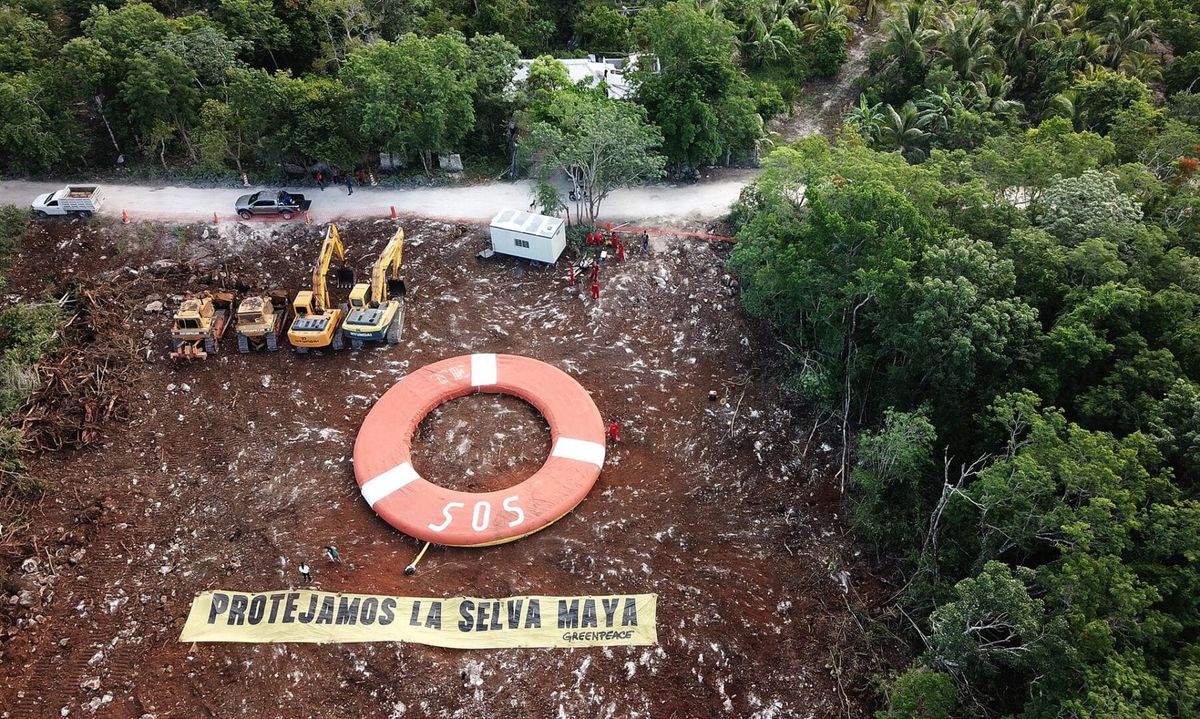
In a decisive move to protect one of the Yucatán Peninsula’s most fragile ecosystems, environmental organization Greenpeace is calling on Mexico’s Secretariat of Environment and Natural Resources (SEMARNAT) to immediately publish its official denial of a controversial quarrying project proposed by cement giant Cemex.
According to Greenpeace, the public record remains conspicuously incomplete. The only visible document related to the project is a permit granted on January 27, authorizing Cemex to begin the first phase of mineral extraction on 572,685 square meters of forested land near Tulum. The denial of further permits, Semarnat claims to have issued, is nowhere to be found in the Ecological Gazette.
Greenpeace sees this omission as more than a bureaucratic oversight. It views it as a transparency failure, and a potentially dangerous one. The organization has demanded that the agency led by Alicia Bárcena Ibarra deliver “total transparency” and make public the resolution blocking Cemex from expanding its project to 650 hectares of jungle terrain.
Greenpeace Protest Sparks Government Response in Cancún
In response to the lack of documentation, Greenpeace activists staged a protest outside Semarnat’s offices in Cancún earlier this week. Following media coverage, Semarnat informally confirmed that it had, in fact, denied Cemex’s request to change land use for the construction of a sascabera, or quarry, near Tulum.
But for Greenpeace, verbal statements and press comments aren’t enough. The group insists that until the official resolution is published, Cemex’s full-scale plan to extract 13 million tons of construction aggregate over the next 15 years remains an unresolved, and urgent, threat to the region.
Environmental Risks to the Gran Acuífero Maya and Local Communities
At the heart of the controversy lies the Gran Acuífero Maya, the vast freshwater system running beneath the Yucatán Peninsula. Greenpeace warns that Cemex’s proposed quarry sits directly above this vulnerable aquifer, in an area with highly porous karstic soil. Blasting and deforestation, the group argues, could destabilize the underground system, risking both contamination and structural collapse.
The environmental impact is not limited to the aquifer. The affected area contains virgin tropical forest, a biodiversity hotspot home to endemic species and part of the region’s critical ecological balance. Greenpeace has labeled the project a “grave environmental and social risk,” citing the potential destruction of natural habitat and threats to Indigenous and local communities dependent on clean water sources.
Cemex, the Military, and the Expanding Footprint of Quarry Operations
The Cemex project is far from the only quarrying operation under scrutiny in Quintana Roo. Greenpeace estimates that approximately 30 sascaberas are already active in the region, many of which are operated by the Mexican military under the Secretariat of National Defense (Sedena). Notably, Sedena also oversees the construction of the Tren Maya railway and a series of government-backed hotels along the Riviera Maya.
This overlap of roles has raised questions among environmentalists and legal observers. Sedena, as both regulator and operator, holds significant power over land use and environmental impact in the region. The entanglement of government interests in tourism, infrastructure, and extraction industries has sparked concern over conflicts of interest and a lack of independent oversight.
Greenpeace has been vocal about these systemic risks, warning that the continued proliferation of quarry operations without proper environmental controls could irreversibly damage the fragile ecosystems that make Quintana Roo a global biodiversity treasure.
A Call for Accountability and Action
By demanding the immediate publication of Semarnat’s resolution, Greenpeace is not only challenging Cemex’s ambitions but also testing the government’s willingness to uphold environmental law and public accountability. In a statement to the press, the organization emphasized that transparency is non-negotiable when the health of ecosystems and communities is at stake.
The implications of this case extend beyond a single project. It reflects a broader tension playing out across Mexico’s southeast, between rapid development and environmental preservation, between corporate interests and public good.
As the forest stands in limbo and the aquifer flows silently below, Greenpeace has made its position clear. The battle for Tulum’s future is being fought not only in the jungles and limestone but also in the footnotes of government documents. Until those records are made public, the story remains unresolved.