
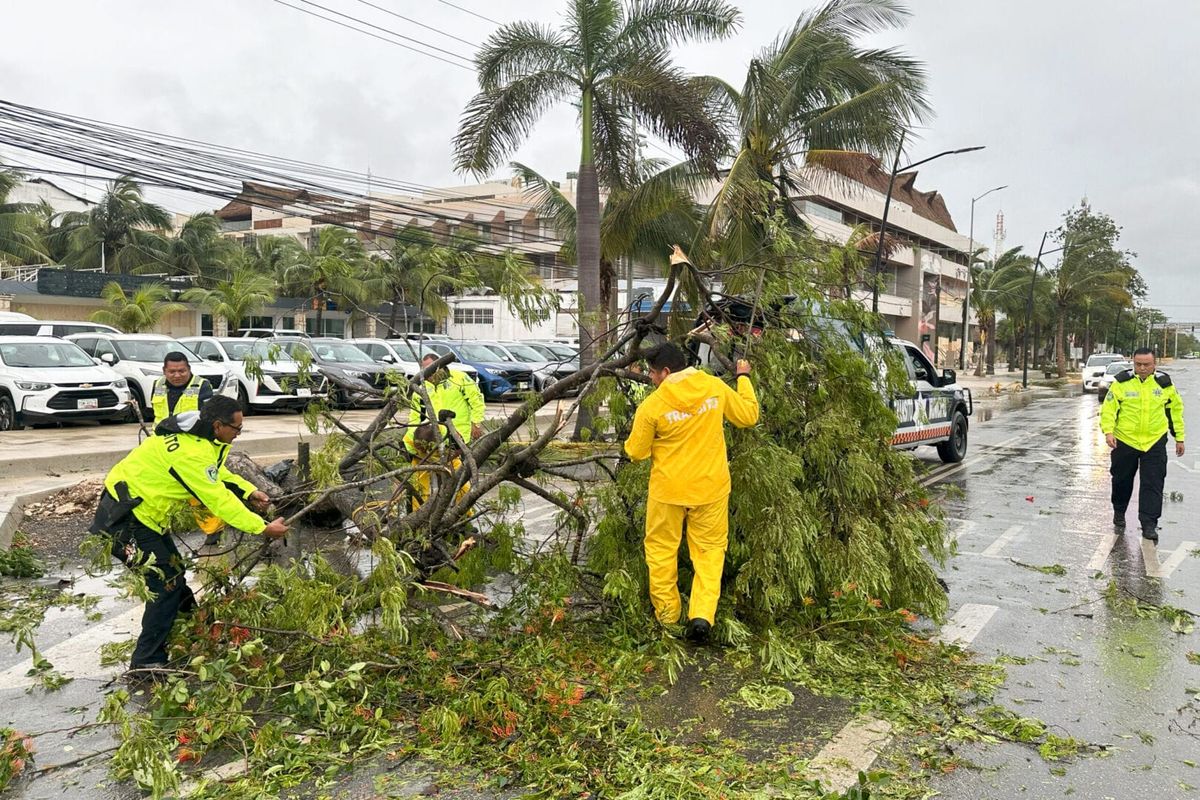
The air in Tulum, usually thick with a languid humidity and the murmur of conversation, feels different now. There’s a new undertone, a hum of preparation beneath the daily rhythm. **Tulum Gears Up for Hurricane Season 2025**, a phrase whispered in cafes and discussed more openly in municipal offices, has become a silent mantra for the community here. It’s a season that always carries a unique weight, a time when the stunning coastal landscape, so often celebrated for its beauty, also reminds locals of its raw power, its untamed wildness. This year, however, there’s a discernible shift, a more organized, almost clinical readiness that speaks to lessons learned and a palpable desire to protect not just property, but lives.
The formal establishment of the Municipal Special Committee for Hurricane Season 2025 marks a critical turning point. It’s not just a procedural formality; it’s the crystallization of a new approach. The committee, a broad coalition that brings together various arms of government and civilian defense, is designed to be the central nervous system of Tulum’s hurricane response. It’s a move born from experience, from observing how quickly a tranquil sky can turn malevolent, how suddenly a community can find itself isolated. The names involved, Civil Protection, the Navy, the National Guard, the Secretariat of National Defense (SEDENA), even the National Water Commission (CONAGUA) and the Federal Electricity Commission (CFE), speak to the multifaceted nature of the threat. This isn’t a task for one agency; it’s a shared burden, a collective responsibility.
The structure of the committee itself is telling. It’s chaired, notably, by the Municipal President, a direct indication of the priority assigned to this effort. His presence at the helm ensures that decisions are made with the full authority of the local government backing them. But it’s the composition beyond the top seat that truly highlights the integrated strategy: direct representation from the National Guard for security and logistical support; SEDENA, with its specialized engineering and relief capabilities; the Navy, uniquely positioned for coastal surveillance and rescue, especially crucial in a place as connected to the sea as Tulum. And for the first time, or at least with renewed emphasis, the inclusion of entities like CONAGUA and CFE is a pragmatic acknowledgement that hurricanes aren’t just about wind and water; they’re about the aftermath, power outages, compromised water supply, disrupted essential services.
The practical steps being laid out are surprisingly comprehensive in their simplicity. The activation of temporary shelters, for instance, isn’t just a checklist item; it’s a lifeline. The directive to identify and prepare these spaces, often schools or community centers, before the first storm forms, is a stark reminder that when a hurricane looms, there is no time for improvisation. Every minute counts. The mapping of vulnerable areas, the pre-positioning of emergency supplies, these are the quiet, unsung acts of preparedness that determine whether a community recovers quickly or struggles for months.
A crucial emphasis this year is on clear, consistent communication. The directive to use official channels for information dissemination, avoiding the often-turbulent sea of social media rumor, reflects a hard-won understanding of how panic can spread faster than the storm itself. The call for residents to remain vigilant, to follow official advisories, carries a weight of experience. It’s not just a suggestion; it’s an imperative. This focus on verifiable information aims to instill confidence and prevent the chaos that misinformation can breed in a crisis.
The committee’s discussions extend beyond immediate dangers, delving into the logistical challenges of recovery. The coordination for debris removal, the plan for restoring utilities, the assessment of critical infrastructure damage, these are the elements that dictate the speed and efficacy of a community’s return to normalcy. It’s a holistic view, acknowledging that surviving the storm is only half the battle; rebuilding and recovering are the other, often longer, struggle.
The sheer scale of the preventative measures being taken speaks to a maturing process within Tulum’s governance. It’s a move away from reactive crisis management toward proactive risk mitigation. The investment in this committee, in its personnel, in its planning, is an investment in the resilience of the community itself. It reflects a deeper understanding that while you cannot stop a hurricane, you can certainly prepare for it, cushion its blow, and ensure that when it passes, the path to recovery is as clear and efficient as possible. The rhythm of life in Tulum continues, but now, beneath the surface, there’s a new, steady drumbeat of preparedness, a quiet assurance in the face of nature’s formidable power.
What are your thoughts on Tulum’s preparations for hurricane season? Share your opinions on The Tulum Times’ social media channels.