
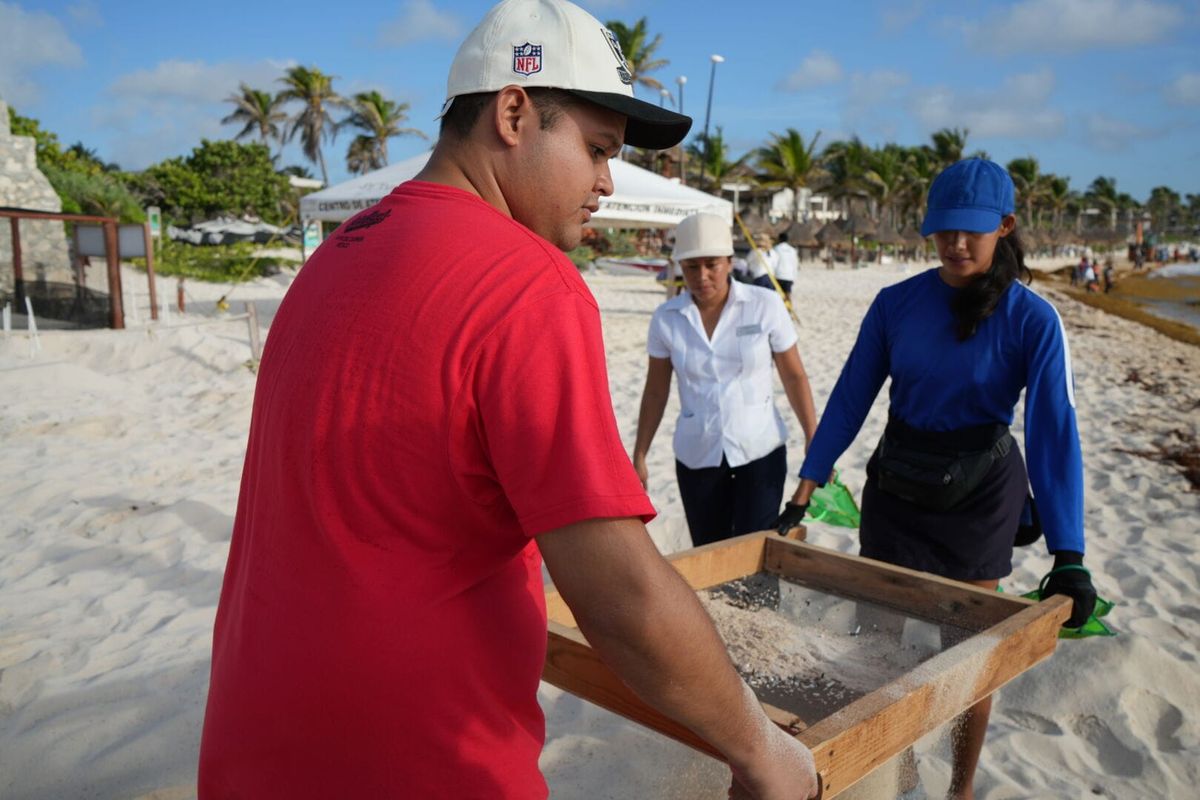
Tiny pellets, nurdles, they call them, nestled in the seaweed, almost invisible unless you’re looking. And this summer, dozens of people in Playa Aventuras DIF and the surrounding mangrove swamps were doing just that: looking, collecting, and cleaning. Not for fame, not for pay. Just because the ocean near Tulum needs them.
In July and August 2025, Fundación Eco-Bahía, the environmental wing of Grupo Piñero in Mexico, led a string of coastal and mangrove cleanups under the banner of the Programa SAK, an initiative aimed at combating marine pollution and engaging the local community in coastal conservation. Their findings weren’t pretty, but they were real.
And reality is what gets things done.
The context behind the cleanups
Located in the Riviera Maya and closely linked to the Bahía Príncipe resort complex, Fundación Eco-Bahía has been operating at the crossroads of tourism and environmental advocacy. This latest push, part of the third quarter activities of the Programa SAK, marks a continued effort to not only clean up but also educate and change habits.
Over two months, volunteers removed 243 nurdles, those pesky microplastics that drift in from global supply chains, and logged them with the Nurdle Patrol, an international citizen science platform. But the pellets were just the start. PET bottles, cigarette butts, broken glass, plastic bags, all cataloged and removed from 235 meters of beach and 300 meters of mangrove area.

The September campaign was planned. But nature had its own plans. Severe weather forced its cancellation, reminding everyone of the climate’s increasing unpredictability.
What the data says, and what it doesn’t
Here’s where it gets interesting. Beyond the visible waste, Fundación Eco-Bahía and Bahía Príncipe Riviera Maya Resort also carried out monthly waste classifications. The results revealed something deeper than trash, they revealed habits.
Among the most common items? Containers for personal hygiene products, leftover construction materials, and hazardous waste like batteries, syringes, and used light bulbs. That’s not just litter. That’s a pattern. And patterns, once recognized, can be broken.
It’s a reflection that the issue isn’t only what washes ashore, but also what we consume, discard, and forget.

Human hands, local hearts
Luis Verdín, manager of Fundación Eco-Bahía, summarized it like this:
“Each action by our volunteers, collaborators, and partners is a vital step in protecting our seas and coasts. Programa SAK proves that when the community comes together, even the smallest gestures make a big impact for marine life and for building a more sustainable future.”
His words aren’t just press-release fluff. On the ground, there are real people behind the gloves and trash bags. Staff from Tulum Country Club, locals from the surrounding towns, tourists who stayed to help, environmental groups like Tulum Circula, and families who brought their kids to teach them something that schools often don’t.
One volunteer, dripping sweat under the August sun, picked up a handful of nurdles, held them up and said, “You wouldn’t even see them, but the fish eat this stuff. Then we eat the fish.” That’s a feedback loop nobody wants to be part of.

Why this matters beyond the beach
While Cancún gets headlines and Playa del Carmen draws crowds, Tulum finds itself in a unique position: rapidly growing, heavily touristic, and sitting on fragile ecosystems.
In that context, Grupo Piñero’s push for “regenerative tourism”, a model that doesn’t just sustain but seeks to repair, feels especially timely. Their alignment with UN Sustainable Development Goals (specifically SDGs 12, 14, and 15) signals a deeper ambition than just greenwashing.
Still, some locals quietly wonder: could more be done upstream, before the waste hits the sand? Should resorts rethink supply chains and tourist behavior? It’s not cynicism, it’s caution. And in environmental work, caution is a form of love.

What lies ahead for Programa SAK
The road is long and murky, like the mangroves themselves. But the path is clear. Fundación Eco-Bahía plans to continue cleanups, scale educational outreach, and integrate deeper with the Riviera Maya’s business and civil networks.
What’s missing is not just more hands, but sustained attention. Environmental fatigue is real. And headlines come and go.
Yet Tulum’s coastline doesn’t forget. Plastic takes centuries to disappear, if ever. And what washes away today, returns tomorrow with the tide.
The Programa SAK, supported by a constellation of local efforts and international platforms, may not solve everything. But it’s building something: a local culture of care, one nurdle at a time.
We’d love to hear your thoughts. Join the conversation on The Tulum Times’ social media.
What small act of care could ripple into something bigger in your community?