
Just past midnight on Playa Conchitas, a small crowd gathers under a sky salted with stars. In near silence, a group of volunteers watches as a hatchling claws its way through the sand. It’s fragile, no bigger than a clenched fist. But the odds are stacked against it.
This year, sea turtle conservationists in Tulum are sounding the alarm.
As nesting season intensifies along the Riviera Maya, a mix of stray dogs, domestic pets, and beach pollution is threatening one of the region’s most fragile natural spectacles. According to specialists from the long-standing Kanan Ak program, these pressures have become the top cause of lost nests and dead hatchlings along this stretch of the Mexican Caribbean.
Conservation under siege
Rocío Peralta has been tracking these patterns for more than two decades. As a biologist and coordinator for Kanan Ak, meaning “guardians of turtles” in Maya, she’s seen it all. But this season, she says, things feel more precarious.
“We’ve recorded daily incidents of dogs digging up nests and eating the eggs,” she explained during a recent release event at Playa Conchitas. “It’s critical. The waste, the dog feces, even leftover food, it’s all disrupting the natural habitat.”
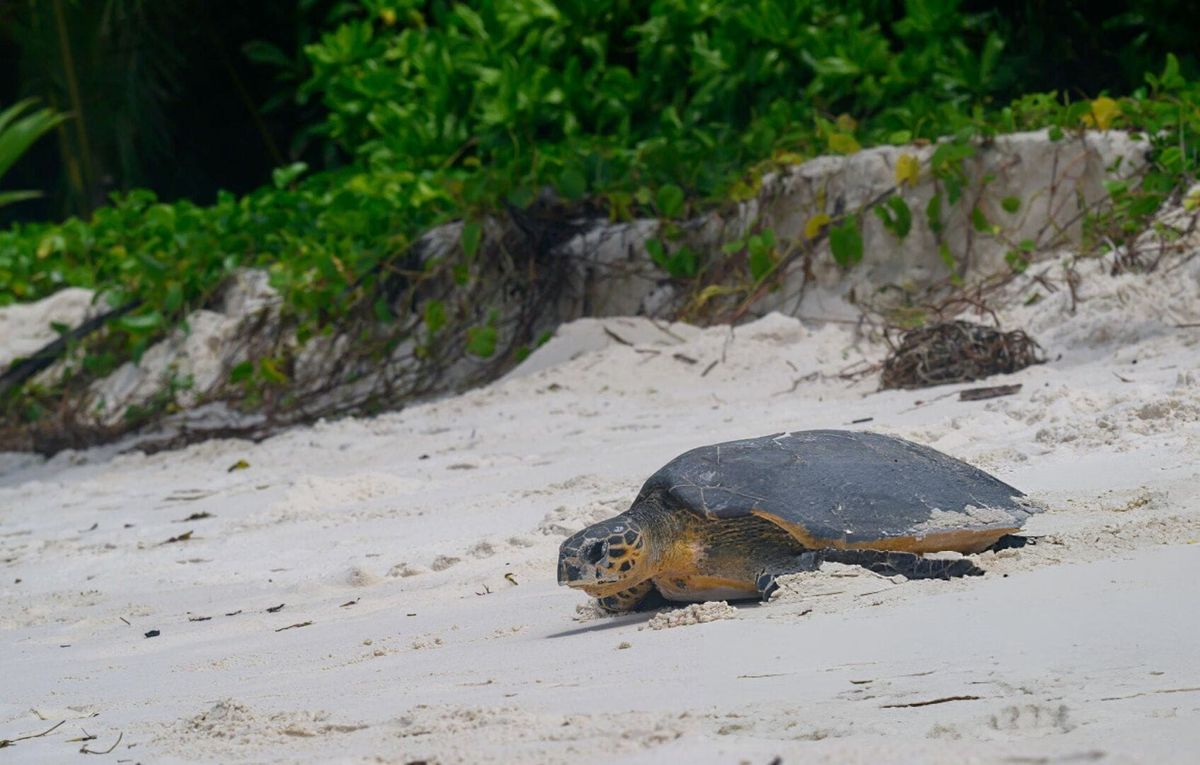
This isn’t just anecdotal. The group is currently monitoring around 80 active nests, primarily from the green turtle and loggerhead, both species categorized as endangered. These nests, once buried deep in quiet sand, now face intrusion from pets brought by unaware tourists and local visitors alike.
The nesting period began in May and will stretch through November, with nightly hatchling releases timed to the turtles’ natural rhythms. But fewer eggs are making it that far.

The human footprint grows heavier
Tulum’s beaches aren’t just under ecological strain. They’re being reshaped by booming tourism, sprawling development, and inconsistent enforcement. And unlike Cancun, where turtle conservation is often tightly regulated by resort protocols, Tulum’s more “open” coastline can mean less control, and more chaos.
While a Municipal Committee for the Protection of Sea Turtles exists, which includes seven conservation camps, their reach is limited. Much of the protection relies on volunteers and the goodwill of residents.
“We’re asking people not to bring pets to the beach,” Peralta emphasized. “Don’t leave trash. And at night, use red lights instead of white ones. The white lights disorient the turtles.”
Such simple actions could tip the balance. But the gap between awareness and behavior remains wide.
Jaguar Park and the federal role
Some of the most vital nesting areas fall within the Caribbean Mexican Biosphere Reserve, specifically in the federally protected Parque del Jaguar. There, monitoring is the responsibility of CONANP, Mexico’s national commission for natural protected areas.
Yet, even with federal oversight, protection is patchy.
“It’s not just about rules on paper,” Peralta noted. “It’s about boots on the ground and eyes on the nests.”
That lack of full coverage leaves many turtle camps vulnerable. Nest predation, plastic debris, and disturbances from nightlife or ATV activity all continue to take a toll.
And with climate change altering sand temperatures, another factor in hatchling survival rates, conservation efforts must adapt quickly or risk collapse.

A legacy 23 years in the making
Despite the mounting challenges, Kanan Ak continues its work without interruption. For 23 years, the program has combined scientific monitoring, rescue operations, and environmental education to protect the ancient ritual of sea turtle nesting.
This October, it will host the 2025 Sea Turtle Festival, a regional celebration stretching across Akumal, Chemuyil, and Xcacel from the 25th to the 27th. The event blends cultural activities with public hatchling releases and conservation talks.
The hope is to foster a deeper connection between the community and the species it shares the coast with.
“Each egg we protect is a chance for future generations to witness turtles on our shores,” Peralta said. It’s a line that rings like a promise, and a warning.
What comes next?
What’s missing, say those on the frontlines, is a broader commitment. Not just from authorities, but from every tourist who snaps a beach selfie, every local walking a dog near the dunes, every developer clearing coastal land.
Tulum has become a symbol of beauty and excess, of paradise and peril. And in the quiet hours before dawn, as baby turtles scramble toward the surf, the consequences of that contradiction are laid bare.
What’s at stake isn’t just the survival of a species. It’s the very soul of the Riviera Maya’s coastline.
We’d love to hear your thoughts. Join the conversation on The Tulum Times’ social media.
What role should residents and visitors play in protecting Tulum’s turtles?