Lucha libre in Tulum remains active through the work of independent promoters who have sustained the sport and spectacle in the municipality despite a lack of consistent institutional support. For organizers, that has meant covering costs privately, training young participants on their own, and continuing to stage events even without the infrastructure seen in nearby cities. The issue carries local weight because it affects recreational options for young people, the future of a distinctly Mexican cultural tradition, and the kind of sports development available in Tulum today.
Andrés, known in the ring as Lady Pink Sexy, said he has spent nearly 18 years as a professional wrestler and more than 15 years organizing events in Tulum. From that experience, he said there has not been steady backing from authorities to help grow the discipline in the municipality.
His account describes a local wrestling scene that has endured, but on a limited foundation. While destinations such as Playa del Carmen and Cancún have suitable venues and organized competitions, he said Tulum still lacks the infrastructure and training programs needed to develop new talent in a more structured way.
That gap matters beyond wrestling itself. In a municipality where sports and cultural spaces can shape community life, the absence of formal support leaves organizers to fill a role that would otherwise be shared by institutions, schools, or public programs.
Private promoters carry the local scene
According to Andrés, wrestling events in Tulum currently depend mainly on private resources. Organizers take on expenses such as transportation, lodging, and wrestler fees without public funding.
That model has allowed events to continue, but it also sets clear limits. Without stable support, every function depends on the ability of promoters to gather resources, coordinate talent, and maintain public interest on their own.
The result is continuity without stability. Events are still being held, and lucha libre has not disappeared from Tulum, but its survival depends on individual effort rather than a lasting local structure. That affects not only how often functions can be organized, but also how much room there is for the discipline to grow.
Andrés said that over the years, there has been no constant institutional push to strengthen the sport. His remarks suggest that local wrestling has remained active in spite of official inaction, not because of a broader development plan.
Training remains one of the biggest gaps
One of the main obstacles, he said, is the lack of spaces and projects where children and teenagers can train.
“There are no spaces or projects to teach children or young people,” Andrés said.
That shortfall has direct consequences for Tulum. Without places to practice or formal programs to guide new participants, young residents interested in wrestling have fewer paths to enter the discipline. It also means the task of developing new talent falls largely on independent promoters.
Even so, interest has not faded. Andrés said he is currently training several young people, including a 12-year-old who already participates in functions. Those details point to continued enthusiasm among younger generations and suggest that the audience for wrestling in Tulum is not limited to nostalgia or occasional spectatorship.
It also shows that demand exists before a formal system does. Young people are still willing to train and perform, but the structure around them remains informal and fragile. That is one of the clearest signs of what could change if the municipality had more support, better facilities, or dedicated development programs.

A sport with social value for young residents
For Andrés, lucha libre is more than entertainment. He said stronger institutional support could help establish it as a sporting and social alternative for young people, offering activities that may help keep them away from risky behavior.
That argument gives the issue a wider local meaning. In communities where structured recreational options can be limited or unevenly distributed, sports often serve more than one purpose. They provide discipline, routine, and a sense of belonging, especially for younger participants.
In Tulum, the case for wrestling is tied to that same idea. Organizers are not only producing shows for public entertainment. They are also trying to create a space where younger residents can take part in a sport that combines training, performance, and identity.
There is a practical lesson in that. When a discipline survives for years without formal support and still attracts children and teenagers, it reflects a level of community interest that institutions may be overlooking.
Cultural identity remains part of the appeal
Andrés also emphasized the cultural importance of lucha libre as part of Mexican identity. That point extends the conversation beyond sports policy or event logistics.
Lucha libre has long occupied a distinctive place in Mexican public life, blending athletic competition with performance and tradition. In Tulum, keeping that practice active means preserving a cultural expression that residents recognize and that younger generations can still inherit through direct participation.
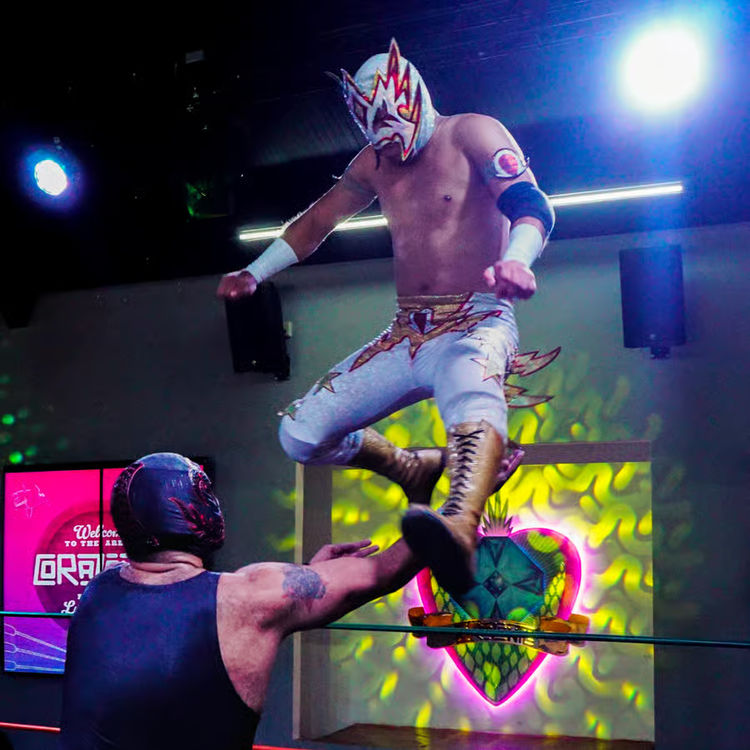
That cultural dimension is especially relevant in a municipality better known internationally for tourism than for locally rooted spectacles. Keeping lucha libre active adds to the range of public life in Tulum and offers a form of entertainment with clear national and community resonance.
It also helps explain why the issue is not only about whether another event can be organized. The larger question is whether a cultural practice with visible local interest will continue to depend solely on private will.
Functions have also supported communities in need
Andrés said wrestling events in Tulum have at times served social purposes beyond the ring. On several occasions, he said, functions have been used to collect food supplies for communities affected by contingencies.
That detail broadens the role these events play in the municipality. Rather than operating only as paid entertainment, they have also functioned as meeting points where public attendance can be linked to support efforts.
The examples suggest that local wrestling has offered more than spectacle. It has provided a platform that organizers can adapt when communities need assistance, reinforcing the idea that these events are part of a wider social fabric.
For Tulum, that matters because it shows how a small, locally sustained activity can carry cultural, athletic, and civic value at the same time.
A new event is set for March 21
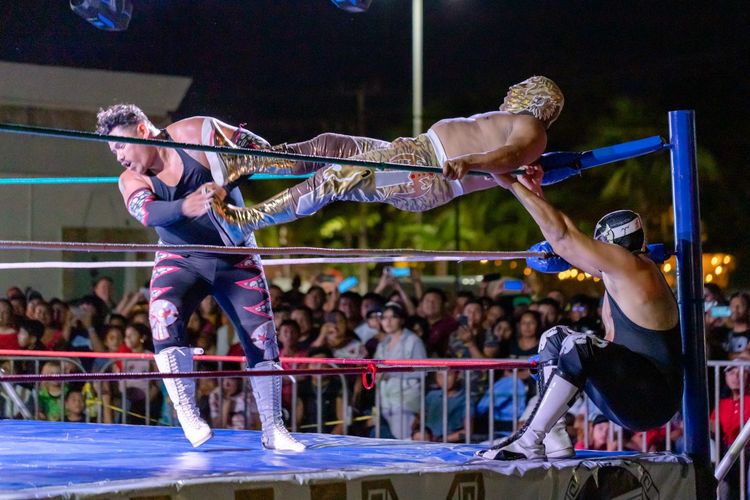
As part of upcoming activities, Andrés announced a wrestling function scheduled for March 21. The event is expected to include recognized names from the national and international circuit, including Zumbido, a former Triple A member, as well as a wrestler coming from Canada.
That announcement signals continuity at a time when continuity itself is part of the story. Despite the lack of public financing, local organizers are still building cards, bringing in visiting talent, and maintaining a regular presence for wrestling in Tulum.
What changes now is not the existence of the sport, but the visibility of the gap around it. Wrestling in Tulum remains alive, yet it does so without the infrastructure, training system, or public backing that could make it more stable and accessible. The people most directly affected are young residents interested in the discipline, local organizers who continue to finance it, and audiences who still respond to it as both entertainment and tradition.
For now, lucha libre in Tulum continues because independent promoters refuse to let it disappear. What is at stake is whether that effort will remain a private burden or become part of a stronger local sports and cultural agenda. We’d love to hear your thoughts. Join the conversation on The Tulum Times’ social media. Should Tulum do more to support lucha libre as a local sports and cultural option?