

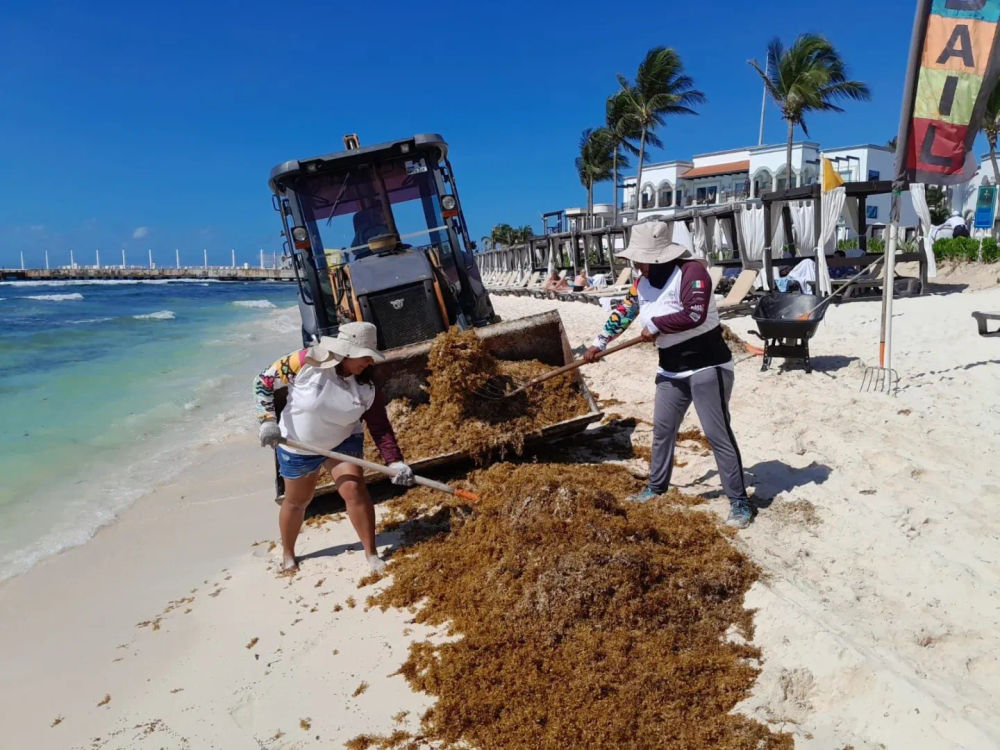
Shortly before sunrise, a line of workers fans out along Cancún’s coastline. In the pale dawn light, they rake and shovel at mounds of wet, brown seaweed that washed ashore overnight. There’s a tang in the air, a mix of salt and something rotten, that has become all too familiar. Sargassum in Cancun 2025 has arrived in force. By the time vacationers wake and wander down from their hotels, these crews will have piled the offending algae into trucks. The beach will look postcard-perfect for a few hours, at least. But the workers know the truth: by evening, more sargassum will likely slosh in, as relentless as the tide itself.
This summer, Cancún’s battle with sargassum has taken on an almost epic scale. What began years ago as an occasional nuisance has grown into a seasonal siege. Scientists warned that 2025 could bring one of the largest sargassum invasions on record, and early reports seemed to prove them right. By May, satellite images revealed an enormous belt of seaweed stretching across the Atlantic, a floating mass of algae so vast one researcher described it as “larger than any country.” All that drifting biomass has only one place to go: onto the beaches of the Caribbean. From Cancún’s popular shores to hidden coves along the Yucatán coast, waves of sargassum have been rolling in week after week. In Quintana Roo state (home to Cancún and the Riviera Maya), experts estimate that over half a million tons of seaweed could wash up this year, surpassing the infamous onslaught of 2018. The prospect is sobering. It’s also visible in real time, as beach after beach gradually turns from golden to brown.

A Seaweed Invasion and Its Causes
Marine biologists and oceanographers have been tracking this phenomenon closely, and they trace this year’s crisis to a convergence of factors far out at sea. A vast region between Brazil and West Africa, now nicknamed the Great Atlantic Sargassum Belt, has become a breeding ground for the algae. There, nourished by warming waters and fed by nutrients pouring off the Amazon River, sargassum blooms explode in size. Currents and winds corral the floating seaweed into island-sized mats and carry it north and west. What starts as a mid-ocean bloom ends as a coastal invasion. One scientist likened it to a slow-moving natural disaster: not as sudden as a hurricane, but just as relentless once it makes landfall.
The environmental conditions in 2025 created a perfect storm for sargassum. Unusually high rainfall in the Amazon Basin followed a prolonged drought, flushing a surge of nitrogen-rich water out to sea, essentially fertilizing the algae. Combine that with higher sea surface temperatures (fueling rapid algal reproduction) and favorable ocean currents, and you get a record-breaking seaweed belt drifting toward the Caribbean. In fact, researchers at the University of South Florida reported nearly 38 million metric tons of sargassum in the Atlantic this spring, a staggering figure that dwarfs previous records. It’s as if a giant floating garden has grown out of control and broken free, now spreading itself along thousands of miles of tropical shoreline. Cancún is one of many places now facing the consequences of that distant bloom.
The Environmental Toll on Paradise
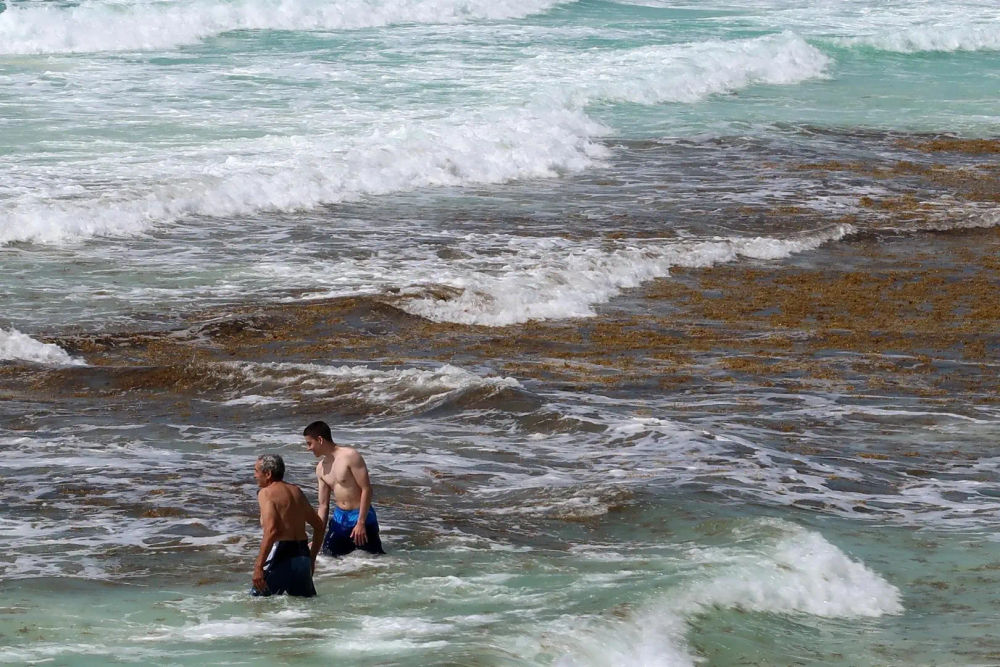
When the sargassum finally meets land, the problems truly begin. In open water, these brown algae mats are a living habitat, sheltering fish, crabs, even baby sea turtles. But on the beaches and in shallow nearshore waters, sargassum quickly turns from habitat to hazard. Piled thick along the tide line, it smothers sea grasses and coral reefs under a soggy blanket. The decay of so much organic matter can suck oxygen out of the water, creating dead zones where fish and other marine creatures can’t survive. More visibly, the rotting seaweed releases gases that sting the nose and eyes: primarily hydrogen sulfide (the same compound as rotten eggs), along with ammonia and other foul-smelling fumes. Residents of beachfront neighborhoods have learned to keep their windows closed on bad days, as the stink can waft inland and hang in the humidity.

Wildlife is feeling the impact too. Sea turtles, iconic to this coast, struggle during nesting season when a barrier of sargassum blocks females from reaching suitable sand or traps hatchlings trying to crawl to sea. Shorebirds pick through the muck looking for sand crabs that have fled or suffocated. And the normally turquoise shallows of the Caribbean turn a murky tea-brown, affecting everything from tiny plankton to prized game fish. “It decomposes and rots and forms these dead zones,” one veteran researcher explains, describing how extreme sargassum events have led to fish kills in parts of the Caribbean. In short, what should be a paradise for marine life becomes a pungent mire until the seaweed is cleared or washes back out with the tides.
There are human health worries as well. Beach workers report headaches and nausea from prolonged exposure to the hydrogen sulfide gas coming off decomposing sargassum. Authorities in Cancún have even started handing out masks and gloves to the 4:00 a.m. cleanup crews as a precaution. Tourists with asthma or respiratory sensitivities are cautioned to stay upwind of big sargassum piles, as the air can irritate the lungs. The seaweed itself isn’t toxic to touch, but it conceals other hazards: bits of plastic debris, dead fish, even jellyfish that ride in with the mats. Cleaning it up is dirty, heavy work, part environmental management, part public sanitation. And yet, that work is absolutely necessary if these beaches are to remain usable, for both wildlife and people.
Tourism and Livelihoods at Stake
Cancún’s very existence revolves around its beaches. This city grew from a tiny fishing village into a global tourism powerhouse in a matter of decades, thanks to powdery white sands and clear blue water. Now those same beaches are at the mercy of the sargassum waves. For the massive resorts in the Hotel Zone, the all-inclusive compounds that host the bulk of Cancún’s millions of visitors, the response has been to tackle the problem head-on (and largely out of sight of their guests). Many resorts have their own teams of gardeners and maintenance staff scooping up seaweed at first light. Some have invested in boom-like offshore barriers to catch the algae before it reaches their swimming areas. The effort is costly and unending, but it’s paying off to some extent: officials report that hotel occupancy remains high, around 70–80% even as the sargassum swells, and so far “no one’s canceling their vacation because of seaweed.” Tourists still come, drawn by Cancún’s enduring allure. If one beach is too choked with sargassum, visitors pivot to a different spot or spend the day by the pool. In the sanitized bubble of a mega-resort, a traveler might only encounter seaweed as a faint odor on the breeze or a line of brown in the distance.
Outside those bubbles, however, the story can be very different. In the more local beach communities and smaller businesses beyond the Hotel Zone, the sargassum is causing quite a devastation. In Puerto Juárez, a fishing neighborhood at the north end of Cancún, family-run seafood restaurants that normally survive the slow summer on local clientele are now sitting empty. At one open-air eatery, a waiter points to the once-prime seaside tables that no one wants anymore. “When the sargassum starts to rot in the sun, it smells terrible and draws in flies,” he says, gesturing at the browning piles of seaweed just beyond the patio. Even the regulars are staying away. On some days, the shoreline here is virtually deserted except for cleanup crews. The usual palapa-roofed restaurants and beach clubs that hum with life are eerily quiet, with employees standing around with nothing to do.
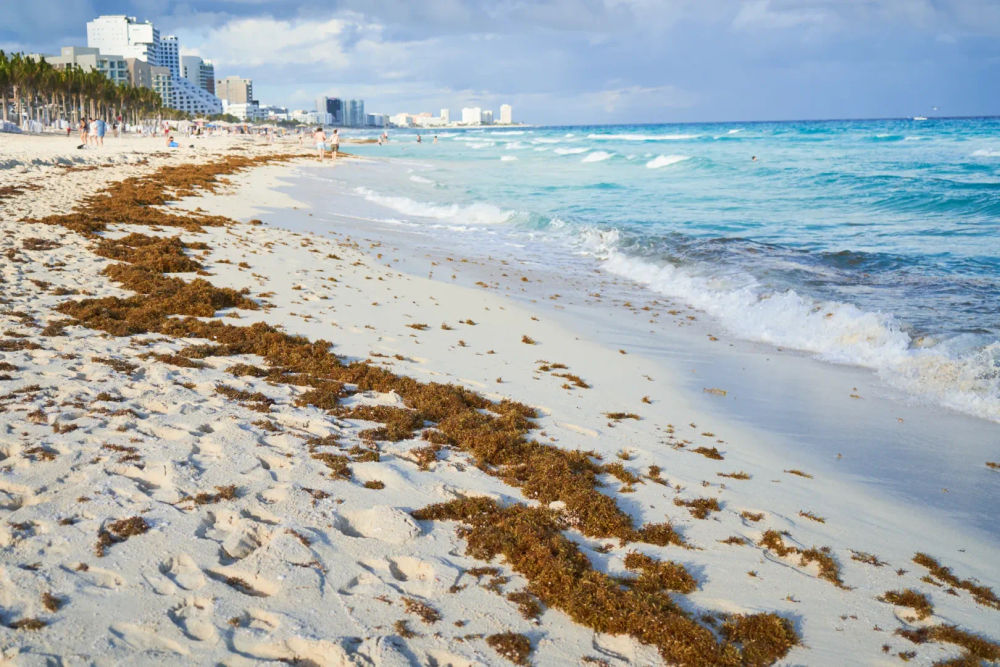
Further down the coast in Playa del Carmen, a popular tourist town, some smaller beach clubs have had to cut staff or even temporarily shut their doors. One club’s owner announced a month-long unpaid furlough, a “solidarity vacation”, for all employees after nearly three weeks went by with zero customers on the beach. “We had no choice,” said one young bartender who was sent home indefinitely. “No tourists means no income. We’re all praying the situation improves next month, but nobody really knows if it will.” For these workers and their families, sargassum isn’t just an inconvenience or an eyesore; it’s an economic emergency. Tour guides, boat captains, fishermen, waiters – anyone whose livelihood depends on a pristine ocean and happy beachgoers – is feeling the strain. In one fishing village south of Cancún, the local cooperative has stopped going out to sea on days when the mats of algae are too thick; the tangles foul their boat engines and nets, making it impossible to work. “We’re at the mercy of this stuff,” a fisherman says flatly, holding a clump of the slippery weed. “Imagine not being able to fish in the ocean because there’s too much… grass. It sounds crazy, but that’s our reality now.”
The economic ripple effect touches the broader community as well. Taxi drivers lose airport runs when would-be visitors rebook to destinations perceived as cleaner. Hotel owners in less-protected areas watch their online reviews plummet because guests post photos of brown water and mention the odor. In fact, a recent analysis of tourist reviews alarmingly tagged Cancún as one of 2025’s most “disappointing” destinations, with sargassum cited alongside high prices and crowding as reasons some travelers left unhappy. And yet, Cancún is far from empty: most visitors are still having a great time, especially if they stay informed about which beaches are clear. It’s a tale of two Cancúns, in a sense – one where beach cleanups and workarounds keep the wheels of tourism turning, and another where locals quietly bear the brunt of the brown tide’s impact.
Fighting Back: From Beach to Boardroom
Faced with this multi-dimensional crisis, everyone, government, businesses, scientists, citizens, is scrambling for solutions. On the beaches of Cancún, the fight is constant and visible: hundreds of city workers and volunteers, colloquially dubbed “the beach warriors,” comb the sand each daybreak with tractors and rakes. Piles of sargassum are loaded into wheelbarrows and trucks, then hauled off to designated dump sites inland. (One major landfill, miles from the coast, has been set aside just for sargassum disposal; it’s already turning into a small mountain of dried seaweed.) The Mexican Navy has also been deployed to aid in the effort. Small navy boats specially fitted with nets patrol offshore to skim up sargassum before it drifts onto tourist beaches. In addition, long floating barriers have been installed in the sea near hotspots like Playa del Carmen and Tulum, designed to catch incoming mats and channel them away from the most popular swimming areas. These measures help, but they are not foolproof. A change in wind or a bit of stormy weather can send heaps of seaweed right over the barriers or into areas previously protected. The sheer volume of algae this year is testing the limits of these defenses.

Behind the scenes, in conference rooms and government offices, another battle is raging – one over responsibility and coordination. Local officials have grown increasingly blunt about the need for private hotels to pull their weight. In Cancún, Mayor Ana Patricia Peralta recently convened an urgent meeting with hotel executives, effectively reading them the riot act over reports of spotty cleanup efforts. Some resorts, it turns out, were improperly dumping the collected seaweed or using quick-and-dirty methods like high-speed beach sweepers that simply scatter the mess to neighboring properties. “It’s not about blame, it’s about working together,” the mayor said diplomatically, but the underlying message was clear: each hotel must take ownership of its stretch of beach. If they don’t, Cancún’s reputation (and everyone’s bottom line) is at risk. The city has offered technical help and even training to hotels on better cleanup and disposal methods. At the same time, officials are warning that if certain properties continue to shirk their duty, fines or other enforcement measures aren’t off the table. As one environment inspector put it, “The health of our ecosystem and our tourism industry depends on all of us doing our part.” In this crisis, alliances are crucial – and occasionally strained – between the public and private sectors.
There is also a push for innovation and long-term strategy. Universities and startups are racing to answer a hopeful question: What if all this nuisance seaweed could be turned into something useful? In labs and workshops across Quintana Roo, people are experimenting with sargassum as a resource. The ideas are as creative as they are ambitious. Some entrepreneurs have begun compacting and drying the seaweed to create bricks for construction – an eco-friendly building material that also takes pressure off landfills. Others are extracting compounds from the algae to make fertilizers, animal feed, or even biogas fuel in pilot processing plants. A fashion-minded venture is reportedly trying to convert sargassum into a form of vegan leather for making wallets and handbags. While no single idea is a silver bullet, the flurry of innovation speaks to the community’s resilience. It’s a classic Cancún approach: turn a challenge into an opportunity if you can. In the words of one local official, “We have lemons, so we’re making lemonade – only in our case, the lemons are stinky seaweed.” The humor isn’t lost on anyone working knee-deep in sargassum all day, but the underlying optimism is real. If any good can come from this brown invasion, Cancún’s people are determined to find it.
Residents and Visitors Adapt
As the summer wears on, people in Cancún are adjusting to what has become a new normal on the coast. For residents, that means both physical adaptation and mental acceptance. Many locals now check the daily sargassum forecast (yes, there is such a thing) each morning along with the weather. Social media groups share updates on which beaches are clear for swimming and which are buried under heaps of seaweed. A beach that’s pristine one week might be unwalkable the next, so flexibility is key. Some residents have shifted their recreation habits accordingly: choosing to snorkel in nearby coral reefs (away from the worst seaweed zones) or cooling off in cenotes, the freshwater sinkholes in the jungle, when the shoreline gets too nasty. Those who do venture to the beach often bring along a rake or join community cleanup efforts before spreading their picnic blanket. It’s not uncommon now to see families cleaning a patch of sand so the kids can play, treating the task as just another part of a day at the beach. There’s a quietly shared sentiment that living in a beautiful place sometimes requires defending that beauty.
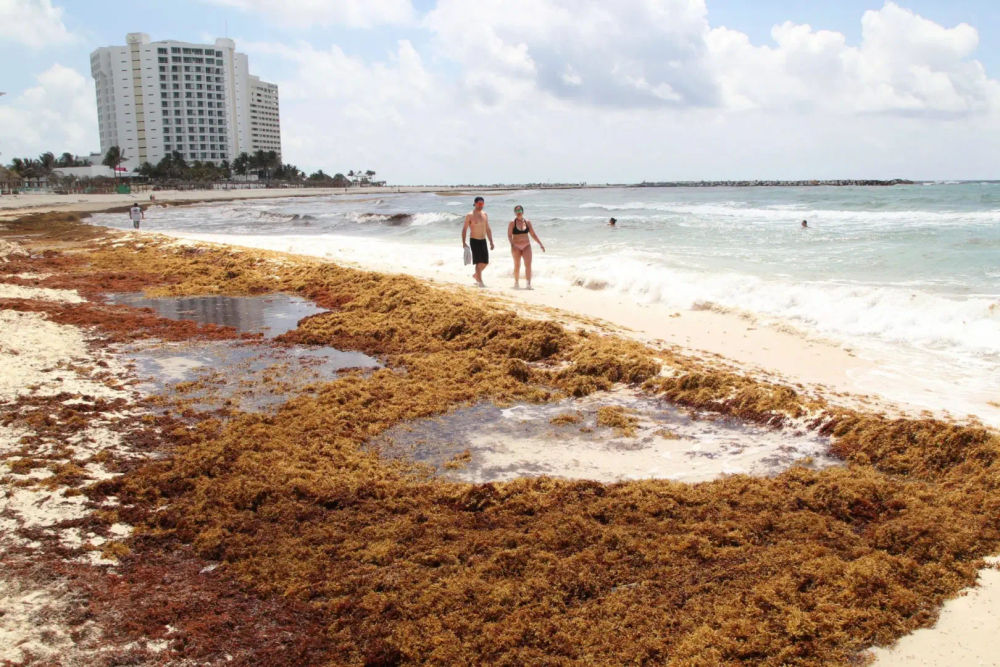
Tourists, especially repeat visitors, are also learning how to make the most of a sargassum season trip. Many hotels and travel agencies have begun giving frank advice: if the beach by your hotel is affected, don’t despair. Perhaps take a ferry to Isla Mujeres, where an island position and currents often keep the main beaches clear. Or head to Cozumel’s leeward coast, known to stay largely sargassum-free even when mainland shores are swamped. Tour operators have tweaked their itineraries, offering more “plan B” activities like lagoon boat rides, cenote excursions, or cultural tours on days when beach conditions are poor. For some visitors, encountering the sargassum is even an educational moment. “It was a shock at first,” admits one traveler from Texas, recalling the sight (and smell) of her resort’s beach upon arrival. But instead of spending the week angry, she took her children to help a volunteer clean up one morning. “We learned a lot about the environment. It wasn’t the Instagram vacation we imagined, but it felt meaningful in a different way.” Not every tourist will be so sanguine, of course, but most leave Cancún still loving it, even if they had to sidestep some seaweed. The natural beauty that made this coast famous is still here; it just takes a little more effort to enjoy it during these challenging months.
Amid all the adaptations, there’s an air of reflection settling in. Locals talk about how this issue has made them more aware of their relationship with nature, the delicate balance between the environment and the tourism-fueled prosperity they’ve built. There is pride in how Cancún is handling the crisis (“we’re tough and we’ll get through it” is a common refrain), but also an undertone of concern. Is this the future? Many wonder. Climate change and pollution aren’t problems with quick fixes, and the sargassum may be one messy manifestation of those larger global forces. If so, Cancún and its neighbors across the Caribbean will need to keep adapting, year after year.

A Resilient Coast, Bracing for Tomorrow
As twilight falls on Cancún, the last beach cleaners of the day dump their final loads of sargassum onto a waiting truck. The sun sets in a blaze of orange over the calm Caribbean, and for a moment, the beach looks beautiful again, smooth and brown-free. But everyone knows the next high tide after midnight might deliver another unwelcome gift from the sea. This fight against sargassum is a marathon, not a sprint. Yet, in the face of a challenge that washes in from beyond the horizon, Cancún is finding something in itself: unity, ingenuity, and a dogged persistence. There’s a metaphor often used here – that the daily cleanups are like a Sisyphean task, the mythic figure doomed to roll a boulder uphill over and over. It does feel that way on the hardest days, admit the weary crews. But unlike Sisyphus, the people of Cancún have not lost hope that their labor will yield a lasting solution. Every dawn, they return to the shoreline, brooms and optimism in hand, determined to preserve the paradise they call home.

In the end, this is more than a story about smelly seaweed or troubled tourism. It’s about a community learning to live with a capricious nature, finding the human angle in an environmental saga. A marine biologist scanning satellite images, a hotel maid scrubbing algae off a guest’s flip-flops, a fisherman repairing nets while he waits for clearer seas, a family shifting their vacation plans but still sharing laughter under the tropical sun… These are the threads of the tale of Sargassum in Cancun 2025. It’s a tale still unfolding, somewhere between tragedy and triumph. And as Cancún looks toward the next tide, the next month, the next year, one can sense both worry and wonder in the air. The Caribbean has always given generously to this coast: warmth, beauty, life. Now it’s giving challenges too. How Cancún faces those challenges may come to define its future, long after the sargassum recedes.
We’d love to hear your thoughts, join the conversation on The Tulum Times’ social media.